
If you manage a brownstone in Brooklyn, run a business in Midtown, or own an apartment building in Queens — you already know that controlling who enters your property is a daily priority. Intercom systems are one of the most widely used security tools across New York City, but many property owners don’t fully understand how they work or how much more powerful they become when integrated with access control.
In this guide, we explain what an intercom is, how intercom systems work, and why combining them with access control is the smartest security upgrade you can make for your NYC property.
What Is an Intercom?
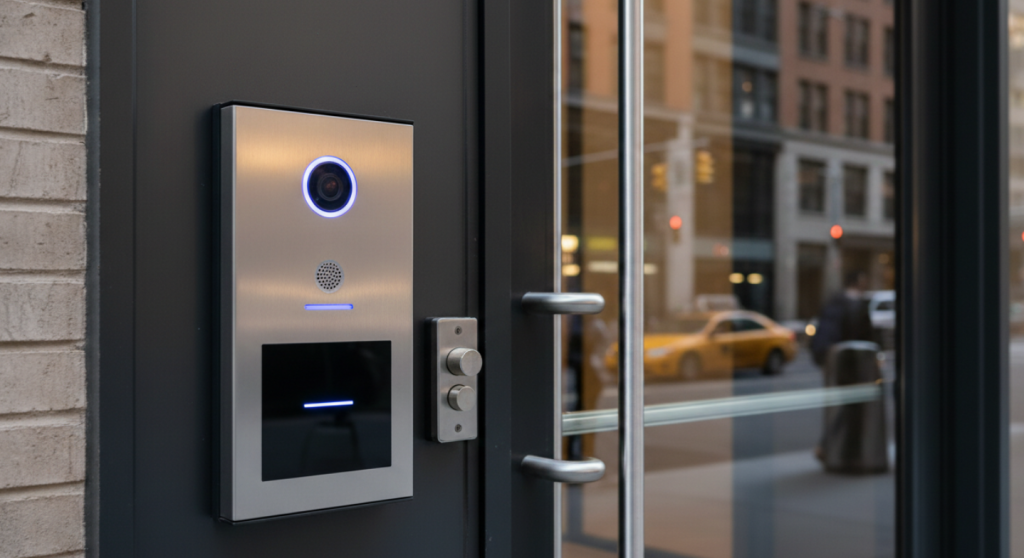
An intercom — short for intercommunication device — is a system that enables two-way audio or audio-video communication between different points within a building or property. At its most basic, an intercom lets someone at a door or gate communicate with someone inside before entry is granted.
But modern intercom systems are far more than a simple speakerphone on a wall. Today’s systems feature HD video cameras, mobile app integration, remote unlocking, visitor logging, and seamless connectivity with access control systems, alarm panels, and smart home platforms.
Intercom system meaning varies depending on context — a residential intercom in a six-unit Brooklyn walkup functions differently from a commercial intercom in a Midtown office tower — but the core purpose is always the same: controlled, secure communication at points of entry.
In New York City specifically, intercom systems are a near-universal feature of multi-unit residential buildings and commercial properties. They are often required by building codes and co-op or condo board regulations, and they play a critical role in daily building management.
How Does an Intercom Work?
Understanding how intercoms work starts with the core components of the system:
- Outdoor Station (Door Panel). The outdoor unit is mounted at the building entrance — a front door, lobby, gate, or loading dock. It contains a microphone, speaker, and in most modern systems, a camera. When a visitor arrives, they press a button to initiate communication.
- Indoor Station (Master Unit). The indoor unit receives the call from the outdoor panel and allows the person inside to speak with, see, and respond to the visitor. In residential settings, this may be a dedicated wall unit, a telephone handset, or a smartphone app. In commercial settings, it may be a security desk monitor or a networked software interface.
- Communication Channel. The signal between outdoor and indoor stations travels through either a wired connection — coaxial cable, twisted-pair wire, or structured cabling — or a wireless IP network. Wired systems offer greater reliability; IP-based systems offer remote access and greater scalability.
- Door Release Mechanism. Most intercom systems connect directly to an electric door strike, magnetic lock, or electronic latch. When the person inside presses the release button, the door unlocks — allowing verified, controlled entry without any key exchange.
In practice: a visitor arrives → presses the call button → the resident or staff member sees and hears them → verifies identity → remotely releases the door. The entire process takes seconds.
Types of Intercom Systems Used in NYC
New York City’s building stock is diverse — from prewar apartments to modern commercial developments in Lower Manhattan. Different properties require different intercom solutions.
Audio-Only Intercoms. The most basic format — voice communication without video. Still found in older NYC residential buildings where systems haven’t been updated. Functional but limited, with no visual verification of visitors.
Video Intercoms. The current standard for most NYC installations. Video intercoms add a camera to the outdoor unit, giving residents or staff a live view of the visitor before releasing the door. Available in wired, wireless, and IP formats. Increasingly expected by tenants in competitive rental markets.
IP / Network Intercoms. IP intercoms transmit audio and video over a standard network connection — the same infrastructure used for computers and phones. They support remote access via smartphone, integration with cloud-based access control, and connection to multiple entry points from a single interface. Ideal for commercial properties, multi-tenant buildings, and any NYC location requiring remote management.
Telephone-Based Intercoms. Common in older NYC apartment buildings, these systems connect the building’s front door panel to individual unit telephone lines. Visitors call the unit directly; residents buzz them in via the phone keypad. Many buildings are now upgrading these legacy systems to modern video or IP intercoms.
Wireless Intercoms. Wireless systems communicate via Wi-Fi or radio frequency, eliminating the need for dedicated cabling between units. Easier to retrofit into existing buildings — particularly useful in NYC’s older building stock where running new wire through walls is difficult or cost-prohibitive.
What Is the Difference Between an Intercom and Access Control?
This is one of the most common questions property owners ask — and the answer is important for understanding how to build a complete security system.
An intercom handles communication. It lets you see and speak with a visitor before deciding whether to let them in. It gives you verification — but on its own, it doesn’t manage who has standing access to your property.
An access control system manages permissions. It determines who is authorized to enter, when they can enter, and through which doors. This may involve key fobs, PIN codes, smart cards, biometric scanners, or mobile credentials.
When used separately, each system does its job. When integrated, they become something far more powerful.
How Does an Intercom Work with Access Control?
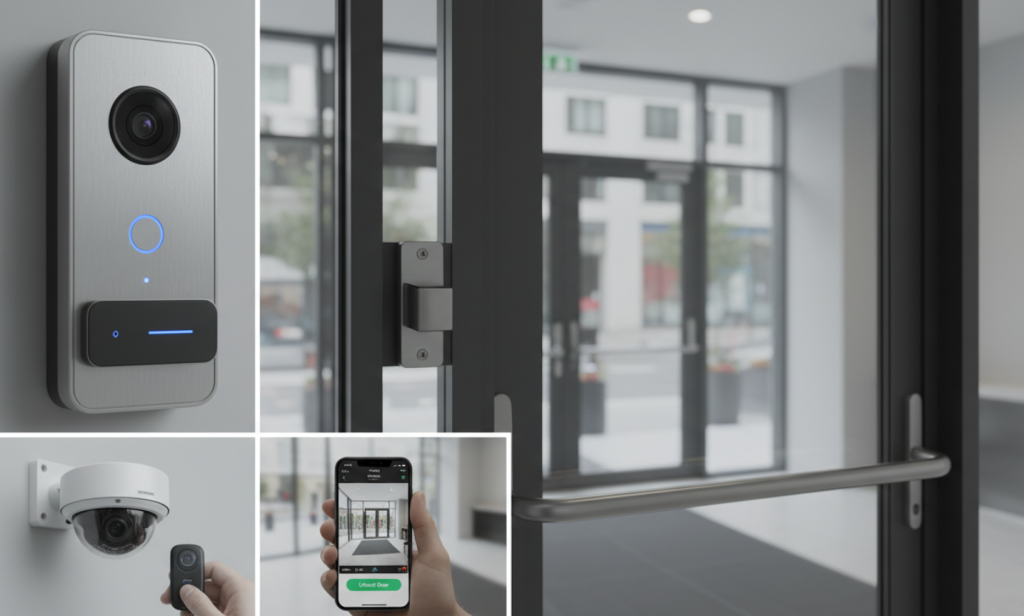
Integrating your intercom system with access control creates a unified entry management platform — one that handles both verified visitor access and credentialed resident or employee access from a single, cohesive system.
Here’s how the integration works in practice:
Visitors and Deliveries. When an unregistered visitor arrives, they use the intercom to call the relevant unit or front desk. The resident or staff member verifies them via video, speaks with them, and grants or denies access remotely. The door release is triggered through the intercom — no physical key, no coming downstairs, no guesswork.
Residents, Employees, and Authorized Users. Credentialed users — tenants, employees, contractors with temporary access — bypass the intercom entirely. They use their key fob, access card, PIN, or mobile credential to enter directly. The access control system logs every entry with a timestamp and user ID.
Remote Management. In an integrated IP system, building managers can grant or revoke access credentials instantly from any device. A tenant moves out? Their fob is deactivated immediately. A contractor needs access for two days? A time-limited credential is issued and automatically expires. No locksmith visit, no key collection, no security gap.
Real-Time Alerts and Audit Trails. Every entry event — both intercom-granted and credential-based — is logged. Building managers can review who entered, when, and through which door. In the event of an incident, this data is invaluable for both internal review and law enforcement cooperation.
Integration with Other Systems. A fully integrated setup can connect your intercom and access control to your CCTV cameras (automatically recording when a door is opened), your alarm system (triggering alerts for unauthorized access attempts), and your building management software.
For New York City buildings — where building staff can’t monitor every entrance around the clock and tenant security expectations are high — this kind of integrated system is quickly becoming the standard.
Who Needs an Integrated Intercom and Access Control System?
Residential building owners and property managers in NYC managing multi-unit properties benefit enormously from integrated systems. Tenant turnover, package deliveries, service vendors, and building staff all create daily entry management challenges that a unified system handles automatically.
Commercial property owners and businesses need to control access across multiple zones — lobbies, server rooms, executive floors, loading docks — while maintaining visitor management at the front desk. Integration makes this seamless.
Co-ops and condos frequently require modernized entry systems as part of building upgrades. Many NYC co-op boards now specify video intercom and access control as mandatory components of building security.
Retail and hospitality businesses benefit from integrated systems that manage both customer-facing and staff-only entry points, with audit trails that support loss prevention and compliance requirements.
Why Professional Installation Matters in New York City
A well-designed intercom and access control integration requires more than buying the right hardware. In NYC specifically, professional installation matters for several reasons:
Building complexity. New York’s older buildings — many prewar or mid-century construction — present unique wiring and structural challenges. A skilled technician knows how to route cabling cleanly and compliantly without damaging historic finishes or violating building regulations.
Code compliance. NYC has specific requirements around door hardware, electric strikes, fire egress, and building entry systems. Professional installers ensure your system meets all applicable codes.
System design. Every building is different. The right camera placement, panel location, lock type, and credential system for a six-unit walkup in Park Slope is completely different from what a 40-story commercial building in Midtown requires. Professional design prevents blind spots, bottlenecks, and compatibility issues.
Ongoing support. Intercom and access control systems require periodic maintenance, firmware updates, and occasional repairs. A professional installation comes with documentation, warranty coverage, and a team that knows your system.
Why Choose Lock and Tech for Intercom and Access Control in NYC?
At Lock and Tech, we specialize in the design, installation, and maintenance of intercom and access control systems for residential, commercial, and mixed-use properties across New York City and New Jersey.
Our licensed technicians have years of experience working with NYC’s unique building stock — from prewar apartments to modern commercial developments. We install, integrate, and support the full range of intercom and access control solutions, including:
- Audio and video intercom systems
- IP and cloud-based intercom platforms
- Telephone intercom upgrades and replacements
- Key fob, card, PIN, and biometric access control
- Integrated intercom + access control systems
- CCTV integration and full security system design
We offer free on-site consultations — because the right system starts with understanding your specific building, your specific needs, and your specific budget.
Ready to Upgrade Your Building’s Security?
Whether you’re managing a brownstone in Brooklyn, a commercial office in Manhattan, or a multi-unit building anywhere in the NYC metro area — Lock and Tech has the expertise to design and install an intercom and access control system that works for you.