
- Home
- Security System
- Biometric Access Control
Biometric Access Control Installation in New York



For Biometric Access Control
Since 1989, we’ve been securing homes and businesses across NYC and New Jersey with professional security solutions you can trust. Our licensed technicians provide 24/7 emergency service, using only the latest technology and backed by comprehensive warranties on all installations.



Facilities That Benefit From Biometric Readers
- Server rooms and IT closets. A fingerprint check ties every entry to a named person, so a borrowed card cannot open the rack aisle.
- Warehouses with high-value stock. Readers on the cage and the shipping door log who went in and when, down to the second.
- Laboratories and clean rooms. Facial readers open the door with no contact, which suits gloved hands and gowned staff.
- Casinos. Cage, count room and back-of-house doors stay tied to individual staff through shift changes and rotations.
- Fitness centers. A fingerprint reader at the turnstile ends card sharing between members on a single account.
- Sites with high staff turnover. Access is added and removed in the software, with no badge to hand out or chase down.
- Doors where cards keep getting passed around. A credential that cannot be handed to a coworker fixes the problem at the reader.
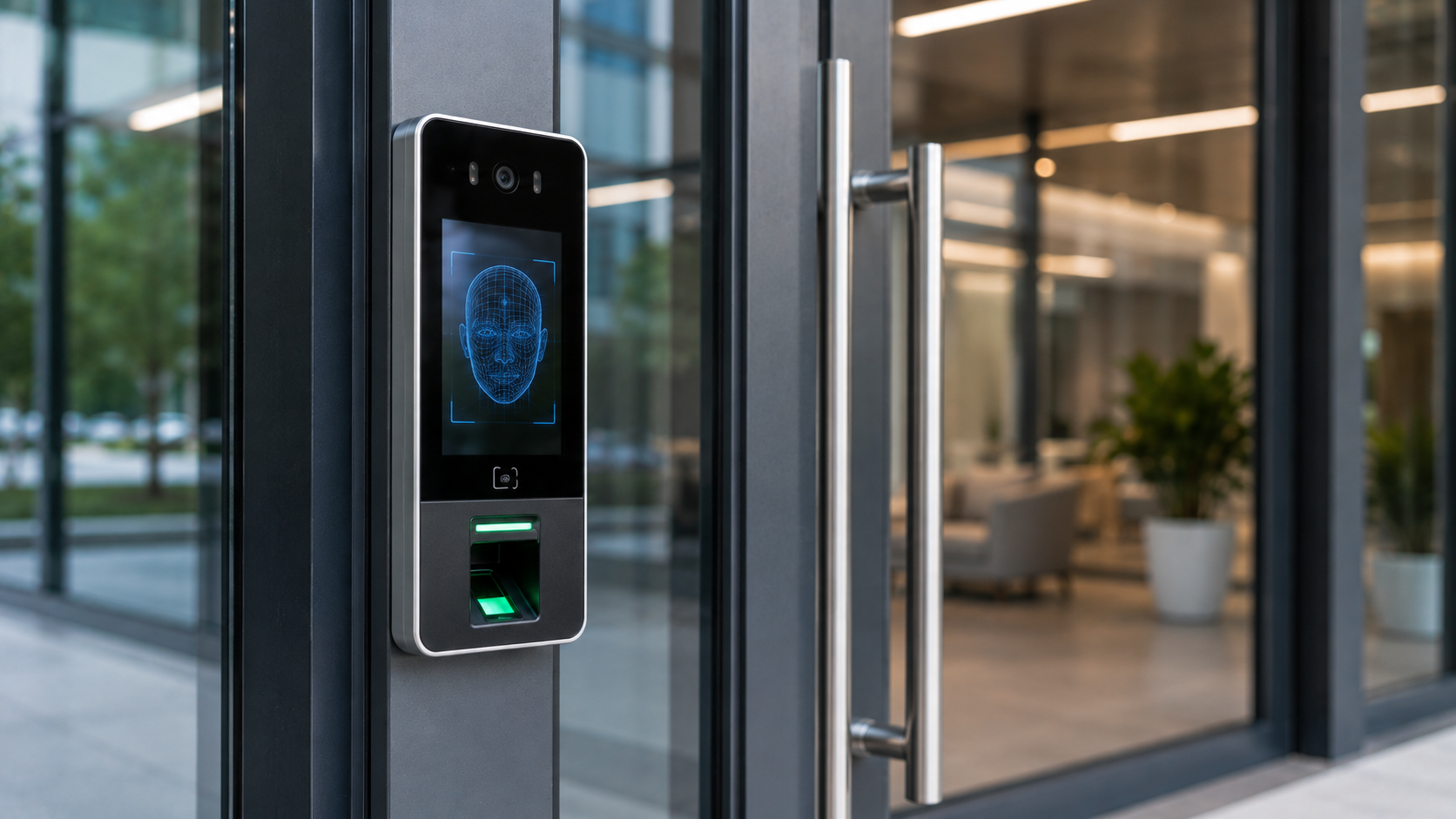
Biometric access control opens a door after a reader confirms a fingerprint or a face, instead of reading a card or a keypad code. The credential is the person, so it cannot be lent to a coworker, propped in a drawer, or left in a locker. A biometric access control system runs on the same controllers, locks, and management software as card and keypad access control systems; the reader at the door is what changes. Most commercial buildings mix the two and keep biometrics on the handful of doors where identity has to be certain.
Fingerprint, Face, or Both
Two methods cover almost every commercial job. A fingerprint reader matches the ridge pattern in under a second, and a facial reader grants access one to two seconds after someone steps in front of it.
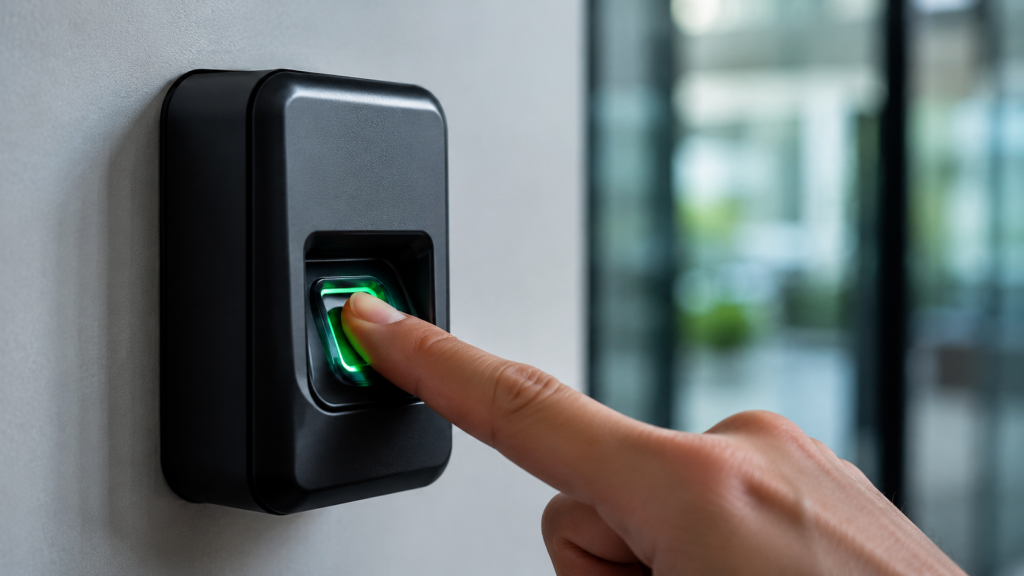
Fingerprint sensors come in optical, capacitive, and ultrasonic versions, and they differ mostly in how they handle hands that are not clean and dry. Capacitive sensors are the most sensitive to moisture, ultrasonic the least. Sites with glove work or wash-down areas enroll two fingers per person and keep a card reader on the same door as a fallback.
Facial recognition is touchless, which is why it lands on doors people reach with full hands. Glasses, a beard, or a new haircut do not break the match, since the template is built on fixed distances between features. A mask covering the nose and mouth does. Backlighting causes more failed reads than dim light, and infrared readers handle both.
Doors that need more certainty run two factors: fingerprint plus PIN, or face plus card. A touchless biometric access control setup with card fallback keeps a lobby moving when a reader cannot get a clean read. In a biometric fingerprint access control system, enrollment takes about a minute per person, so a 200-person site is one scheduled session.
Biometric readers connect to the same access control panels we install from Keri Systems, Rosslare, Hartmann Controls, Paxton Access, and Brivo, and work with HID Global or LenelS2 hardware already on site.
Where Biometrics Are Worth It, and Where They Are Not
Biometrics pay off on doors where you need to know which person opened them, not just that a valid credential was present. Server rooms, IT closets, and warehouse cages holding high-value stock are the usual first three, along with labs where the door has to open without contact.
Two industries buy it for a specific reason. Biometric access control for casinos covers the cage, the count room, and back-of-house doors, where staff rotate through shifts and a shared badge defeats the log. Biometric access control for fitness centers stops one membership from passing through the turnstile four times a night. Sites with high staff turnover gain a second benefit: access ends the moment the profile is deleted.
It is not worth it everywhere. An office of 25 people with the same staff for years gets nothing a card or a Bluetooth mobile credential does not already give it, at a higher cost per door. Lobbies with steady visitor traffic still need a card or intercom path, because visitors cannot be enrolled. For the rest of a building, access control built for commercial properties covers the doors, and biometrics go on the four or five that need them.
What Happens to the Biometric Data
A biometric reader does not keep a photograph of a face or an image of a finger. It converts the scan into a mathematical template, a string of numbers describing the pattern and usually under a kilobyte in size, and stores that. The template cannot be turned back into a usable image of the original.
Templates sit in one of three places depending on the platform: on the reader, on the on-site controller, or in the vendor’s cloud. Which one applies is worth asking about any access control biometric system before it goes in, since it decides who can reach the data and what happens during a network outage. Access to the enrollment database is granted by administrator role, and every read is logged with the time, the door, and the user.
When an employee leaves, deleting the profile deletes the template with it. Access events can also be paired with footage from commercial security camera systems, so each read has a picture of who was standing at the door.
How the Installation Goes
The work runs in six steps, and the first one happens before any hardware is ordered.
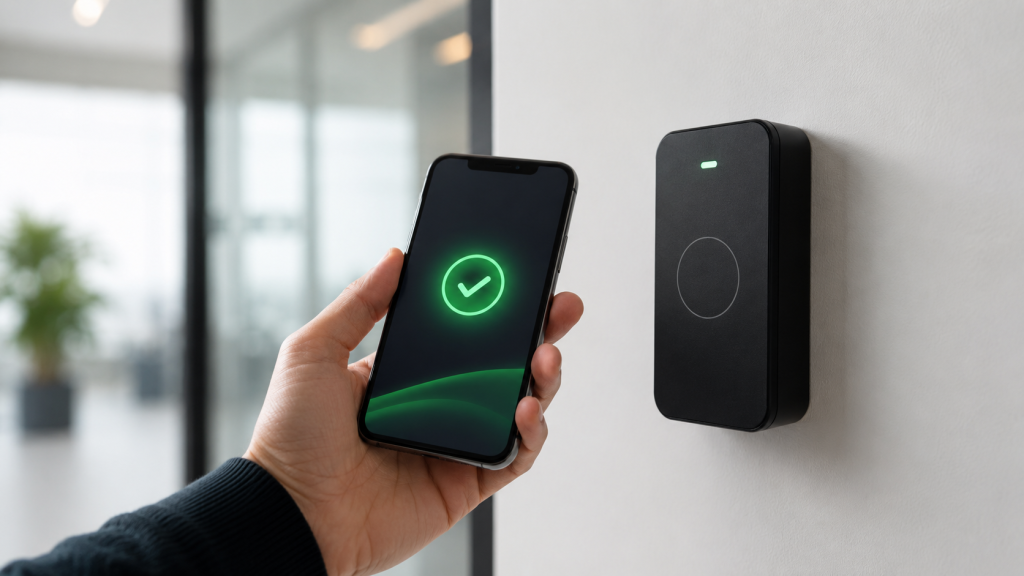
We survey the site: which doors need biometrics, how many people pass through each at peak, and what panels and cabling are already there. The method is then picked door by door, with fingerprint on interior rooms, facial where hands are full, and two factors where the log has to be airtight. Readers, controllers, and power go in next.
Enrollment is a scheduled session on site. Testing follows on every door: read accuracy, lock release, time schedules, and fail-safe or fail-secure behavior on power loss. We finish with a walkthrough, training on the readers, and mobile app setup. The installation carries a 90-day mechanical and 12-month electronic warranty covering parts and labor.
What Drives the Cost, and Where We Work
Five things set the price of a biometric access control installation: the number of doors, the identification method, the number of enrolled users and the license tier tied to it, the integrations you want, and how much of the existing panel and cabling survives. Facial readers cost more per door than fingerprint readers, and each integration with cameras, an alarm panel, elevators, or time and attendance adds configuration work.
Estimates are labor plus material, and a signed contract comes before the work starts, with a partial deposit on larger jobs and a tax exemption form where it applies. We handle biometric building access control across NYC and install within 75 miles of Midtown Manhattan, including Lower Manhattan and Brooklyn. Office hours are 8:00 a.m. to 6:00 p.m. on weekdays, and on-site arrival inside the service area runs 20 to 40 minutes.
Biometric Access Control FAQ
Does a fingerprint reader work with dirty or wet hands?
Yes, with the sensor type deciding how well it copes. Ultrasonic sensors read through moisture and light grime better than capacitive ones. On sites where hands stay wet or gloved, we enroll two fingers per person and leave a card reader on the door.
Will facial recognition work if someone wears glasses or a mask?
Glasses, beards, and hats do not stop a match, but a mask covering the nose and mouth does. The template is built on the whole face, so a covered lower half leaves too little to compare.
Where are fingerprints stored in a biometric access control system?
They are stored as a mathematical template rather than an image, held on the reader, on the on-site controller, or in the vendor’s cloud, depending on the platform. Ask which of the three applies before the system is chosen.
Will biometric readers slow down the morning rush?
No. Fingerprint verification runs under a second and facial verification takes one to two seconds, close to the speed of a card tap. Queues come from single-door bottlenecks, not from the reader.
Is biometric access control worth it for a small office?
For most small offices, no. A card or Bluetooth mobile credential covers a stable staff at a lower cost per door. Biometrics are worth adding on one or two interior doors, such as a server room.
Do you offer 24/7 support?
Support runs during business hours, 8:00 a.m. to 6:00 p.m. on weekdays. On-site arrival inside our service area typically takes 20 to 40 minutes, and phone and email support is available during those same hours.
What is your service area?
We install within 75 miles of Midtown Manhattan and cover multiple sites for clients with more than one property, across commercial, industrial, municipal, and government buildings.
Related Access Control Services
A reader, controller, or lock that has stopped working is handled under access control repair and service, on biometric and card hardware alike. For cameras, alarms, intercoms, and the rest of what goes into a commercial building, see our full security systems lineup.
What our clients say