
- Home
- Security System
- CCTV Installation
CCTV Installation in New York



apart in New York
Since 1989, we’ve been securing homes and businesses across NYC and New Jersey with professional security solutions you can trust. Our licensed technicians provide 24/7 emergency service, using only the latest technology and backed by comprehensive warranties on all installations.


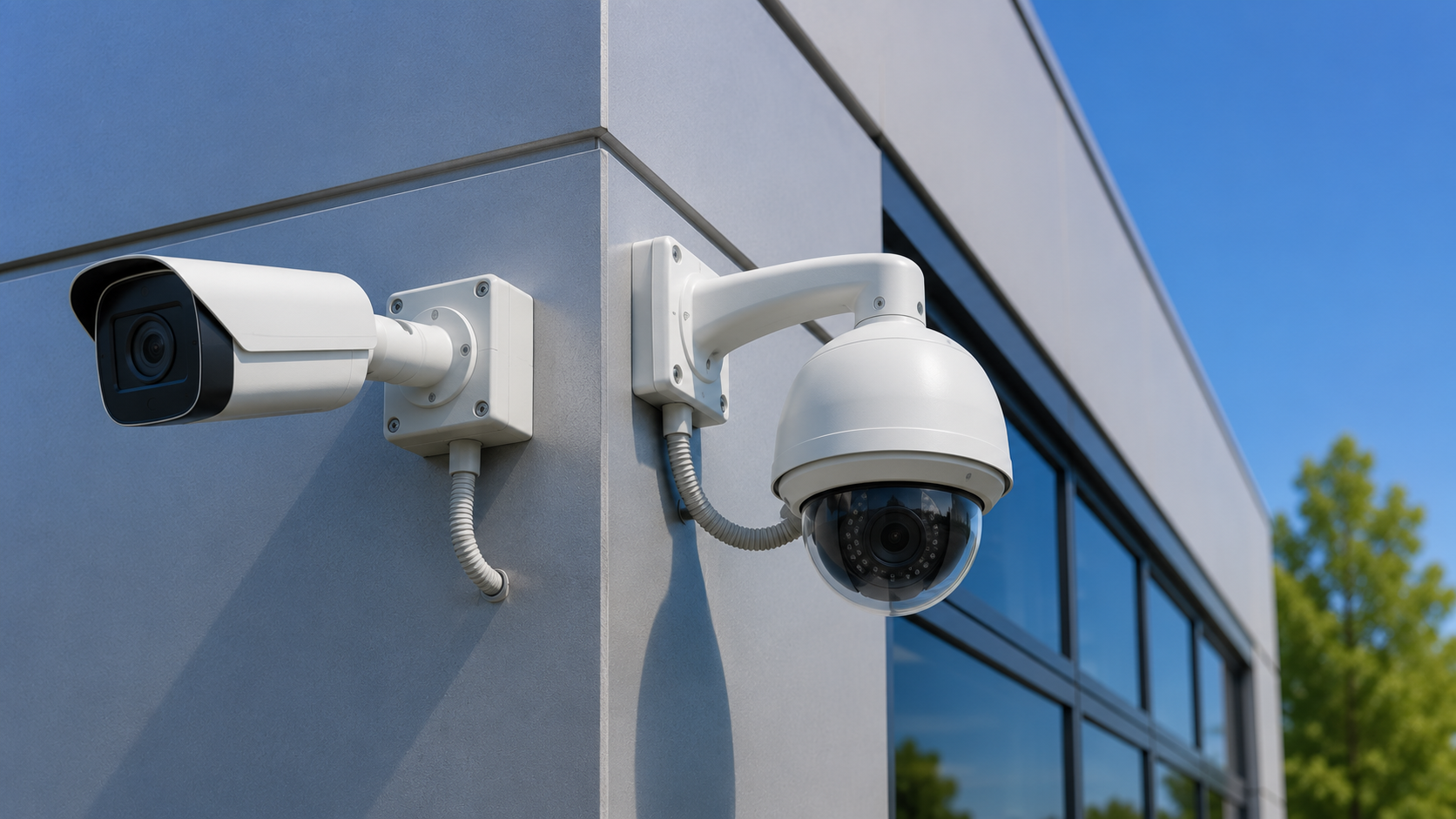
CCTV installation puts every camera on a closed circuit: the cameras run back to a recorder on site, over coax or network cable, and the footage stays in your building instead of on a vendor’s server. Cloud-first setups reverse that, sending video off the property and selling it back through a monthly plan. Lock and Tech USA installs new CCTV systems, rebuilds failing analog ones, and designs video surveillance covering an entire property when cameras are only one piece of the job.
What CCTV Installation Costs in New York
CCTV installation is priced as labor plus material and quoted as one total number before any work starts. What moves that number is the building far more than the cameras.
- Camera count and placement. A four-camera storefront and a sixteen-camera warehouse are different jobs before a single cable gets pulled.
- Cable type and run length. Coax and CAT6 are priced by the foot, and a run from a basement recorder to a fourth-floor hallway costs more than a run across one ceiling.
- The recorder and the drives inside it. Channel count and the number of days you want footage kept decide the storage, and storage is what clients under-buy most often.
- Condition of the wiring already in place. Clean coax with sound BNC ends gets reused; corroded runs, shared conduit and cable that dead-ends behind drywall gets replaced.
- Access to the building. Prewar plaster, exposed conduit, drop ceilings, co-op board approval and lobby work scheduled around tenants all add hours.
A per-camera price quoted over the phone tells you almost nothing in a New York building, because none of those five factors are visible from a phone call. We walk the property first, mark the camera positions and cable routes, then put the labor and the material into one written number. Older buildings also tend to hide surprises behind the walls, which is the single most common reason a CCTV installation quote changes between the walkthrough and the finished job.
Work begins after a signed contract. On larger CCTV camera installation jobs, payment is a partial deposit up front with the balance collected on completion, after the full walkthrough. Our office answers by phone and email from 8 a.m. to 6 p.m. on weekdays, and a technician can be on site in 20 to 40 minutes for a survey across most of the city.
IP or Coax: Choosing the Right CCTV System
Coax earns its place when the cable is already in the walls. Older analog systems ran RG-59 or siamese cable to every camera position, and that cable still carries HD video over HD-TVI, HD-CVI or AHD. Replacing the cameras and the recorder while keeping the runs turns a full rewire into a one-day swap, which matters in a prewar building where fishing new cable means opening plaster.
IP is the better call for new construction, for anything already wired with CAT5e or CAT6, and for sites that want higher resolution or on-camera analytics. Power over Ethernet carries power and video on a single cable, so one run per camera replaces two, and adding a camera later means one more port on the switch rather than another power supply. The trade-off is distance: an Ethernet run tops out around 328 feet without a switch or extender, while coax runs considerably further.
Mixed sites do not have to pick a side. Hybrid recorders take coax and IP inputs on the same box, which lets a building keep working analog runs in the basement and put IP cameras on the new lobby entrance. Camera housing follows the position rather than the technology: domes for lobbies and low ceilings, bullets for exterior walls and loading docks. Uniview is our preferred manufacturer, and we install other systems on the market after talking it through with you. For sites where the cameras themselves are the whole scope, see how we handle camera mounting and coverage as a standalone service.
How a CCTV Installation Goes
Every CCTV system installation starts with a walkthrough. A technician looks at what needs to be covered, checks light levels at the doors and ramps, finds what wiring is already there, and picks a spot for the recorder that stays locked and ventilated.
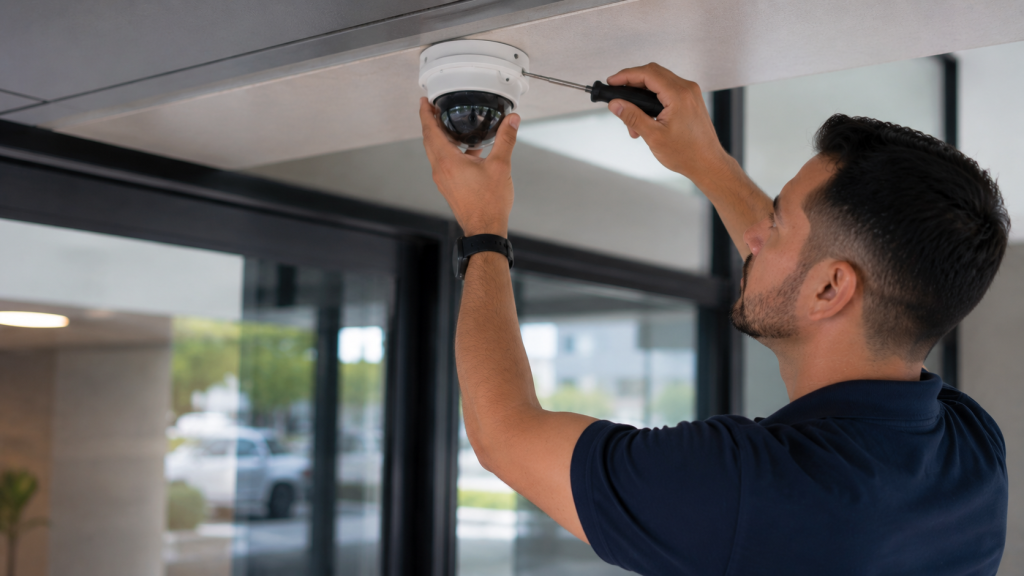
From that walkthrough comes a placement plan: how many cameras, where each one points, how the cable gets from there to the recorder. Runs go through ceilings, conduit and existing chases wherever possible, and get terminated and tested individually rather than bundled and hoped for.
Power comes next, either a PoE switch for IP cameras or a centralized supply for coax, with surge protection at the panel. Then the system gets configured: recording schedules, motion zones, retention, user accounts. Our CCTV system installers test every channel in daylight and again after dark, because a camera that reads a face at noon can be useless at the same angle at 9 p.m.
The last step happens with you on site. We walk the finished system, show how to pull recorded footage, and set up the mobile app before we leave. Technicians are licensed, the installation carries a 90-day mechanical warranty and a 12-month electrical warranty covering parts and labor, and phone and email support runs during business hours.
Recording, Storage and Remote Access
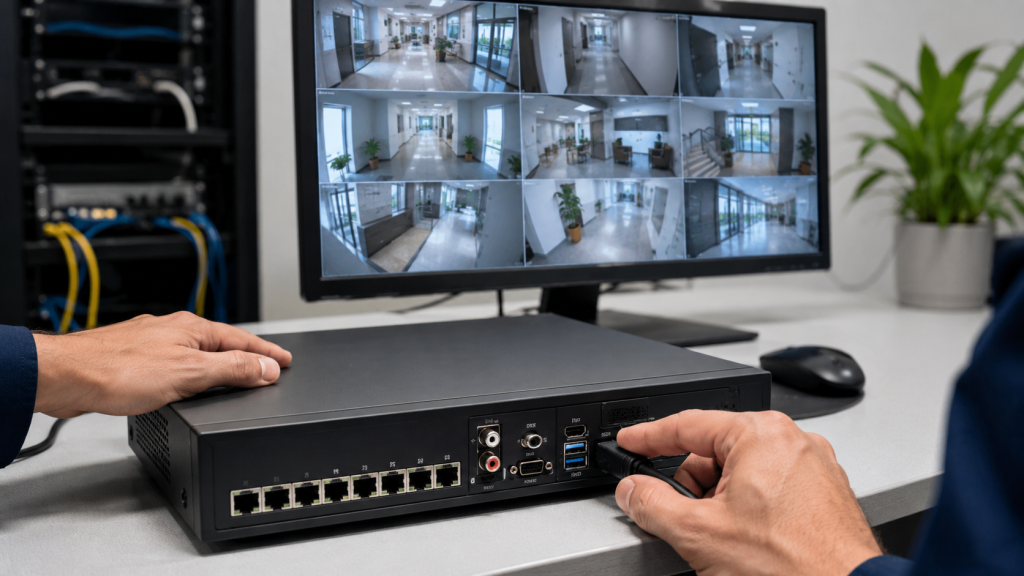
The recorder is the part of a CCTV installation that decides how much footage you actually have when you need it. IP cameras record to an NVR, coax cameras to a DVR, and hybrid units handle both. Retention is arithmetic: camera count, resolution and frame rate against drive capacity. When the drive fills, it overwrites the oldest footage, so a system sized for seven days will never give you a clip from three weeks ago. A sixteen-camera site recording at 4K fills a drive far faster than a four-camera storefront at 1080p, which is why retention gets settled before the recorder is ordered rather than after the first incident.
Remote access is set up on the phone and on a desktop, for live views and for pulling recorded clips. We configure unique passwords on every camera and on the recorder, keep surveillance traffic on its own network segment where the site has a managed switch, and update firmware at handover. Recorders can also feed other equipment already installed on the property, which is worth planning before the cable goes in rather than after.
Where We Install CCTV Systems
CCTV work in New York clusters around a handful of property types, and each one drives the layout. A retail floor and a loading dock ask for different mounting heights, different cable routes and a different recorder location, even when the camera count is identical.
Storefronts need the register, the entrance and the sidewalk gate covered, with the recorder tucked in a back room. Warehouses need the loading dock, the aisles and the back alley, usually with runs long enough to argue for coax. Apartment buildings need the lobby, mailboxes and basement door, plus access for the super without a phone call to the office. Parking garages need cameras placed for plate capture at the ramp, where light drops off fastest.
Offices and multi-tenant floors sit between those cases and often reuse existing cabling. Larger commercial sites with several buildings or shifts are covered on our page for camera systems built for business properties. Houses, townhouses and small residential buildings are a different scope, priced and laid out separately under residential camera work for homes.
Service Area
We cover all five boroughs and install within 75 miles of Midtown Manhattan, which reaches Westchester, Long Island and northern New Jersey. Response time for a site visit runs 20 to 40 minutes across most of the city, longer at the edges of that radius.
Downtown and Financial District work is scheduled through our Lower Manhattan service page, and jobs in Bay Ridge, Bushwick and the rest of the borough through our Brooklyn coverage. Multi-site clients with locations in more than one borough get one point of contact and one recorder configuration standard across every property.
CCTV Installation Questions
- Which camera brands do you install?
Uniview is our preferred manufacturer, and we install any other system available on the market after discussing it with you. Both IP and HD coax lines are covered.
- Can I keep the coax and cameras I already have?
The coax usually stays. Existing RG-59 and siamese runs carry HD video, so most analog upgrades reuse the cable and replace only the cameras and the recorder. Cameras themselves are worth replacing, since analog units cap out well below what the same cable can carry today.
- What recording and storage options do you offer?
Footage records locally to an NVR or DVR on site, with cloud and central station storage available as an addition. Drive capacity is sized to the retention period you ask for.
- Can I view my cameras from my phone?
Yes. Live and recorded footage is available through a free mobile app and from a computer, set up and tested with you during the final walkthrough.
- Is the installation covered by a warranty?
New installations carry a 90-day mechanical warranty and a 12-month electrical warranty, both covering parts and labor.
- What does CCTV installation cost?
Pricing is labor plus material in one total figure, quoted after a site walkthrough. Larger jobs run on a partial deposit up front with the balance due on completion.
- What is your service area?
We install within 75 miles of Midtown Manhattan, covering all five boroughs plus Westchester, Long Island and northern New Jersey, for residential, commercial, industrial and municipal properties.
Related Security Services
Cameras that have stopped recording, lost focus or dropped off the network are handled as repair work on existing camera systems rather than a new install. The full list of what we install and service in New York sits on the security systems overview.
What our clients say