
- Home
- Security System
- Alarm Systems
Alarm System Installation in New York



Before You Sign
Since 1989, we’ve been securing homes and businesses across NYC and New Jersey with professional security solutions you can trust. Our licensed technicians provide 24/7 emergency service, using only the latest technology and backed by comprehensive warranties on all installations.


Why Homes and Businesses Put In an Alarm System
- A brownstone or walk-up owner wants contacts on the front door, the garden entry, and the fire escape windows, with a keypad inside the vestibule.
- Building management or a co-op board asks for a wireless system so nobody opens finished walls or runs conduit through a hallway.
- A storefront needs motion sensors and glass break detection covering the sales floor and the back door after closing.
- An office wants separate user codes per employee and zones that arm on different schedules.
- Someone takes over a leased space with an old panel and no code for it, and starts fresh.
- An insurance carrier asks for a documented alarm system before writing or renewing a policy.
- A renovation is underway and the wiring can go in before the drywall closes up.
Alarm system installation covers the control panel, the sensors, the keypad, and the communication path that ties them together, set up for a house, an apartment, a storefront, or an office. Lock & Tech works across New York City and out to 75 miles from midtown Manhattan. A job runs from a walkthrough of the property to a tested system with the zones programmed and the app on your phone. Techs are licensed, the quote is labor plus materials, and the work is covered for 90 days on mechanical parts and 12 months on electronics.
What to Look For When You Hire an Installer
Start with the license. An alarm system installer working in New York holds a state license for security and fire alarm work, and should hand over the number without being asked. Ask who does the actual install too: some alarm system companies sell the job and subcontract the labor, and you find out only when something needs a service call.
Get the scope in writing before you sign. A real contract lists the panel model, the count of door and window contacts, the motion detectors, the glass break detectors, the communication path, and the total. A lump sum with no equipment list behind it gives you nothing to hold anyone to later.
A monitoring agreement is not a requirement for getting a system installed. Plenty of alarm systems companies bundle the two and quote a low install price against a three- or five-year monitoring term, so read the length, the auto-renewal clause, and the cancellation window before that part gets signed. Buying the equipment and the installation outright, then deciding on monitoring separately, is a normal way to do it.
Ask what happens after the handoff. Find out who picks up when a sensor drops offline on a Monday morning, whether service comes from the same crew that installed the system, and what the labor rate is once the warranty period ends. A security alarm system company that installs but hands service off to someone else leaves you with two numbers to call.
Then compare what the warranty actually covers. Lock & Tech backs new installs for 90 days on mechanical parts and 12 months on electronics, parts and labor both. Local alarm system companies differ here, and the gap between parts-only and parts-and-labor shows up on the first repair invoice.
What Is Inside an Alarm System
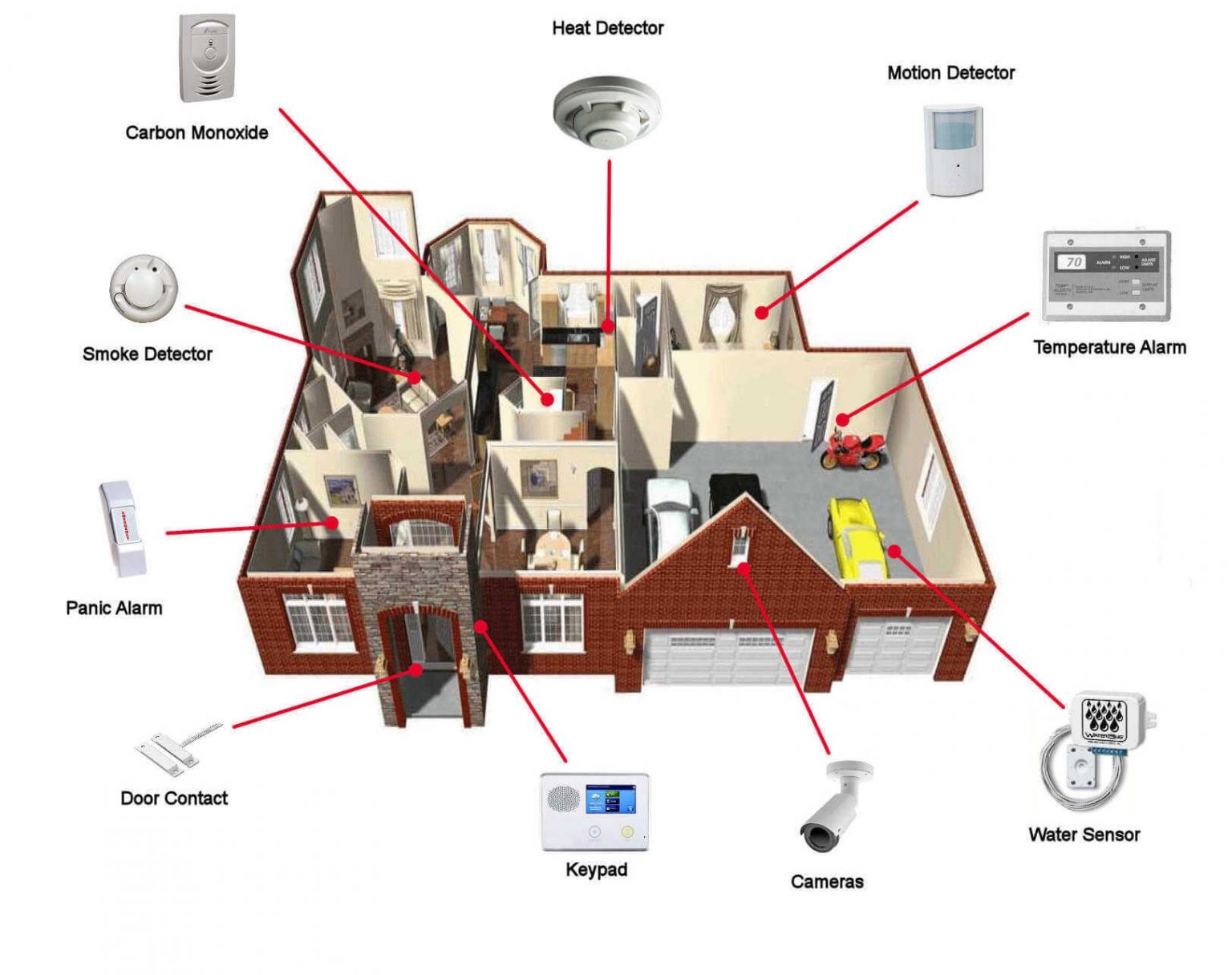
An alarm system is a control panel plus the devices that report to it. The panel holds the zone programming, arms and disarms, and sends signals out; everything else either feeds it information or reacts when a zone trips.
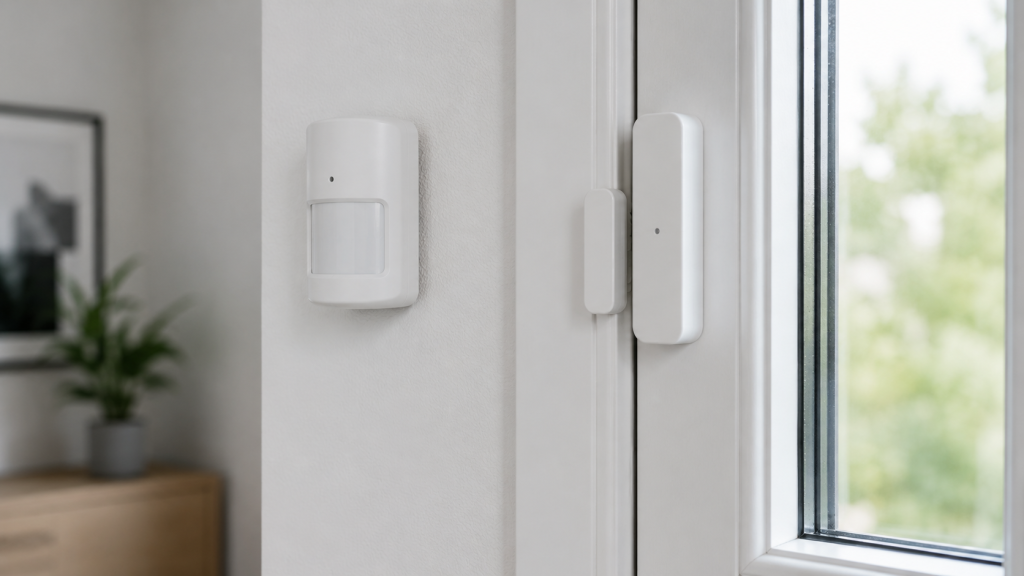
The standard device list looks like this:
- Door and window contacts — two-piece magnetic sensors on the front door, the back door, a garden entry, and any window reachable from a fire escape or a basement stair.
- Motion detectors — cover a room or a hallway instead of a single opening, with pet-immune versions that ignore animals under a set weight, usually 40 or 80 pounds.
- Glass break detectors — listen for the sound signature of breaking glass and cover a whole room from one spot, which suits storefronts and ground-floor windows.
- Smoke and carbon monoxide detectors — tie fire and CO events into the same panel, on zones that stay live whether the system is armed or not.
- Keypad — mounted by the door you use most, with a separate code per person so the panel log shows who armed and disarmed it.
- Siren — indoor, outdoor, or both, depending on whether the point is to drive someone out or to be heard from the street.
- Communication path — cellular radio, internet, or both; this is how the panel reaches anything outside the building.
Company alarm systems use the same parts and more of them. A storefront covers the sales floor, the back door, and a roof hatch; an office usually wants codes per employee and zones that arm on different schedules. A home leans toward fewer zones and remote arming from the app. Intrusion coverage on its own is the subject of our burglar alarm setup for houses and apartments, and larger commercial sites are handled under intrusion detection for warehouses, offices, and retail floors. Cameras, access control, and intercoms run alongside the panel and share the same app on most platforms.
Wired or Wireless
Wireless is the practical choice in a building that is already finished, and wired makes sense when the walls are open or the cable is already run.
In a prewar apartment, a brownstone, or a walk-up with plaster and original trim, wired sensors mean opening walls and patching them afterward, plus a sign-off from building management or a co-op board before anyone drills. Wireless devices mount with screws or adhesive on the frame and leave the finish alone, which is why most retrofit alarm systems installation in the city ends up wireless.
Wireless sensors run on lithium cells rated three to five years, and the panel names the device that is low instead of leaving you to hunt for it. Wired sensors draw power from the panel and need no cells at all; their weak point is the cable, and a nicked wire behind plaster is a harder fix than a battery swap.
Range is the other split. Wireless devices check in with the panel every few minutes and are supervised, so one that stops reporting shows up as a trouble condition rather than going quiet. Thick masonry, elevator shafts, and long runs to a garage or a rear building eat that range, and those are the spots where a wired run still wins.
New construction and gut renovations are their own case. Cable goes in before the drywall closes, nothing gets patched, and a single panel can carry wired and wireless zones on the same board.
How an Install Goes
To install an alarm system, a tech walks the property with you, marks what gets covered, and the plan from that walkthrough becomes the scope in the contract.
The walkthrough decides which doors take contacts, which windows are reachable from outside, where one motion detector covers a hallway instead of three separate rooms, and where the keypad goes so you can reach it inside the entry delay. A two-bedroom apartment usually lands between six and twelve zones; a storefront with a back door and a roof hatch runs higher.
That plan goes into a written contract with the equipment list and the price, signed before any work starts. Larger jobs take a partial deposit up front, with the balance due at completion.
On install day the panel gets mounted near power and the communication path, sensors go on, and the zones get programmed: entry and exit delays on the doors you actually use, instant trip on the rest, always-live zones for smoke and carbon monoxide detectors. Every device is then tested one at a time, each contact opened and each motion detector walked, with the signal confirmed at the panel.
The last step is the handoff. Alarm system installers show you arming and disarming, how to add or delete codes for family or staff, and what a trouble beep means, then set up the mobile app before they leave. The install is covered for 90 days on mechanical parts and 12 months on electronics.
What Drives the Price
An alarm system is quoted as labor plus materials, and the number moves with the device count more than with anything else.
- Zones and devices — every contact, motion detector, and glass break detector adds hardware and time; a perimeter with eight openings costs differently than one with twenty.
- Wired or wireless — wire pulls take hours and often patching, while wireless devices trade that labor for battery replacement every three to five years.
- Communication path — a cellular radio is extra hardware and a data account on top of the panel.
- Condition of the property — finished plaster, landmarked exteriors, and commercial spaces that require conduit all change the labor side.
- What else ties in — smoke and CO detectors, cameras, or an existing access control system add integration work.
The quote is written out before anything starts, and a job over a certain size takes a partial deposit. Later on, an alarm system service call is billed on its own once the warranty period has run, so it is worth asking for that labor rate at signing rather than at the first fault.
Panels and Platforms Used in New York
A short list of manufacturers covers most of what gets installed in the New York area, and any of them holds up when the system is sized and programmed properly.
Honeywell and its Resideo line are the most common panels in residential retrofits. Napco builds in Amityville on Long Island and turns up across city commercial work, which makes parts and support easy to source locally. DSC has a long install base in both houses and small commercial sites, DMP is common where a building needs many partitions and detailed user permissions, and Bosch shows up on larger and mixed fire-and-intrusion jobs. Alarm.com is not a panel at all — it is the platform that many of these panels report through for app control, notifications, and camera integration, so the same phone screen works across brands.
Service Area
Lock & Tech installs and services alarm systems within 75 miles of midtown Manhattan and reaches most addresses inside the city in 20 to 40 minutes.
That takes in all five boroughs, including work in the Financial District and Tribeca and coverage across Brooklyn brownstones and storefronts, along with Westchester, Long Island, and the closer parts of northern New Jersey. Office hours are 8 a.m. to 6 p.m. on weekdays, and phone and email support runs during those same hours. Alarm systems service for clients with several properties is scheduled across sites on one visit where the addresses allow it.
Questions We Get
What happens if the power or the internet goes out?
The panel keeps running on its backup battery, which carries a system for roughly 24 hours on standby. A panel with a cellular radio also keeps reporting when the internet is down, which is the main argument for cellular over an internet-only path.
Do I have to sign a monitoring contract to get a system installed?
No. The installation and the equipment can be bought outright, and monitoring is a separate decision you can make later or skip. The central station side of it — the operators who take the signal around the clock and dispatch — is covered on our central station monitoring page.
Can I arm and disarm the system from my phone?
Yes, on any current panel with an app platform behind it. You get arming, disarming, push alerts per zone, and user code management from the phone, and it gets set up during the handoff rather than left for you to configure.
Can smoke and carbon monoxide detectors run on the same panel?
Yes. They sit on always-live zones that report whether the system is armed or not, so a fire or CO event goes out the same communication path an intrusion does.
Is the installation under warranty?
Yes — 90 days on mechanical parts and 12 months on electronics, covering parts and labor both.
How many sensors does an apartment actually need?
Coverage starts with every door and every reachable window, which in a two-bedroom apartment usually means six to twelve devices. One motion detector in a central hallway often replaces three interior sensors, and a glass break detector covers a whole room facing a fire escape.
Related Services
An existing panel that faults, drops sensors, or locks you out is a repair and diagnostics job rather than a new install. Cameras, access control, intercoms, and everything else in the same category sit on our security systems overview.
What our clients say