Lighting and climate are two of the most direct influences on how comfortable a space feels — and two of the most wasteful when left unmanaged. Lights stay on in empty rooms. Thermostats run on fixed schedules that ignore whether anyone is home. Smart lighting control and smart climate control systems change this: they respond to occupancy, time of day, and the preferences of the people using the space. The result is a home or office that is more comfortable, more efficient, and easier to manage from anywhere.
This guide covers how smart lighting and climate control systems work, the types available, what they cost, and how professional installation in NYC delivers better outcomes than DIY approaches.
What Is Smart Lighting Control
Smart lighting control is a system that manages the intensity, color temperature, and on/off state of lights throughout a property — automatically, on a schedule, or through a smartphone, keypad, or voice command.
Unlike a standard wall switch that simply cuts or restores power to a light fixture, smart lighting control systems communicate with a central controller or hub that knows which lights are where, what they are doing, and what rules govern their behavior. A single scene command — “good morning,” “movie night,” “away” — can simultaneously dim the bedroom, brighten the kitchen, turn off every light on the upper floor, and activate exterior lighting, all without touching a single switch.
The term covers a range of technologies from basic smart bulbs connected to a Wi-Fi hub to enterprise-grade systems that manage hundreds of fixtures across a multi-story property. The right approach depends on the size of the space, the level of automation desired, and whether the system needs to integrate with climate control, security, and other home automation platforms.
Types of Lighting Control Systems
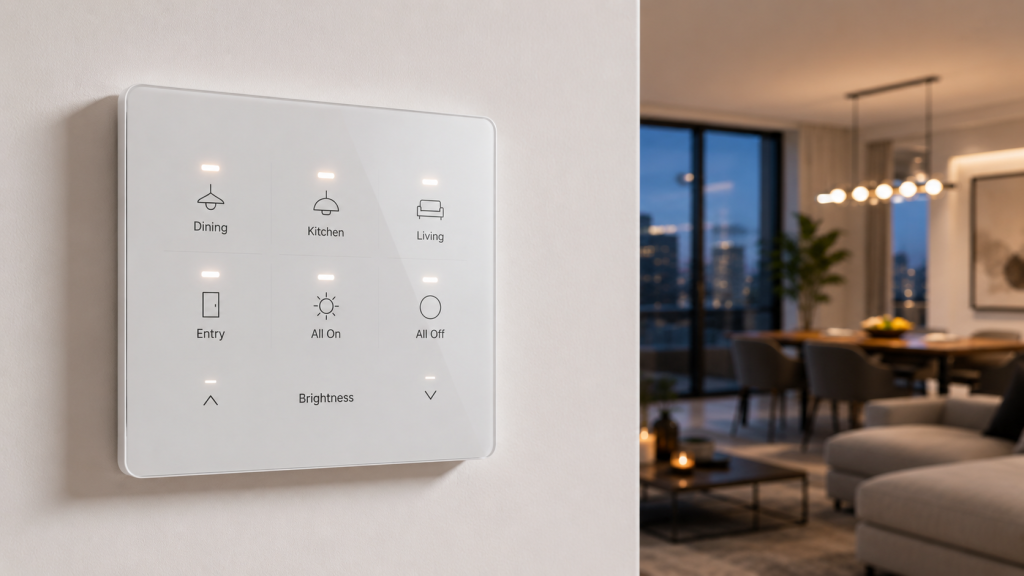
Understanding the types of lighting control systems helps you match the right technology to your property.
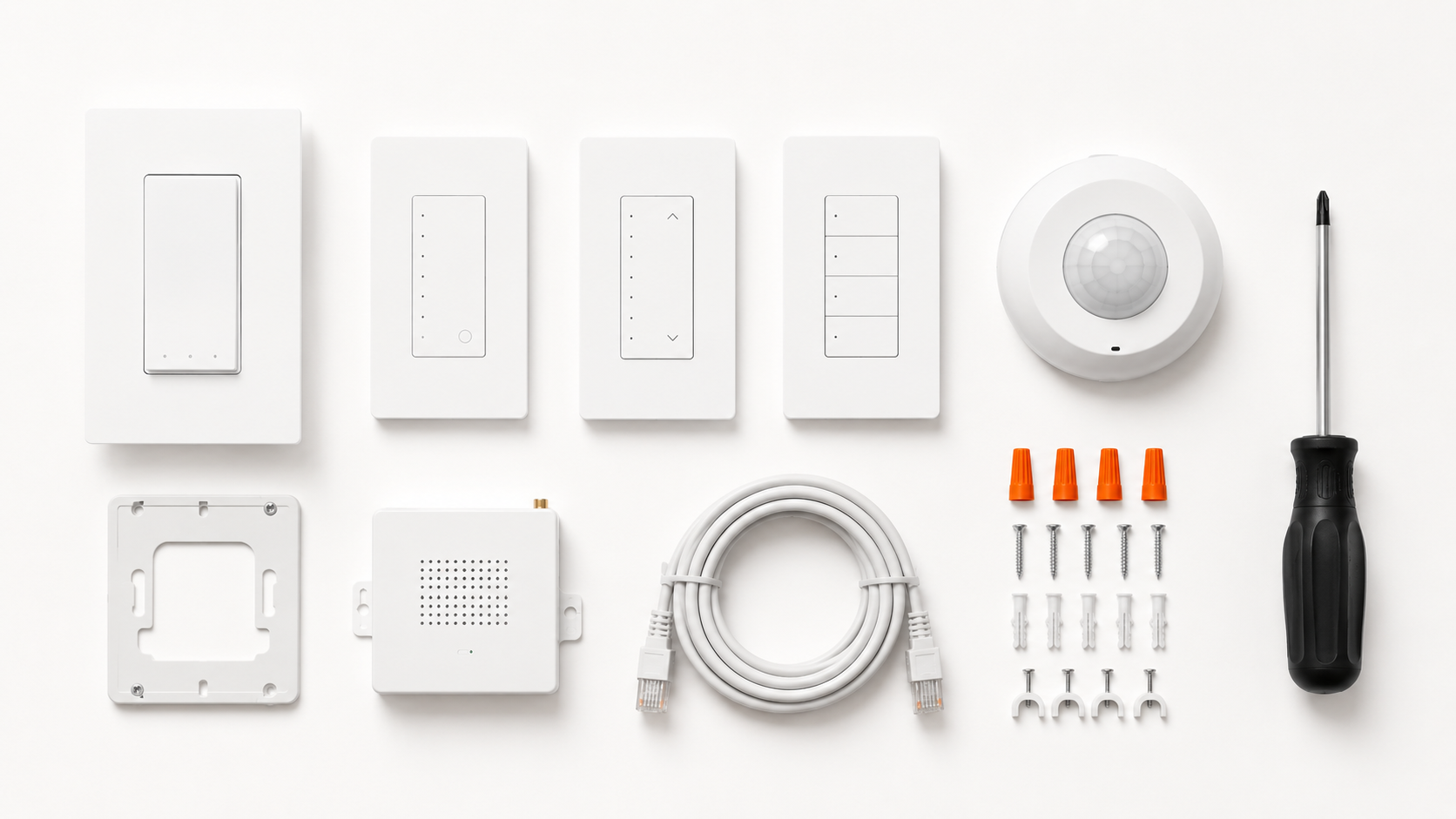
Wireless lighting control systems are the most practical choice for retrofitting existing homes and offices. Wireless dimmers, switches, and keypads replace standard wall plates without requiring new wiring to each fixture. They communicate via Z-Wave, Zigbee, or proprietary RF protocols with a central hub. A wireless lighting control system is faster to install and less invasive than wired alternatives, making it the dominant choice for finished NYC apartments, co-ops, and brownstones where opening walls is costly or restricted.
Wired lighting control systems use dedicated low-voltage control wiring run alongside or instead of standard line-voltage wiring. They offer the most reliable performance and are the preferred choice for new construction, full renovations, or high-end installations where absolute reliability and clean aesthetics are the priority. Professional-grade wired systems can operate across hundreds of fixtures in a single property with zone-by-zone control managed from a central panel.
Professional lighting controllers span a wide range from entry-level dimmers compatible with most smart home platforms to enterprise-grade systems for larger properties requiring precise control of hundreds of fixtures across multiple zones. Professional-grade controllers are designed for compatibility with LED, incandescent, halogen, and fluorescent fixtures and produce smooth, flicker-free dimming that consumer-grade alternatives cannot match.
DMX lighting control systems are used primarily in commercial and hospitality environments requiring precise color and intensity control across large numbers of fixtures. They are common in restaurants, event spaces, hotel lobbies, and retail environments where lighting is a designed experience rather than just illumination.
Intelligent lighting control systems combine occupancy sensors, daylight harvesting sensors, and time-based scheduling to manage lighting automatically without user input. They are standard in commercial buildings seeking LEED certification or energy efficiency compliance, where documented energy savings justify the higher upfront investment.
Benefits of Smart Lighting Control
Energy efficiency. Lights that respond to occupancy never waste electricity in empty rooms. Daylight harvesting reduces artificial light levels when natural light is sufficient. Dimming to 80% extends LED lamp life significantly and reduces energy draw. In a typical NYC home, smart lighting reduces lighting energy consumption by 30 to 40% annually.
Convenience. Single-button scene control eliminates the need to adjust multiple switches. Remote control from any location means lights are never left on accidentally after leaving the house. Scheduled automations handle routine adjustments without any user action.
Security. Automated lighting schedules simulate occupancy when a property is empty, one of the most effective deterrents against opportunistic break-ins. Integration with alarm systems means lights can activate the moment a sensor triggers — exterior lights turning on during an unexpected door open at 2 AM is a powerful deterrent and an immediate visual alert.
Ambiance and comfort. Dimming capability and color temperature adjustment transform how a space feels at different times of day. Bright, cool-temperature light in a home office supports focus and reduces eye strain. Warm, dim lighting in the evening signals the body to wind down. This is the difference between a property with switches and a property with designed lighting environments.
A Day with Smart Lighting
The practical value of a smart home lighting control system becomes clear when you see how it handles an ordinary day without requiring any conscious input.
At 6:30 AM, bedroom lights gradually brighten over 20 minutes, simulating a sunrise and making the transition out of sleep less abrupt than a jarring alarm. The bathroom lights come on at full brightness. The kitchen is at 80%.
By 9:00 AM, the system detects everyone has left. Every light in the house turns off. The away scene activates.
At 6:00 PM, the system detects someone entering through the front door. The hallway and kitchen lights activate at welcoming levels. The living room comes on at 60%.
At 10:00 PM, the nighttime scene activates. All overhead lights turn off. Accent lighting drops to a low warm level. The exterior lights activate on motion-detection mode. The system is ready for the next morning.
None of this requires pressing a button. The lighting control system design handles it based on schedules, occupancy inputs, and the rules configured during installation.
What Is Climate Control in a Smart Home
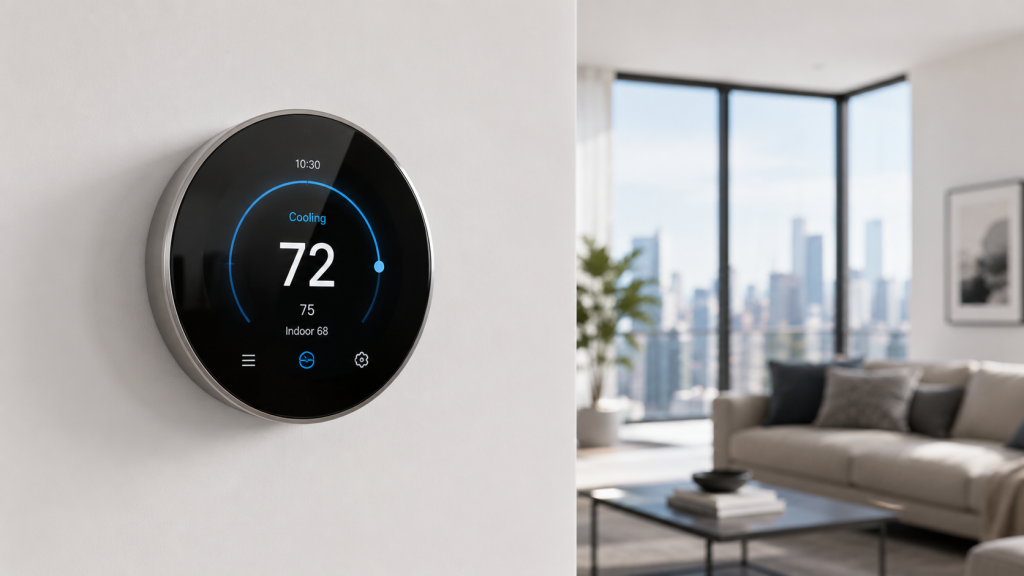
In a smart home context, climate control refers to the automated management of heating, cooling, and ventilation — adjusting temperature, humidity, and airflow based on occupancy, time of day, outdoor conditions, and user preferences, rather than on a fixed thermostat schedule.
Climate control meaning goes beyond a programmable thermostat. A smart climate control system connects to your HVAC equipment, monitors multiple zones independently, responds to occupancy sensors, integrates with your smart home platform, and can be managed remotely from any device.
A smart climate control system for a typical NYC home or apartment involves smart thermostats with occupancy detection, zone-level temperature management for multi-floor properties, integration with motorized shades that adjust based on solar exposure to reduce heating and cooling load, and remote management via app for properties that are occupied intermittently.
The practical impact is significant: heating and cooling account for 40 to 50% of residential energy use. A system that stops conditioning unoccupied spaces and responds to actual occupancy patterns — rather than a fixed schedule that may or may not match real behavior — delivers energy savings of 15 to 25% annually according to EPA estimates for smart thermostat adoption.
How Lighting and Climate Control Work Together
The most efficient approach treats lighting and climate control as a single integrated system rather than two separate products.
Motorized shades integrated with both lighting and climate control adjust automatically based on time of day and solar position. In summer, shades close during afternoon hours to block direct solar heat gain, reducing cooling load. The lighting system compensates by increasing artificial light levels slightly — maintaining consistent illumination without the thermal cost of direct sun. In winter, the logic reverses: shades open to capture solar heat, and artificial lighting adjusts accordingly.
Occupancy sensors serve both systems simultaneously. When a room is vacated, lights turn off and the HVAC system reduces conditioning in that zone. When someone enters, both systems activate. A single sensor installation serves two purposes.
Scene-based control creates environments that feel cohesive. The “movie” scene dims lights to a warm low level, drops the temperature slightly, and closes the motorized shades. The “work from home” scene sets lights to bright and cool, the temperature to the preferred working range, and opens the shades to maximize natural daylight. Both happen with a single command.
Lighting Control System Design and Installation
Professional lighting control system design starts with a lighting plan — identifying every fixture, its purpose, its dimming requirements, and the scenes it participates in. This is not simply mapping switches to fixtures; it is designing how the space is experienced at every hour of the day under every use condition.
The design phase for a complete NYC home or apartment covers: fixture inventory and compatibility check (not all LEDs dim cleanly on all dimmers — incompatibility causes flickering and buzzing), zone mapping (which fixtures are grouped, which operate independently), scene definition, occupancy sensor placement, and keypad layout for manual override.
Installation for a wireless system in a finished apartment involves replacing standard dimmers and switches with smart controllers, installing occupancy sensors in key zones, connecting the hub to the home network, and commissioning each device in the system software. A 10 to 15 room apartment typically takes one to two days.
Climate control installation involves replacing or upgrading thermostats with smart units, verifying compatibility with the existing HVAC equipment, configuring zone sensors, and integrating the climate system into the same home automation platform as lighting.
For new construction or full renovations, wired systems are designed alongside the electrical plans, installed before drywall, and commissioned after fit-out.
Costs for Lighting and Climate Control Systems
Wireless lighting control systems for homes: $60 to $150 per switch or dimmer for professional-grade wireless hardware, plus $75 to $150 per device for installation and configuration. A 10-room apartment using 15 to 20 dimmers and switches runs $2,000 to $5,000 fully installed.
Wired lighting control systems for larger properties or new construction: $150 to $400 per device point, with total installed costs for a complete multi-room system ranging from $8,000 to $25,000 depending on fixture count and system complexity.
Smart climate control: $150 to $350 per smart thermostat with occupancy sensing, plus $100 to $200 per unit for professional installation and integration. A multi-zone system covering 3 to 4 thermostats runs $1,000 to $2,500 installed.
Integrated lighting and climate: Designing both systems together on a shared platform costs more upfront but significantly less than retrofitting the integration later. Budget $5,000 to $20,000 for a complete integrated installation in a typical NYC apartment or townhouse.
Frequently Asked Questions
What is smart lighting control and how does it work?
What is climate control in a smart home?
What is the best lighting control system for a home?
Can smart lighting control be installed in an existing NYC apartment?
How much does a smart lighting control system cost?
Does smart lighting control work without internet?
Smart Lighting and Climate Control Installation in NYC
Lock and Tech designs and installs smart lighting and home automation systems throughout New York City and New Jersey. We work with professional-grade lighting and climate control platforms from our trusted manufacturer partners, handling system design, device installation, programming, and integration as a complete service.
Every installation begins with a lighting plan that maps fixtures, zones, scenes, and keypad locations before any equipment is ordered. Our technicians are familiar with the electrical constraints of pre-war NYC apartments, the requirements of co-op and condo boards, and the NYC building code considerations that affect low-voltage installation work.
Whether you need a single-room dimming upgrade or a whole-property integrated lighting and climate system, contact Lock and Tech to schedule a free site assessment and get a quote for your NYC property.