CCTV stands for closed-circuit television — a video surveillance system in which the footage travels to a defined, private set of recorders and screens instead of being broadcast openly. The word “closed” is the whole point of the name: only the people the system owner authorizes can see what the cameras see. This guide covers what the abbreviation means, what a CCTV system is made of, how the signal actually travels from lens to screen, and where CCTV ends and IP security cameras begin.
What Does CCTV Stand For?
The abbreviation expands to closed-circuit television. It was coined to distinguish this kind of video from the broadcast television that existed alongside it, and the distinction it draws is still the most useful way to understand what the technology does.
Closed-Circuit vs Broadcast Television
Broadcast television sends a signal outward to anyone with a receiver tuned to it. A closed circuit does the opposite: the signal travels along a defined path — camera to recorder to monitor — and stops there. Nobody outside that circuit receives the feed. That closed path is what makes the footage private, and it is why the name stuck even as the underlying technology changed completely.
Why the Term Is Still Used Today
Almost nothing about modern surveillance resembles the analog systems the term was invented for. Footage is digital, cameras sit on computer networks, and the “television” in the name is usually a phone screen. The term survives because the principle survives: access to the video is restricted to whoever controls the system. In everyday use, “CCTV” has simply become the general word for a professionally installed surveillance system, whether the underlying cameras are analog or networked.
What Is a CCTV Camera?
A CCTV camera is the device that captures the video, but it is only one part of the system. Cameras get most of the attention in product comparisons, and they are rarely the component that determines whether a system works.
Dome, Bullet and PTZ Cameras
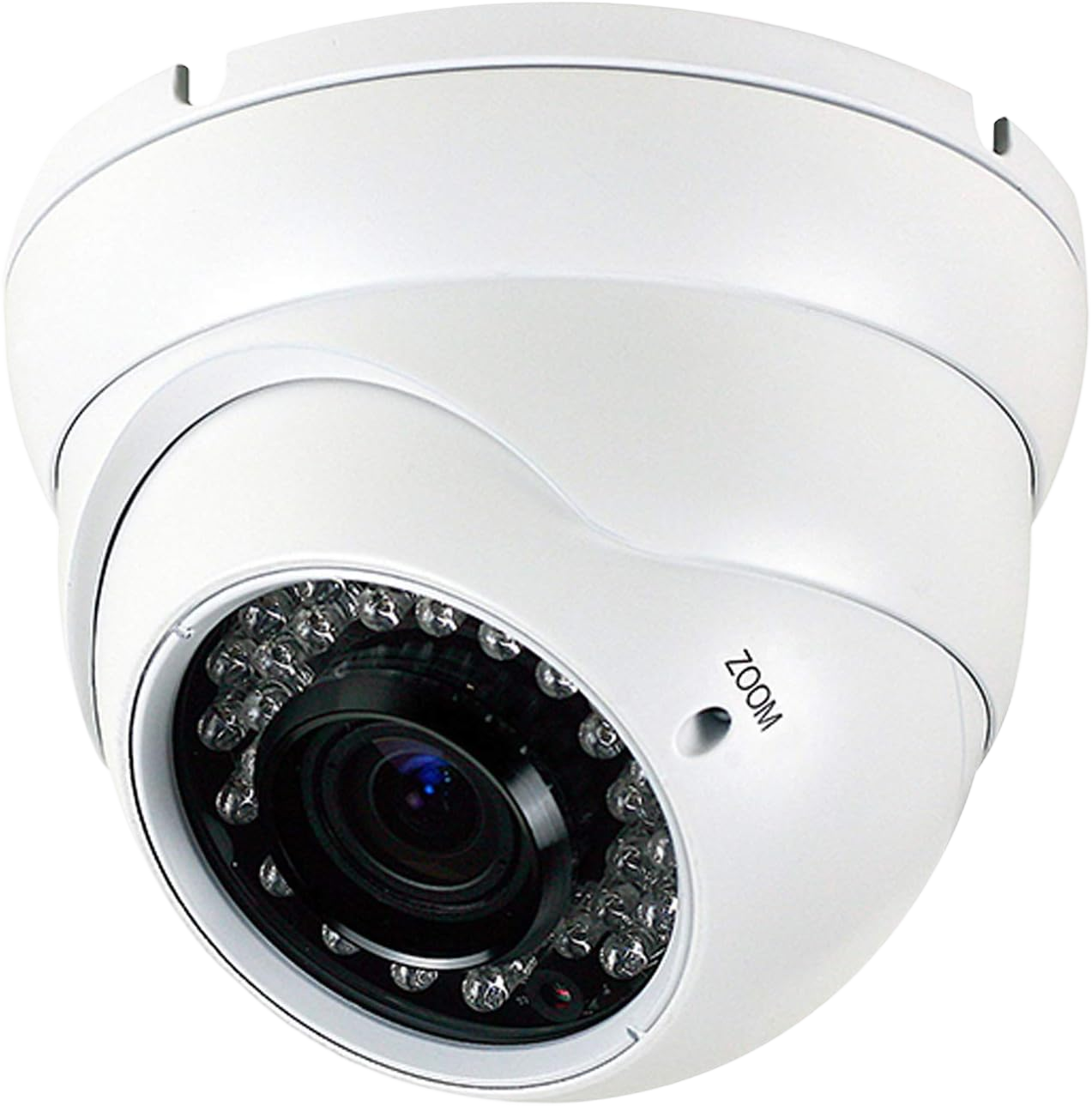
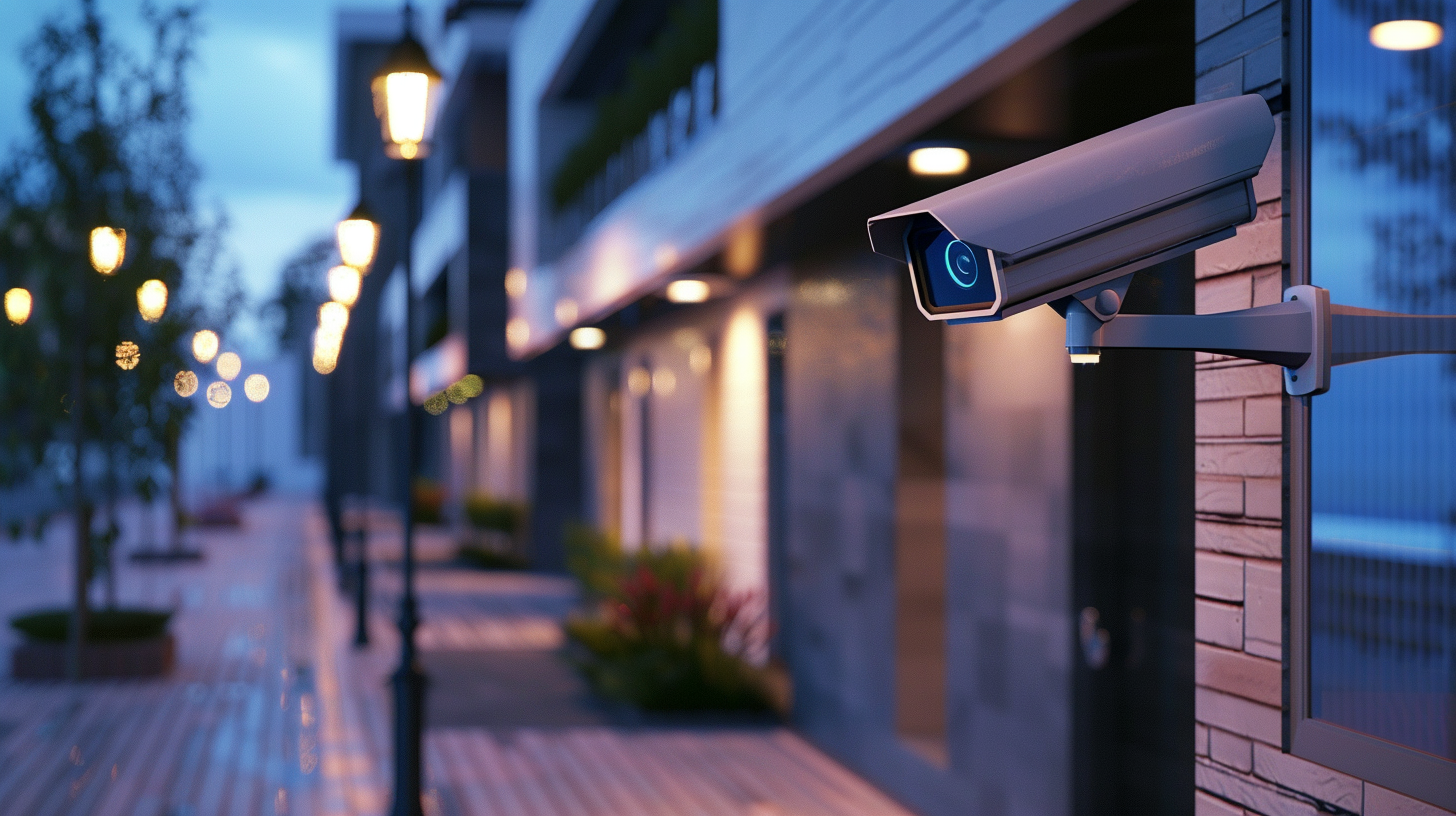
Three form factors cover most installations. Dome cameras sit flush against a ceiling in a tinted housing, which makes them discreet and hard to tell where they are aimed — the usual choice for interiors, lobbies and retail floors. Bullet cameras are the visible cylindrical units mounted on a bracket; they cover longer distances and act as a deterrent precisely because everyone can see them. PTZ cameras pan, tilt and zoom under remote or automatic control, covering a wide area from a single position, which suits parking areas, yards and large open spaces.
What Modern CCTV Cameras Can Do
Beyond resolution, the features that change how useful a camera is in practice are infrared night vision for low-light hours, wide dynamic range for scenes with both bright and dark areas — a lobby facing a glass door, for example — motion detection that triggers alerts and recording, and remote viewing from a phone or browser. Higher resolution helps only up to a point; a 4K camera aimed at the wrong angle produces very detailed footage of nothing useful.
Where Cameras Actually Belong
Placement decides what a system is worth far more than specifications do. Entry points, the paths between them, and any area where something valuable sits cover most of the need, and coverage is judged by whether a person crossing the property can be followed from frame to frame without gaps. Our guide to security camera placement works through the angles and blind spots in detail.
What Is a CCTV System Made Of?
A complete system has five parts, and a weakness in any one of them limits everything else. The most common disappointment comes from spending heavily on cameras and treating the rest as an afterthought.
Cameras and Coverage
The cameras and where they point define what the system can ever record. Everything downstream only stores and delivers what was captured in the first place, so coverage planning comes before equipment selection rather than after it.
DVR and NVR Recorders
The recorder stores the footage and is what you interact with when something needs to be reviewed. A DVR — digital video recorder — works with analog cameras and processes the video at the recorder itself. An NVR — network video recorder — works with IP cameras that process video in the camera and send it over the network. The practical difference is capacity and flexibility: NVR systems handle higher resolutions and scale more easily, while DVR systems are less expensive and work over existing coaxial cable.
Cabling, Power and Network
The least visible component and the one that causes the most failures. Analog systems run on coaxial cable with separate power; IP systems typically use a single Ethernet cable that carries both data and power over one run. Cable quality, run length and termination determine whether a camera drops out intermittently — and intermittent dropouts are far harder to diagnose than a camera that fails outright.
Monitors and Remote Access
Live viewing happens either on a dedicated monitor on site or through an app. Remote access is standard now, but it is also the point where the closed circuit opens up to the internet, which is why default passwords and outdated firmware on recorders are the most common security weakness in surveillance systems.
Monitoring
Recording and monitoring are different things. A system that records gives you footage to review after an event. A system connected to a central station is watched by operators around the clock, so an alert produces verification and a response while the event is still happening. Central station monitoring is what turns stored video into an active response.
How a CCTV System Works, Step by Step
The sequence is short. The lens captures the image and the sensor converts it into a digital signal. In an IP camera, encoding and compression happen inside the camera; in an analog setup, the signal travels to the recorder and is processed there. The recorder writes the stream to its hard drive, indexed by camera and timestamp, and simultaneously makes a live view available to any authorized monitor or app.
Two practical points follow from that sequence. First, storage is finite: recorders overwrite the oldest footage once the drive fills, which is why retention is measured in days rather than kept indefinitely. Typical setups hold somewhere between one and four weeks depending on drive size, camera count, resolution and whether recording runs continuously or only on motion. Second, if the recorder loses power or its drive fails, the cameras keep capturing and nothing gets kept — which is why the recorder, not the camera, is the component worth having redundancy on.
CCTV vs IP Security Cameras
These two terms get used interchangeably, and in ordinary conversation that is fine. Technically the distinction is about how the video travels rather than about how good the cameras are.
| Traditional CCTV (analog) | IP cameras | |
|---|---|---|
| Signal path | Coaxial cable to a DVR | Network cable to an NVR or switch |
| Where video is processed | At the recorder | Inside the camera |
| Resolution ceiling | Lower, limited by the analog signal | Higher, limited by network capacity |
| Power | Separate power run per camera | Usually one cable for data and power |
| Expanding the system | New cable run per camera | Add to the existing network |
| Typical use | Existing installations, cost-sensitive projects | New installations, higher detail requirements |
Most systems installed today are IP-based, and most are still called CCTV. Existing analog infrastructure often stays in place because replacing the cabling costs more than the cameras do, and hybrid recorders let both types run side by side. The full comparison is in our guide to IP vs analog cameras.
What Is CCTV Used For?
The purpose is consistent across property types — deter, observe, document — but what that looks like in practice differs.
Homes. Entry points, the front door and wherever deliveries are left. In a house, the perimeter matters; in an apartment, coverage usually starts and ends at the door because everything beyond it belongs to the building.
Businesses. Entrances, the sales floor or work area, storage, and the register or cash-handling point. Retail and hospitality also use footage for disputes and insurance claims, which makes timestamp accuracy and retention length more important than they seem.
Buildings and property management. Lobbies, vestibules, service entrances, stairwells, laundry rooms and parking. In New York’s multi-unit buildings these shared areas are where most incidents actually occur, and coverage there is typically the building’s responsibility rather than any individual resident’s — which is also why camera work in common areas usually requires management or board approval before anything is mounted.
Frequently Asked Questions
What does CCTV stand for?
CCTV stands for closed-circuit television. The name describes a video system whose signal travels along a private, defined path to specific recorders and screens rather than being broadcast to anyone with a receiver.
What does CCTV mean in simple terms?
It means a camera system that only its owner can watch. The video goes to a recorder and to authorized screens, and nobody outside that circuit receives it.
Is CCTV the same as a security camera?
In everyday use, yes. Technically CCTV describes the closed system as a whole, while “security camera” describes a single device that may or may not be part of one. A standalone Wi-Fi camera streaming to a cloud account is a security camera but not, strictly speaking, a closed circuit.
Does CCTV need internet to work?
No. Cameras and recorder work over their own local connection and keep recording without internet. What internet adds is remote viewing, alerts to your phone, and off-site backup. Lose the connection and the system still records; you simply cannot watch it from elsewhere.
How long does CCTV footage stay stored?
Until the recorder’s drive fills and begins overwriting the oldest files, which for most installations falls somewhere between one and four weeks. Retention depends on drive capacity, how many cameras there are, what resolution they record at, and whether recording is continuous or motion-triggered.
What is the difference between DVR and NVR?
A DVR receives raw video from analog cameras over coaxial cable and processes it at the recorder. An NVR receives video that IP cameras have already processed and sends over a network cable. NVR systems support higher resolutions and expand more easily; DVR systems cost less and reuse existing coaxial wiring.
Choosing and Installing a CCTV System
The decisions that matter are coverage first, then recorder and retention, then camera type — in that order, because the last one is the easiest to change later. Costs scale mainly with camera count and with how difficult the cable runs are, and our breakdown of CCTV installation pricing by number of cameras shows how that adds up. If you would rather have the coverage planned before anything is bought, our team handles CCTV installation for homes, businesses and multi-unit buildings across New York City and New Jersey.