- Home
- Security System
- Alarm Monitoring Services
Alarm Monitoring Services in New York



in New York
Since 1989, we’ve been securing homes and businesses across NYC and New Jersey with professional security solutions you can trust. Our licensed technicians provide 24/7 emergency service, using only the latest technology and backed by comprehensive warranties on all installations.


Alarm monitoring services connect an installed alarm system to a central station that receives signals every hour of the day and acts on them. Lock and Tech USA sets up alarm monitoring for apartments, brownstones, co-ops, storefronts, offices, and industrial buildings across New York City and within 75 miles of midtown Manhattan. Monitoring covers burglary, fire and smoke, carbon monoxide, water, temperature, panic, and tamper signals. The subscription pays for watching and response, and it is separate from the equipment work that puts the system in.
What Happens When Your Alarm Goes Off
A tripped sensor sends a signal to the central station in a few seconds, and an operator picks it up as it lands. The operator sees what the panel reported: which zone opened, which sensor type fired, and the time stamp. Verification starts from there, and the steps are written into your account before the first signal ever arrives.
The first step is your contact list. The operator calls your numbers in the order you set and asks for your passcode. Security alarm monitoring runs on that sequence rather than on a guess about what the sensor meant. If you confirm a break-in, or if nobody picks up, the operator requests NYPD response on an intruder alarm monitoring signal and FDNY response on fire and smoke. Each signal type has its own protocol, so a carbon monoxide alert and a rear door contact do not get handled the same way.
Most signals turn out to be false: a propped service door, a cleaner who forgot the code, a smoke detector mounted too close to a stove. Answer the call, give the passcode, and the operator cancels the sequence and logs the event. A cancelled signal never becomes a dispatch, which matters in a city where repeat false alarms bring fines to the property owner.
You own the contact list, and you decide who is on it. Most New York accounts list two or three people plus a super or building management, because someone with lobby and stairwell access can reach the panel faster than an owner sitting in an office across town. Send us changes when a tenant moves out or a phone number dies, and we update the account during business hours, 8 a.m. – 6 p.m. on weekdays. On a service call to the panel itself, a technician gets to you in 20 to 40 minutes.
How the Central Station Works
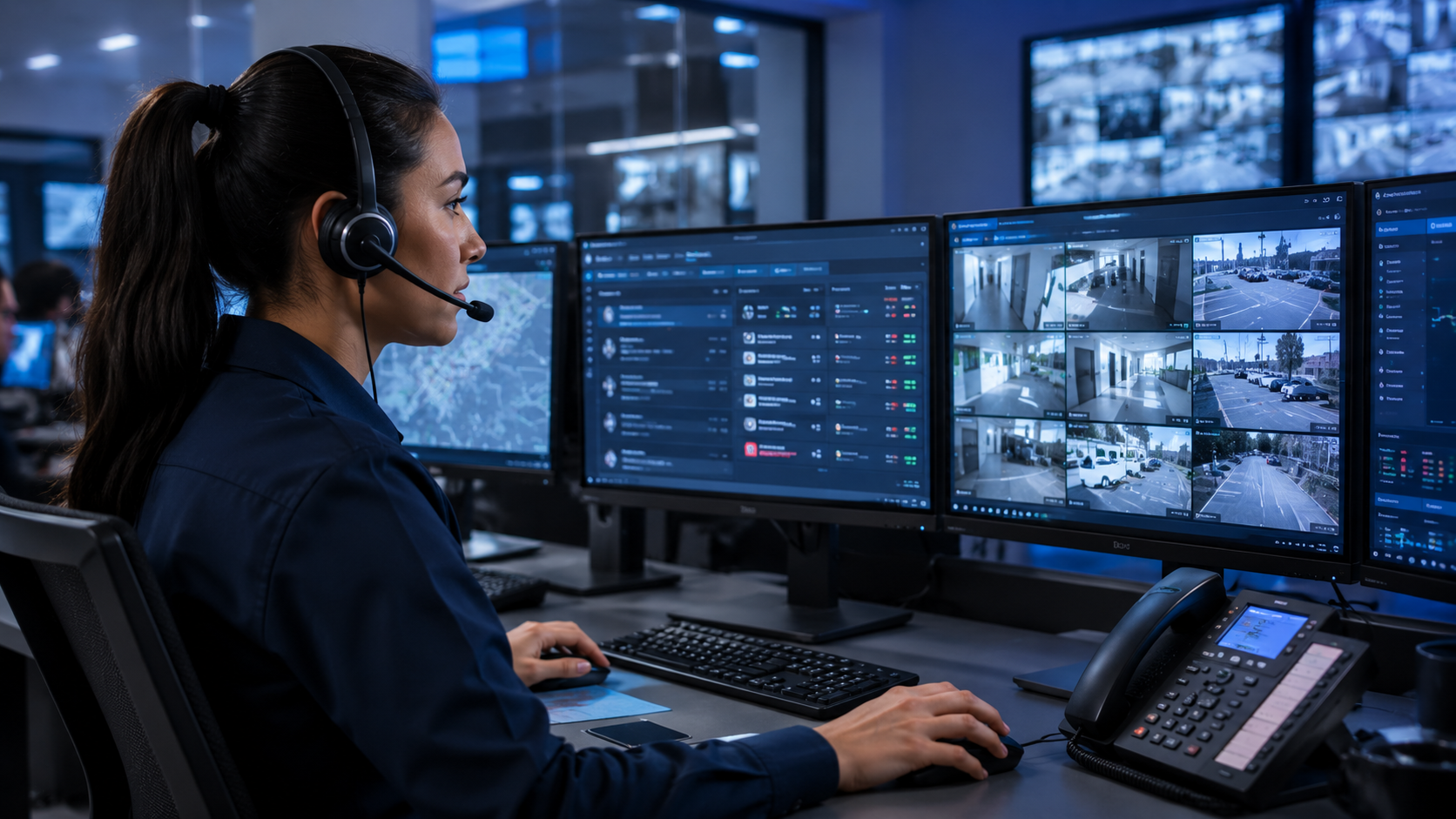
The central station is where alarm system monitoring actually happens. Signals from every account land on receivers there, get matched to the address on file, and go into a queue that operators work through by priority. Fire and panic signals move ahead of trouble and supervision messages, so a smoke alarm never waits behind a low-battery report.
Stations that handle monitoring alarm systems at this level are built around redundancy. Receivers are duplicated, power runs through battery backup and a generator, and phone and internet routes come in on separate carriers. A second station in another region can pick up the load if the primary one drops, which is the reason signal handling continues through a storm or a regional outage.
Operators work from a script per signal type, not from judgment in the moment. The script sets the order of calls, how long to wait between them, when to request emergency response, and what to enter in the log. Every action on your account is time stamped, so the record shows when the signal arrived, who was called, and when responders were requested. That log is what an insurance carrier asks for after a claim, and it is available to you on request.
Signal handling at the station runs 24 hours a day, every day of the year. Technician visits, phone and email support, and account changes at Lock and Tech USA run 8 a.m. – 6 p.m. on weekdays.
Which Signals Are Monitored
An account can carry any signal the panel is wired to report. Each one is tied to a response protocol at the station, and you decide which ones go on the account when we program it.
- Burglary and intrusion: door and window contacts, motion sensors, glass break detectors.
- Fire and smoke: detectors, heat sensors, and pull stations, routed to FDNY response.
- Carbon monoxide: detectors that report the alarm state, not just a local siren.
- Water and flood: sensors under sinks, near boilers, and in basements that flood in heavy rain.
- Temperature: high and low limits, used in restaurants, server rooms, and vacant units in winter.
- Panic and hold-up: fixed buttons and pendants that call for police response with no verification call.
- Tamper and supervision: an opened panel enclosure, a cut cable, or a sensor that stops reporting in.
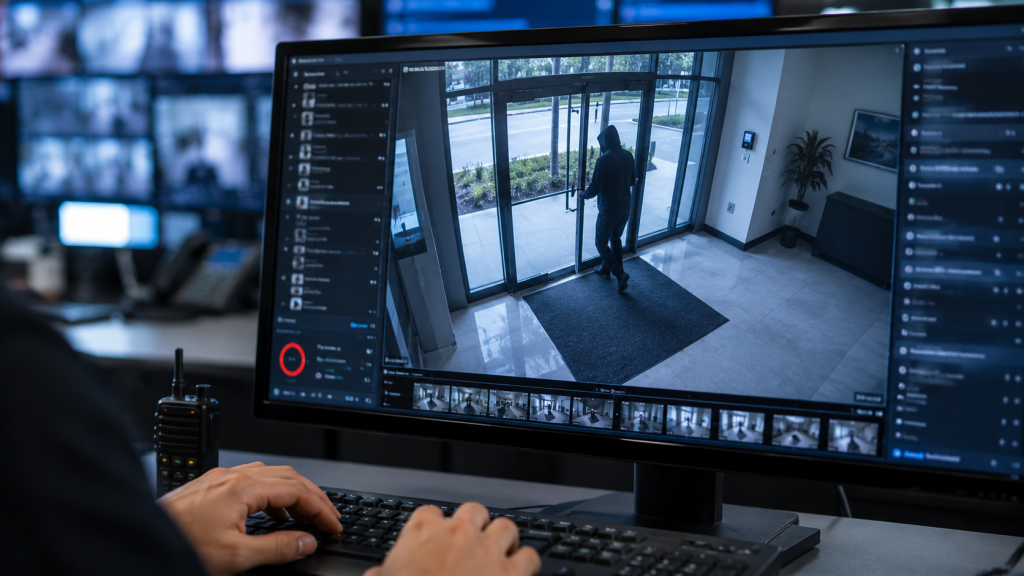
Cameras add a verification layer on top of those signals. When cameras are tied to the account, an operator can look at the clip from the zone that fired and confirm whether someone is actually inside before requesting police, and remote alarm monitoring through an app lets you check the same view yourself. Camera work, from equipment to placement, is covered on our security camera installation page.
What Alarm Monitoring Costs
The monthly fee is built from four things: the number of zones on the panel, the communication path, the list of signal types on the account, and whether video verification is attached. A one-bedroom apartment with eight zones and a cellular communicator sits at the low end. A storefront with fire, temperature, panic, and camera verification across two floors sits at the top.
Property type moves the number too. Commercial accounts usually carry more signal types, longer contact lists, and multi-site reporting, and all three add operator work per event. Alarm monitoring companies price that work differently, so a quote is worth reading line by line rather than by headline number.
Low-priced plans exist, and the cut usually shows up in one of three places: the panel reports over the internet with no cellular backup, the contact list is capped at one or two numbers, or verification is skipped and every signal goes straight to dispatch. Ask any monitoring company which of those applies before comparing fees.
The subscription is not the same money as the install. Equipment and installation are quoted as labor plus material, with a partial deposit on larger jobs and a signed contract before work starts, and that side of the job is covered on our alarm system installation page. Installation carries a 90-day warranty on mechanical parts and 12 months on electronics. After handoff, a licensed technician walks you through the panel on site and sets up the mobile app.
Communication Paths and Backup
The panel has to reach the station for any of this to work, so the communication path is worth more attention than the sensor count. Three paths are in use in New York buildings: an internet connection, a cellular radio, and a legacy phone line. Copper phone service is on its way out across the city, and panels still reporting over it lose their route the day the line is retired.
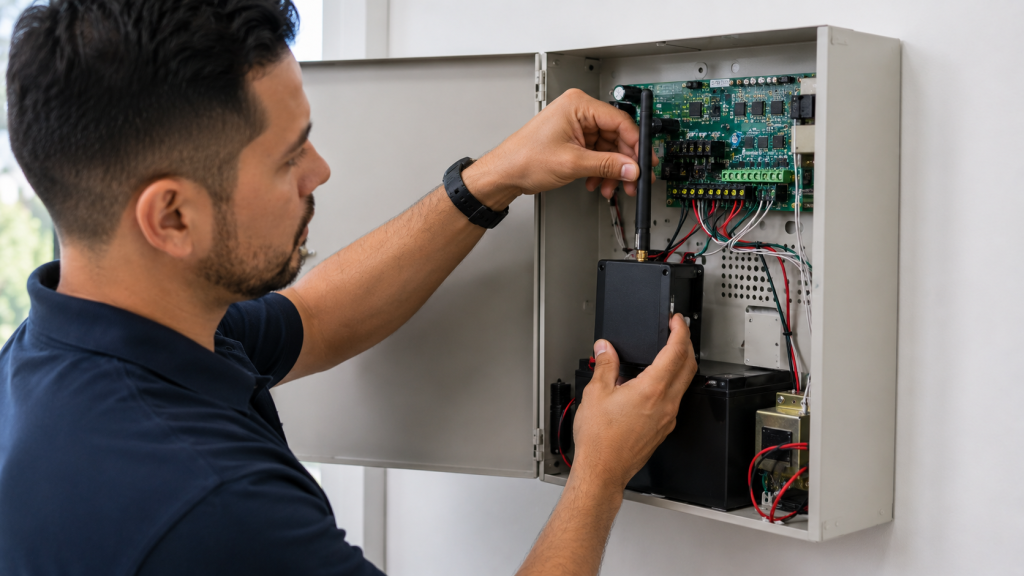
Dual-path covers the gap. The panel reports over the internet as the primary route and switches to cellular within seconds when the router loses service, the modem is unplugged, or the line into the building is cut. The station also watches the path itself: if a panel stops checking in on schedule, that silence generates a supervision signal and an operator calls you before anyone notices the system went dark.
Panels handling alarm monitoring service in this market are usually Honeywell or Resideo, Napco, DSC, DMP, or Bosch, and most of them report to Alarm.com for app access and event history. Contractors here work with that set because parts and communicators stay available for them.
Homes and Commercial Properties
Residential and commercial accounts run on the same station and differ in what gets watched and who gets called. A home account is built around a short contact list, entry points, and fire. A commercial account adds staff codes, opening and closing reports that show when the storefront was unlocked, temperature limits on refrigeration, and a call list that includes management rather than a family member.
Requirements often come from outside the owner. Insurance carriers write central station monitoring into policies for commercial property and reduce premiums when it is in place. Landlords put it in leases for ground-floor retail. A co-op board can require it as a condition of approval, and the board usually wants the certificate before the panel is installed. We provide the monitoring certificate for any of those.
Larger commercial installs, from multi-tenant buildings to warehouses, are covered on our commercial burglar alarm page. A monitored system can also tie into Control4 alongside lighting and other building systems, with the scope agreed before work starts.
Service Area Across New York
We cover properties within 75 miles of midtown Manhattan, including all five boroughs, Westchester, Long Island, and northern New Jersey. Extended zones and multi-site accounts are supported, so several addresses can sit under one account with one contact list. Technician response on a service call runs 20 to 40 minutes inside the city.
Neighborhood coverage details are on our Lower Manhattan service page and our Brooklyn service page.
Questions and Answers
Is the central station handling signals at night and on weekends?
- Yes. The central station receives and acts on alarm signals 24 hours a day, every day of the year. Lock and Tech USA handles installation, service visits, and account changes 8 a.m. – 6 p.m. on weekdays.
What happens if I do not answer the operator’s call?
- The operator moves to the next name on your contact list and keeps going down it. If nobody answers and the signal stays unverified, the operator requests police or fire response under the protocol for that signal type.
Can monitoring be added to an alarm system that is already installed?
- Yes, on most panels made in the last fifteen years. A licensed technician checks the panel model, adds a cellular or dual-path communicator if it lacks one, programs the account codes, and tests every zone with the station.
Which signals can go on the account?
- Burglary and intrusion, fire and smoke, carbon monoxide, water and flood, high and low temperature, panic and hold-up, and tamper or supervision trouble. Each one carries its own response protocol at the station.
How is the monthly fee calculated?
- The fee is built from the zone count, the communication path, the signal types on the account, and whether video verification is attached. Commercial accounts run higher because they carry more signal types and longer call lists.
Can my cameras be tied to the monitored system?
- Yes. Cameras covering alarm zones let an operator view the clip from the zone that fired before requesting response, which keeps false signals from turning into dispatches.
What keeps the system reporting if the internet goes down?
- A cellular radio in the panel. On a dual-path setup the panel switches over within seconds of losing the internet route, and the station raises a supervision signal if the panel misses its scheduled check-in.
Can a monitored alarm work with other building systems?
- Yes, through Control4, which lets the alarm sit alongside lighting and other connected systems on one platform. The scope is agreed with you before work starts.
Which areas do you cover?
- Properties within 75 miles of midtown Manhattan, including all five boroughs, Westchester, Long Island, and northern New Jersey. Multi-site accounts across several addresses are supported.
Related Services
Alarm system monitoring services sit on top of equipment that has to keep working. If a panel is throwing trouble codes, a keypad is dead, or a sensor stopped reporting in, that work is covered on our alarm and security system repair page. Access control, intercoms, cameras, and everything else we handle in this category are listed on the security systems hub.
What our clients say