A garage door locksmith works on the locks that keep a garage shut: the handle lock on an overhead door, the slide bolts on its sides, and the lock on the garage’s side entry door. Lock and Tech handles garage locksmith calls for houses, townhouses, and small businesses across New York, day and night, and a licensed technician usually arrives in 20 to 40 minutes. Springs, cables, rollers, and openers are work for a garage door repair company, not a locksmith.
Garage Door Locks
A garage usually has more than one lock, and they work differently. The overhead door has a lock in its outside handle and bolts that slide into the tracks. A side entry door, if there is one, has its own lock like any house door. Each one fails in its own way.
Handle Locks on Overhead Doors
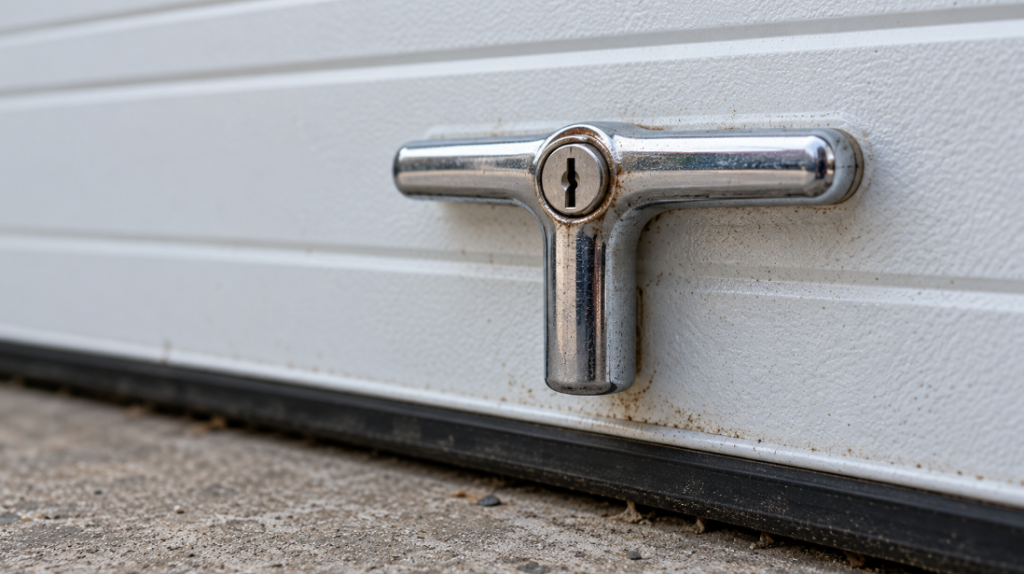
Manual overhead doors are often locked from outside with a key cylinder in the handle, usually a T-shaped or flat handle in the middle of the bottom panel. Turning the key turns a plate on the inside, and that plate pulls two long bars that slide into holes in the vertical tracks on each side. When the key and handle turn but the door still lifts, the problem is usually in the bars or their linkage, not in the cylinder itself.
Slide Bolts and Side Locks
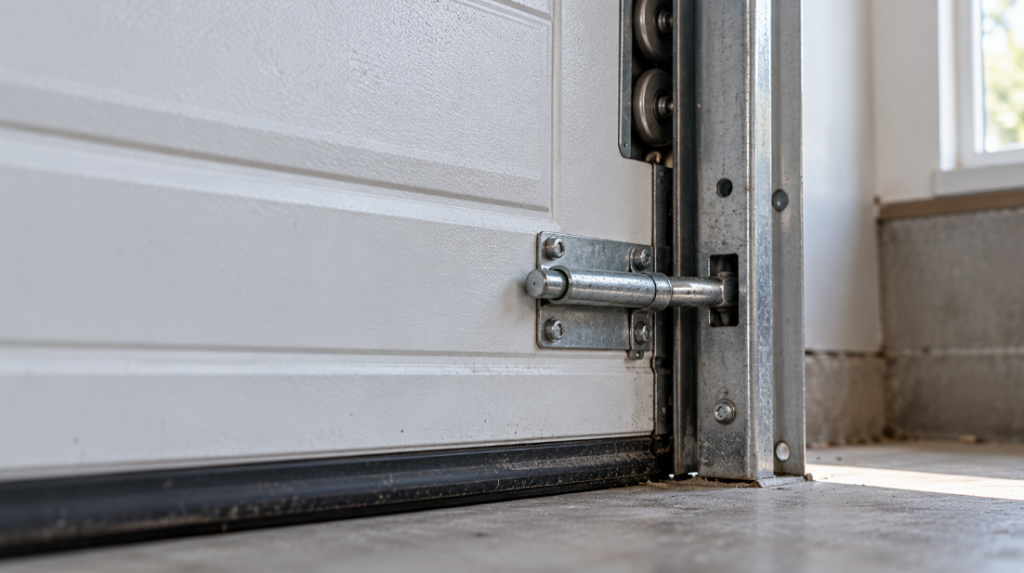
Many garage doors also have slide bolts on the inside, near the bottom of the door, that shoot into a hole in the track. Some have a hasp or a bolt with a loop for a padlock. These are simple parts, but the track holes shift as a door settles, and a bolt that no longer lines up stops locking.
Side Entry Doors
A side door into the garage locks like an ordinary exterior door: a knob or lever lock, often with a deadbolt above it. As a locksmith for garage door and side door locks, Lock and Tech repairs or replaces both, names the price before work starts, and can key them to the same key as the overhead door.
Garage Lockouts and Broken Keys
The usual calls are simple: the key to the garage is lost, the key snapped off in the handle lock, or the cylinder rusted and won’t turn. Garage locks sit outside in rain and snow, so corrosion is more common than on house locks, and a garage that hasn’t been opened for a season often has a lock that won’t budge. What happens on site:
- Lost key. The lock is opened with non-destructive methods, then rekeyed or fitted with a new cylinder and fresh keys.
- Broken key. The broken piece is extracted from the cylinder, and a new key is cut if the lock still works.
- Rusted lock. The cylinder is freed and cleaned, or replaced if the corrosion has gone too far.
Before opening, the locksmith confirms the garage is yours with a photo ID and a deed, lease, or utility bill for the address. A locksmith garage door owners can reach at night keeps the car from staying locked in until morning. Late calls go through our emergency locksmith service, with arrival usually in 20 to 40 minutes.
Rekeying Garage Locks to Match the House
One key for the front door and the garage is a common request, and often it can be done. Rekeying changes the pins inside a lock so it works with a different key. For the garage to match the house, its cylinder has to take the same key profile as the house locks, and that is checked on site. If it doesn’t, the garage cylinder can usually be replaced with one that does.
Rekeying also makes sense after a move. Previous owners, contractors, and neighbors may still hold garage keys, and rekeying makes all of them useless while the hardware stays in place. Most people rekey the garage together with the house. Whole-home rekeying is covered under our residential locksmith services. After rekeying, test every new key in each lock before the locksmith leaves.
Garage Lock Repair
Garage locks wear out from weather and from the weight of the door. These are the signs heard most often:
- The handle is loose or spins without moving anything.
- The key goes in but won’t turn.
- The bolts don’t reach the holes in the tracks.
- The lock freezes on winter mornings.
- The side door won’t latch.
Most of these have simple causes. A spinning handle usually means a broken or loose connection between the handle and the inside plate. A key that won’t turn points to dirt, rust, or worn pins in the cylinder. Bolts that miss the tracks usually mean the door or the tracks have shifted, and the bolts or their guides need adjusting. Freezing comes from water inside the cylinder, and cleaning it and using a dry lubricant rather than oil keeps it from coming back. A side door that won’t latch often needs the strike plate moved rather than a new lock.
Repair covers cleaning and lubricating the mechanism, adjusting the bolts, and replacing the cylinder or the whole lock when it is worn through. A new cylinder can usually be keyed to your existing garage or house key at the same visit.
Where We Work
Lock and Tech works within 75 miles of Midtown Manhattan. Most garage calls come from houses and townhouses in Brooklyn, Queens, and Staten Island, along with New Jersey, and garages in Manhattan are covered too. A garage door locksmith usually arrives in 20 to 40 minutes, up to an hour depending on traffic. When you call, mention whether the problem is the overhead door, the slide bolts, or the side door.
Warranty, Service Area, and Payment
All work is done by licensed locksmiths. New locks we install carry a warranty of 90 days on mechanical parts and 12 months on electronics. Lock opening, key extraction, rekeying, and repairs don’t carry a warranty, and opening is charged as its own job.
The service area runs 75 miles from Midtown Manhattan, and calls are taken around the clock, including weekends and holidays. The price is named before work begins.
Payment can be made by cash, credit card, ACH, wire transfer, check, Zelle, or Venmo.
Frequently Asked Questions
Do you repair garage door springs and openers?
No. A garage locksmith works on locks only: handle locks, slide bolts, and side door locks. Springs, cables, rollers, and openers are handled by a garage door repair company.
Can I have one key for my house and garage?
Often, yes. If the garage cylinder takes the same key profile as the house locks, it can be rekeyed to match. If not, it can usually be replaced with one that does. This is checked on site before any work.
A key broke off in the garage lock. What should I do?
Don’t push on the rest of the key or force the lock, since that can drive the piece deeper. Call a locksmith: the piece is extracted, and if the lock still works, a new key is cut.
The garage lock freezes in winter. What can I do?
Warm the key and use a lock de-icer rather than forcing the key. Over time, the cylinder should be cleaned and treated with a dry lubricant, since water inside is what freezes. A badly corroded cylinder is better replaced.
Do you work at night and on weekends?
Yes. Calls are taken around the clock, including weekends and holidays, and arrival usually takes 20 to 40 minutes.
Can I open my garage door from my phone?
That takes a smart opener controller rather than a lock, and it’s handled by our home automation team. See smart garage door control for details.