
A classic car locksmith from Lock and Tech works on keys and locks for older cars built before chip keys, with the goal of keeping original parts in place. For a locksmith for old cars, that means cutting keys to the existing locks, repairing worn cylinders before replacing them, and opening the car without marking paint or chrome. Arrival usually takes 20 to 40 minutes, up to an hour, and the price is named before work starts. Newer cars are covered by our automotive locksmith service.
Keys for Classic and Older Cars
Most older cars use plain metal keys with no chip, so making one comes down to getting the cuts right. If the key code is known, the key is cut by code. On many older cars, the code was recorded on the original paperwork or a small tag that came with the keys, and it is sometimes stamped on the lock cylinder itself, visible once the cylinder is out of the door or trunk.
If there is no code and no key, an old car locksmith decodes a lock. The cylinder is removed, usually from a door, the trunk, or the glove box rather than the ignition, and the wafer positions are read to work out the cuts. Many older cars used one key for the doors and ignition and a second for the trunk and glove box, so decoding one lock from each set is often enough.
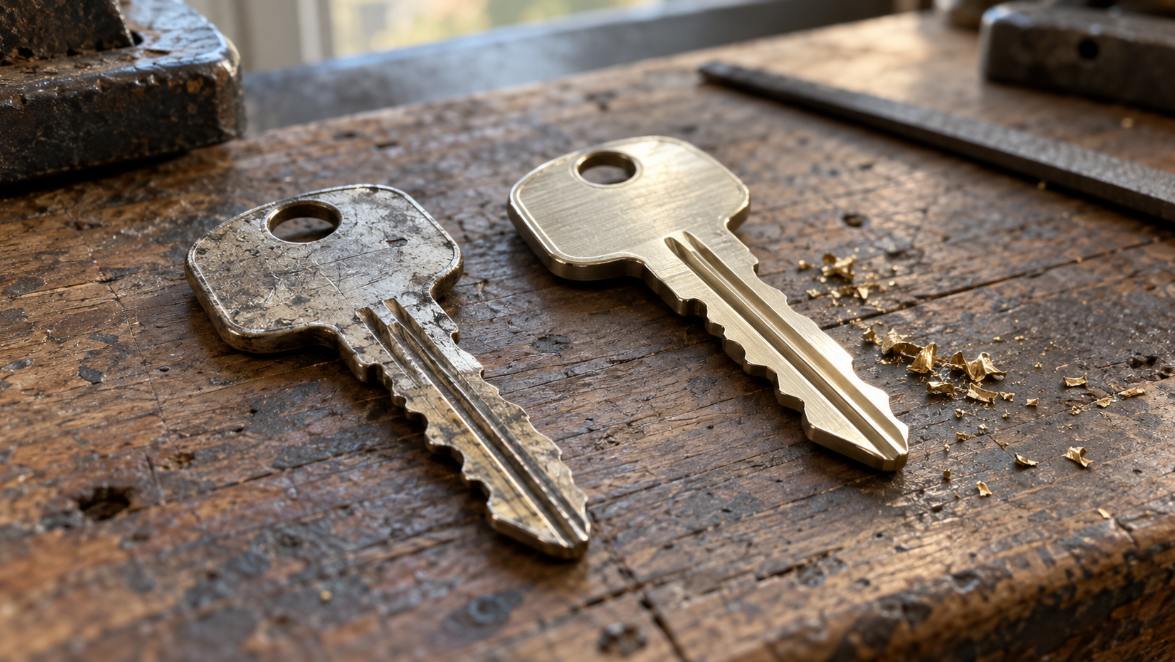
The harder part is often the blank. Many key profiles for older cars are no longer made, so a locksmith for older cars matches the profile against reproduction blanks or blanks from other lines with the same shape and cuts the key from those. A key cut on a well-matched blank works the lock without the play of a worn original.
Before cutting, the locksmith confirms the car is yours with the registration or title and a photo ID that shows the same name. The make, model, and year help narrow down the blank before the visit. If your car’s key already has a chip in the head, that is different work, handled by our chip key and fob service.
Rekeying and Restoring Original Locks
Original locks are part of what makes a car original, so a vintage car locksmith looks at repair first. A cylinder is kept when its housing is sound: it is taken apart and cleaned, the worn wafers and tired springs are replaced, and new keys are cut to match. From the outside, the lock looks exactly as it did.
Replacement makes sense when corrosion has eaten into the cylinder, the housing is cracked, or the lock was damaged mechanically, for example by a forced entry. Even then, a replacement cylinder can often be set up to the existing key.
Rebuilding the original cylinders keeps the car’s period appearance and parts. A modern lock in an older door handle is easy to spot, and on a car that is shown or judged, that can matter.
Over the decades, many older cars end up with a different key for every lock. Rekeying brings them back to a matched set: the doors, trunk, ignition, and glove box are set to one key, or to the two-key arrangement the car originally had. The cylinders stay original; only their internal wafers change.
A new cylinder we install carries a warranty of 90 days on mechanical parts and 12 months on electronics. Key cutting, rekeying, and repairs to original cylinders have no warranty.
Ignition Switches on Older Vehicles
Ignition switches on older vehicles wear in predictable ways. Owners usually describe one of three things:
- The key won’t turn, or turns only with force.
- The key wobbles in the switch and has to be held at an angle.
- The key broke, and part of it is still in the ignition.
A key that won’t turn is often a worn key in a worn cylinder, where the wafers no longer line up with either. A key that wobbles points to worn wafers or a loose cylinder. A broken piece is removed with thin extraction picks, and the cylinder is checked before a new key is cut. Forcing a stuck key with pliers tends to snap it, so it is better left alone.
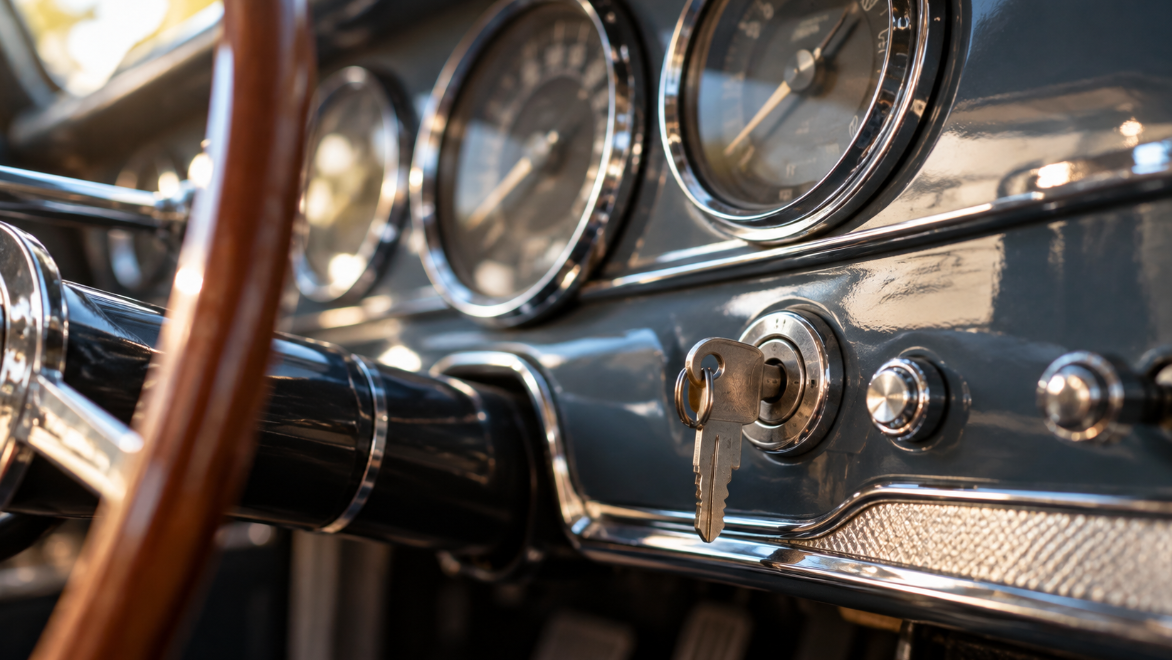
Repair comes first. The cylinder is taken out, rebuilt with new wafers and springs, and set to a fresh key, which keeps the original switch and its trim in the dash. Replacement is reserved for cylinders that are cracked or too far gone, and the new one can usually be set to the car’s existing key.
Opening a Classic Car Without Damage
Opening an older car takes a different touch than opening a modern one. Paint is often original or freshly restored, chrome trim marks easily, rubber seals may be decades old and brittle, and window frames are thin. A tool that is routine on a newer car can tear a dried seal or scratch a chrome frame on a classic.
So methods are chosen for the car. On many older cars, the lock button or the window crank can be reached with a padded long-reach tool through a gap protected by soft wedges, and some doors are better opened through the lock itself, picked with the original cylinder left intact. Where the seals are fragile, protective sleeves go between the tool and the rubber.
These non-destructive methods protect the finish on most cars. Very brittle seals or doors that were forced before carry more risk, and a locksmith should explain that before starting. The price is named before work begins. For newer cars, see our service for opening modern cars.
Where We Work
Lock and Tech works on older cars across New York City, including Manhattan, Brooklyn, Queens, the Bronx, and Staten Island, and in New Jersey. Classic cars are often kept in private garages, storage buildings, and driveways rather than on the street, and the work is done where the car sits. A car that doesn’t run is not a problem for lock and key work.
Warranty, Service Area, and Payment
Licensed technicians handle every job, and calls are taken around the clock. Key cutting, rekeying, opening a car, key extraction, and repairs don’t carry a warranty. A new lock or ignition cylinder installed on the car carries a warranty of 90 days on mechanical components and 12 months on electronics.
The service area runs 75 miles from Midtown Manhattan. The price is named before work begins, and payment can be made by cash, credit card, ACH, wire transfer, check, Zelle, or Venmo.
Frequently Asked Questions
Can you make a key without the original or a code?
In most cases, yes. A lock is removed, usually from a door, the trunk, or the glove box, and decoded to work out the cuts. The key is then cut on a blank that matches the profile.
Will the work affect my car’s originality?
Repair comes first, so the original cylinders stay in the car and keep their appearance; only worn internal wafers and springs are replaced. A cylinder is swapped only when it is beyond repair, and that is discussed before any work.
Can I have one key for all the locks again?
Usually, yes. The doors, trunk, ignition, and glove box can be rekeyed to one key, or to the car’s original two-key arrangement, without replacing the cylinders.
Can you open the car without harming the trim and seals?
Non-destructive methods are chosen for the car: padded tools, soft wedges, and protective sleeves for old rubber. On most cars, nothing is marked. Very brittle seals carry more risk, and you hear about it before work starts.
Do you come to a car that doesn’t run?
Yes. Lock and key work doesn’t need the engine, so the car can stay in its garage, storage space, or driveway.