- Home
- Locksmith Services
- Commercial Door Locksmith
Commercial Door Locksmith in NYC



Before Hardware Is Replaced
Since 1989, we’ve been securing homes and businesses across NYC and New Jersey with professional security solutions you can trust. Our licensed technicians provide 24/7 emergency service, using only the latest technology and backed by comprehensive warranties on all installations.


Storefront and Exit Door Problems Worth a Call
- The front door swings shut but doesn’t latch unless someone pulls it.
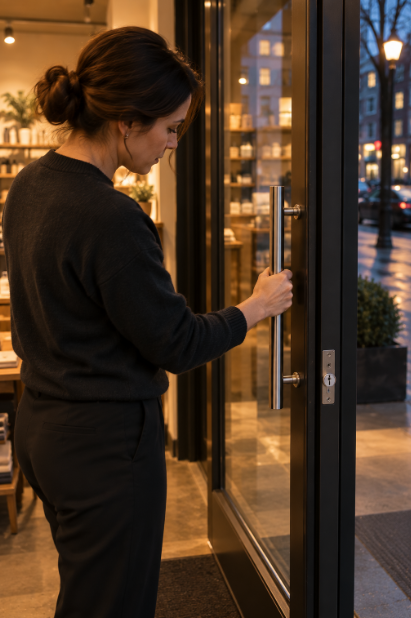
- The key turns hard in the storefront lock and sometimes won’t turn at all.
- The bolt hits the frame instead of going into the strike plate.
- The glass door won’t lock at closing time, and the stock is inside.
- The panic bar stays pushed in and doesn’t spring back.
- The exit door can be pulled open from the outside even when it’s closed.
- The door slams so hard the glass shakes.
- The door stops a few inches short and never closes on its own.
- The handle on the office door is loose and turns without opening it.
- The lock was damaged in a break-in attempt and won’t hold the door.
A commercial door locksmith repairs and replaces the hardware on store, restaurant, and office doors: storefront locks, panic bars, door closers, hinges, and strike plates. Lock and Tech works on entrance and service doors across New York day and night, and a licensed technician usually arrives in 20 to 40 minutes. Keys, master key systems, and business lockouts are covered under our commercial locksmith services.
Storefront Door Locks
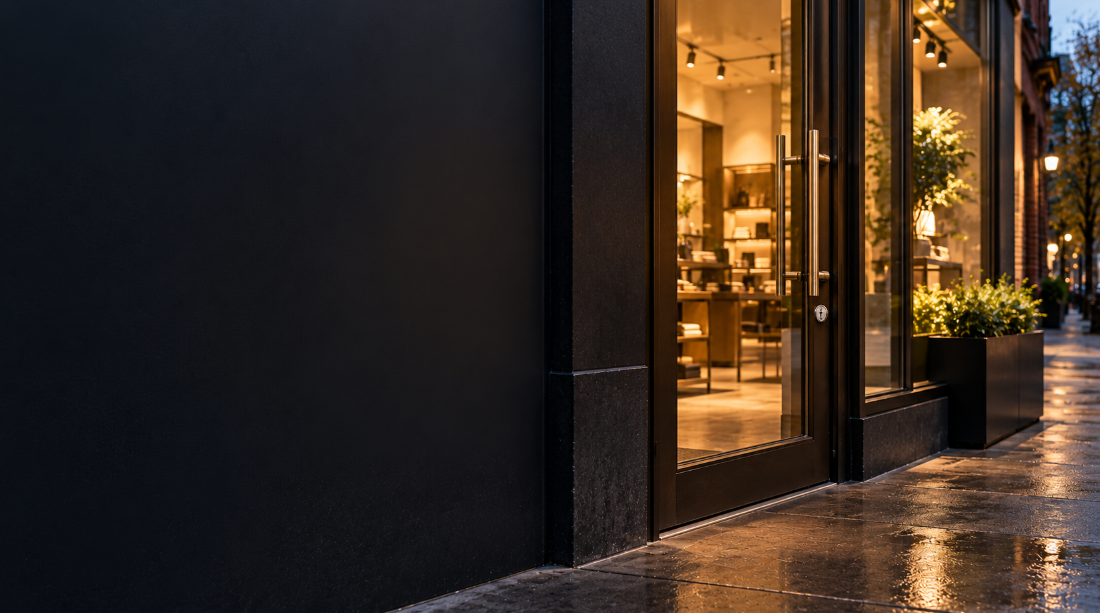
A storefront door is built differently from a standard door. The frame is a narrow aluminum rail, most of the door is glass, and there are only a few inches of metal to hold the lock. That leaves little room for hardware and makes alignment critical.
Narrow-Stile Deadlocks and Cylinders
Narrow-stile doors use a deadlock set into the thin vertical rail of the frame. Because a straight bolt would barely reach the frame, many of these locks use a hook-shaped bolt that swings out and grabs the strike, so the door can’t be pried apart at the gap. Typical wear shows up as a cylinder that turns hard, a hook that stops short, or a sagging door that makes the bolt hit the frame. As a locksmith for commercial doors, Lock and Tech replaces cylinders, moves the strike, and fits new deadlocks sized to the existing cutout, with the price named before work starts.
Glass and Frameless Doors
All-glass doors have no frame to hold a lock, so the lock is clamped onto the glass or set into a metal rail along the bottom. A bottom lock throws its bolt down into a socket in the floor, and a center lock joins a pair of glass doors. When the floor socket fills with dirt or shifts, the bolt can’t drop in and the door won’t lock. Most fixes are a clean-out, realignment, or a new cylinder. A cracked clamp or rail means replacing the lock body.
Exit Devices and Panic Bars
A panic bar, also called an exit device or push bar, is the horizontal bar across a rear exit, a stairwell door, or the inside of a store entrance. Pushing it pulls back the latch, so people can leave in one motion. An exit door has to open from the inside without a key, which is why a panic bar can’t simply be swapped for a deadbolt.
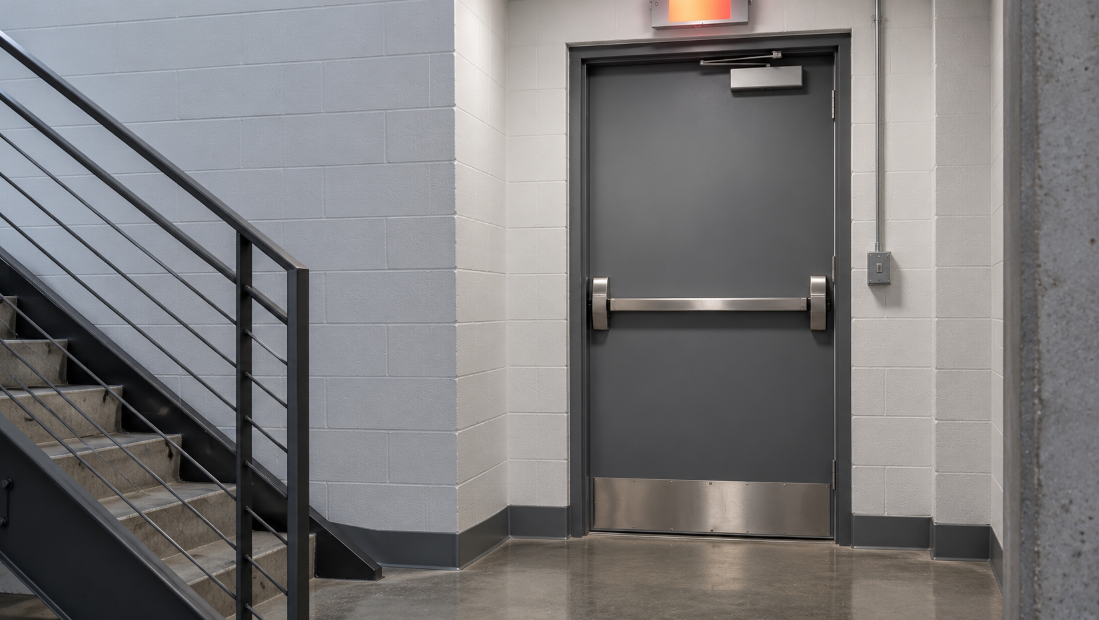
Panic bars take hard use, and the same problems come up again and again:
- The bar stays pushed in and doesn’t spring back.
- The bar sticks halfway or needs a hard shove.
- The latch doesn’t catch, so the door can be pulled open from outside.
- The outside handle or key no longer pulls back the latch.
Most of these come from a worn spring, a bent rod on a tall door, or a latch that no longer lines up with its strike. Repair starts with adjustment and replacing the worn part. When the mechanism inside the bar is worn through, or the device was bent in a forced entry, a new exit device of the same size usually fits the existing holes. We test the door from both sides before leaving, so it opens with a push and stays shut from outside.
Door Closers, Hinges, and Pivots
A door closer is the arm and cylinder mounted at the top of the door. It pulls the door shut and controls the speed in two stages: a steady swing, then a slower last few inches so the latch catches without a slam. When a closer fails, either the door slams hard enough to shake the glass, or it slows down and stops short of the frame. Both usually trace to the closer’s adjustment valves or to oil leaking from the body. A closer that leaks has to be replaced, since it can’t be refilled.
Hinges and pivots carry the weight of the door. On a busy entrance, hinge pins wear, screws loosen in the frame, and the door starts to sag. Glass storefront doors often hang on pivots at the top and bottom instead of hinges, and a worn bottom pivot makes the door drag or drop on the latch side.
This hardware is tied directly to the lock. If the closer can’t pull the door all the way, or the door sags by an eighth of an inch, the latch or bolt no longer meets the strike plate, and the door stays unlocked although the lock itself works.
Common Commercial Door Problems
Most calls start with a symptom, not a part name. These are the ones heard most often:
- The door won’t latch. It swings shut and bounces back, or latches only when someone pulls it.
- The bolt won’t go into the strike. The key turns, but the bolt hits the frame or stops halfway.
- The key is hard to turn or won’t turn. The cylinder is worn, the key is bent, or the bolt is pressing against the strike.
- The handle is loose. It wobbles or spins without moving the latch.
- The panic bar doesn’t spring back. It stays pushed in, and the door doesn’t stay latched.
- The door slams. It closes too fast and hits the frame hard.
- The lock was damaged in a break-in attempt. There are pry marks, a bent bolt, or a cylinder that was twisted or pulled.
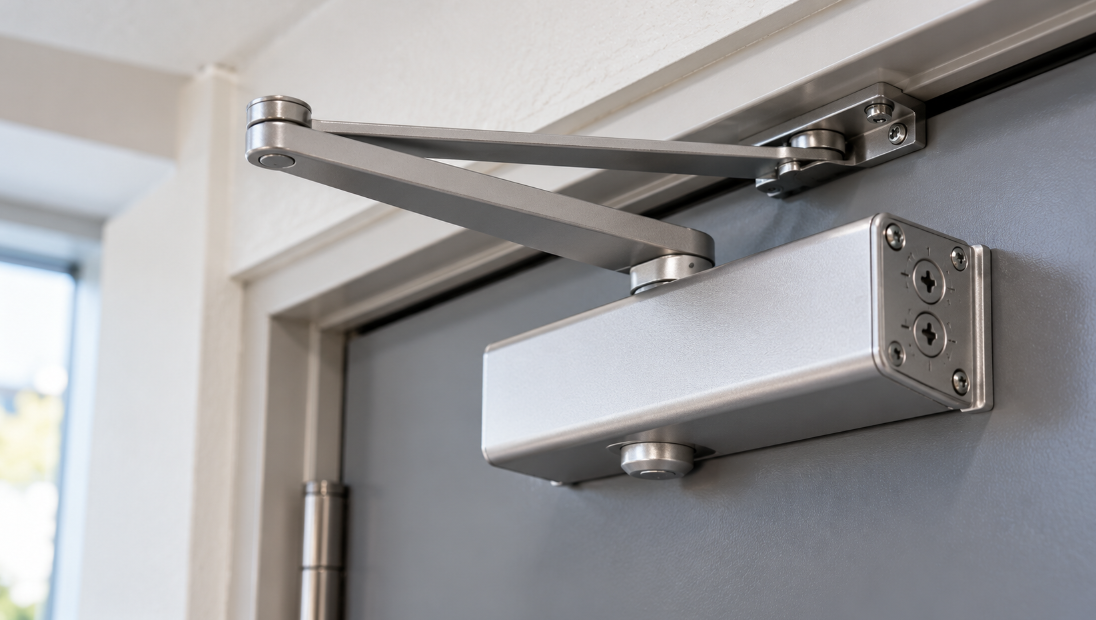
Before calling a locksmith, commercial door owners and managers can note when the problem happens: all day, only in cold weather, or only when the door closes on its own. On site, the first check is the door, not the lock: whether it closes fully, whether it sags, and whether the bolt lines up with the strike plate. Then come the closer, the hinges or pivots, and finally the lock and cylinder. Many broken-lock calls turn out to be an alignment problem solved with an adjustment, and a new lock on a door that still sags fails the same way.
Repair or Replace
Repair makes sense when the hardware is sound but worn or out of adjustment: a strike that needs moving, a closer that needs its speed set, a spring or cylinder inside an otherwise good lock. Replacement makes sense when the mechanism is worn through, when the lock or exit device was damaged in a break-in, or when the door needs a different function, such as a lock that can be secured from inside without a key. A locksmith for business doors should explain which option fits and why before any work starts.
Some parts for storefront and exit hardware aren’t carried on the van and have to be ordered. In that case, the door is secured on the first visit, with a temporary fix or a different lock, so it can be locked overnight. The new part goes in on a second visit.
Where We Work
Lock and Tech works as a commercial door locksmith within 75 miles of Midtown Manhattan. That covers storefronts, restaurants, and office buildings in Manhattan and shopping streets and service entrances across Brooklyn, along with Queens, Staten Island, and New Jersey. Arrival usually takes 20 to 40 minutes, up to an hour. When you call, say which door it is: the entrance, an exit, or a rear service door.
Warranty, Service Area, and Payment
All work is done by licensed locksmiths. New locks and door hardware we install carry a warranty of 90 days on mechanical parts and 12 months on electronics. Repairs, adjustments, lock opening, and rekeying don’t carry a warranty.
The service area runs 75 miles from Midtown Manhattan, and calls are taken around the clock, including weekends and holidays. The price is named before work begins, and a deposit is taken only on large jobs.
Payment can be made by cash, credit card, ACH, wire transfer, check, Zelle, or Venmo.
Frequently Asked Questions
Short answers to what building managers and store owners usually ask about their door hardware.
Can a panic bar be repaired, or does it need replacing?
Most can be repaired. A worn spring, a loose rod, or a latch out of line is fixed with a new part and an adjustment. Replacement is needed when the mechanism is worn through or bent in a forced entry, and a new device of the same size usually fits the existing holes.
Can you come before opening or after closing?
Yes. Calls are taken around the clock, including weekends and holidays, so door hardware can be fixed before the first customer arrives or after the last one leaves.
The door won’t latch. Is it the lock or the closer?
Usually the closer or the door itself. If the door stops short or sags, the latch never reaches the strike plate. A commercial door locksmith checks the swing and the alignment first, then the latch and the lock.
Can a new lock go into an old storefront door?
In most cases, yes. Narrow-stile deadlocks come in standard sizes, so a new lock often fits the existing cutout. If the old opening is a different size or the rail is damaged, the frame may need adapting, and that is explained before work starts.
What if the door won’t lock at the end of the day?
Call rather than leave it overnight. Arrival usually takes 20 to 40 minutes, and the door is either fixed or secured until a part arrives. After-hours calls of every kind go through our emergency locksmith team.
Do you install electric locks and card access?
They are handled by the security systems team of the same company, described on the electric locks and card access page.
What our clients say


