
- Home
- Locksmith Services
- Commercial Locksmith
Commercial Locksmith in NYC



Before Work at Your Business
Since 1989, we’ve been securing homes and businesses across NYC and New Jersey with professional security solutions you can trust. Our licensed technicians provide 24/7 emergency service, using only the latest technology and backed by comprehensive warranties on all installations.


Business Lockouts and Key Control Problems
- The office door won’t open in the morning, and the staff are waiting outside.
- The key snapped off in the front door lock just before opening.
- The storefront door won’t lock at closing time, and the stock is inside.
- An employee left the company and never returned the keys.
- A new tenant is moving into the space, and the old keys are still out there.
- The manager lost the key ring with keys to every door.
- Everyone on staff has a key that opens every room.
- Copies of the back-door key keep turning up, and nobody ordered them.
- The safe with the day’s cash won’t open with the usual code.
- The stockroom lock is jammed, and a delivery arrives in an hour.
A commercial locksmith handles the locks and keys that keep a store, restaurant, or office running: opening a locked business door, rekeying after a staff change, and setting up master keys so each person opens only the doors they need. Lock and Tech provides commercial locksmith services across New York day and night, including before opening and after closing, on weekends, and on holidays. A licensed technician usually arrives in 20 to 40 minutes, and you hear the price before work starts.
Business Lockouts and After-Hours Calls
Most business lock calls come at the worst moment. The office door won’t open at 8 a.m. with staff waiting outside, a key snaps off in the front door lock just before opening, or the door won’t lock at the end of the day while the register and stock are still inside. That is why a business needs a locksmith commercial tenants and managers can reach at any hour, not only during office hours. An emergency commercial locksmith call is handled the same way day or night, weekends and holidays included, with arrival usually in 20 to 40 minutes and up to an hour.
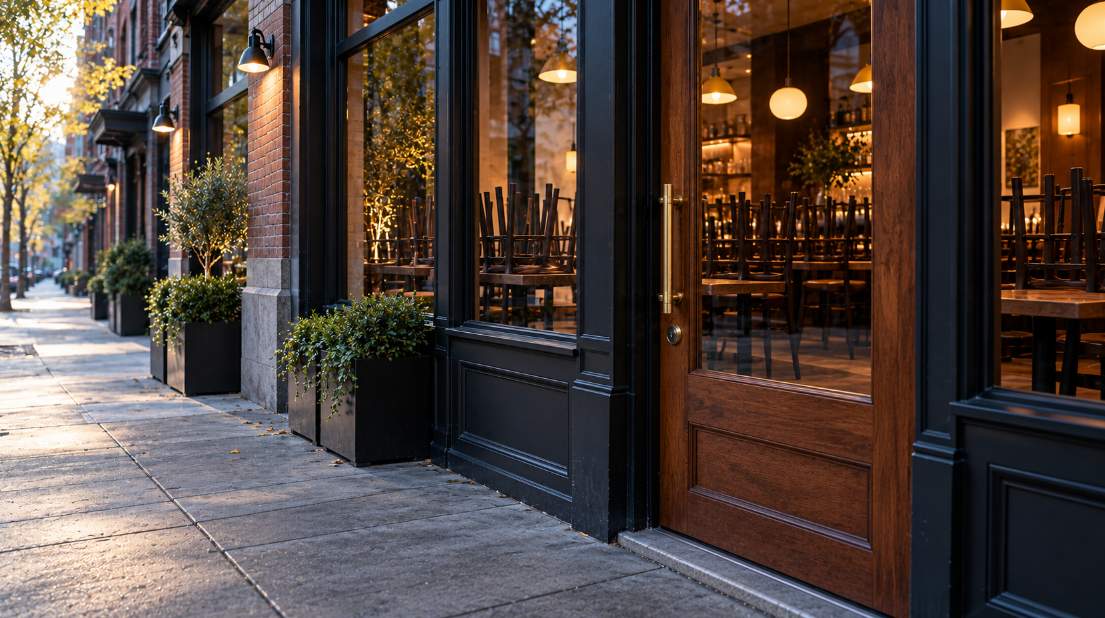
Before opening a business door, the locksmith confirms that the caller has the right to the space: a photo ID plus a lease, a business document with the company name and address, or confirmation from the building manager. If the papers are inside, they are checked once the door is open.
Entry starts with non-destructive methods, such as picking or bypassing the lock, so the lock and door stay usable. Drilling is the last option, and it is explained and priced before anything is done. A broken key is extracted from the cylinder, and a door that won’t lock is repaired or fitted with a new lock. Urgent calls at homes and other properties are covered by our emergency locksmith service.
Rekeying After Staff or Tenant Changes
When an employee leaves without returning keys, a tenant moves out, or a key ring goes missing, every copy still in circulation is a way into the business. Rekeying closes that gap without replacing the hardware.
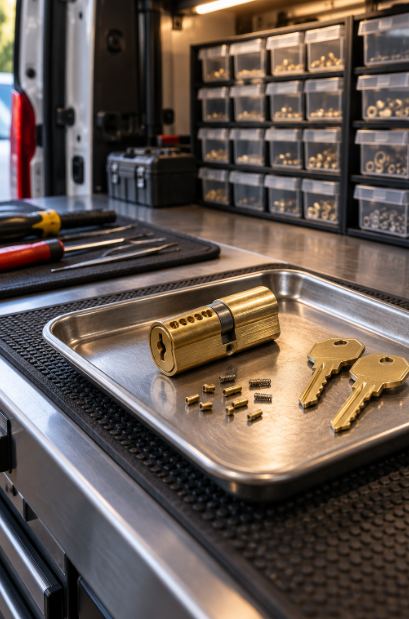
In rekeying, the pins inside the lock cylinder are changed to match a new key. The old keys stop working, while the lock body, handles, and door stay in place. Replacing the lock makes sense only when it is worn, damaged, or no longer suits the door. As a commercial locksmith service, Lock and Tech rekeys locks on site, and you hear the price for each door before work starts.
When several doors are involved, such as the front entrance, the back door, the office, and the stockroom, it usually makes sense to rekey them all at once and plan them as one set. That way a key change doesn’t leave a forgotten door on old keys, and the same layout can later grow into a master key system. After rekeying, the new keys are counted and handed over, and it helps to write down who received which key.
Master Key Systems
A master key system is a set of locks pinned so that one key opens every door, while other keys open only their own doors. It replaces a heavy ring of unrelated keys and lets a business decide who can open what. Among locksmith commercial services, this is the one where planning matters more than hardware.
How Access Levels Work
Keys are arranged in levels. At the top is the master key, which opens every lock in the system. Below it, each change key opens only its own door or group of doors. A restaurant might be set up like this:
- Owner: a master key for every door, including the office and the storeroom.
- Manager: the front door, the back door, and the office.
- Staff: the front door and the back door only.
- Cleaning crew: the front door and the restrooms.
In a building with several tenants, each tenant’s key opens only that suite, while the building manager holds the master.
Key Control
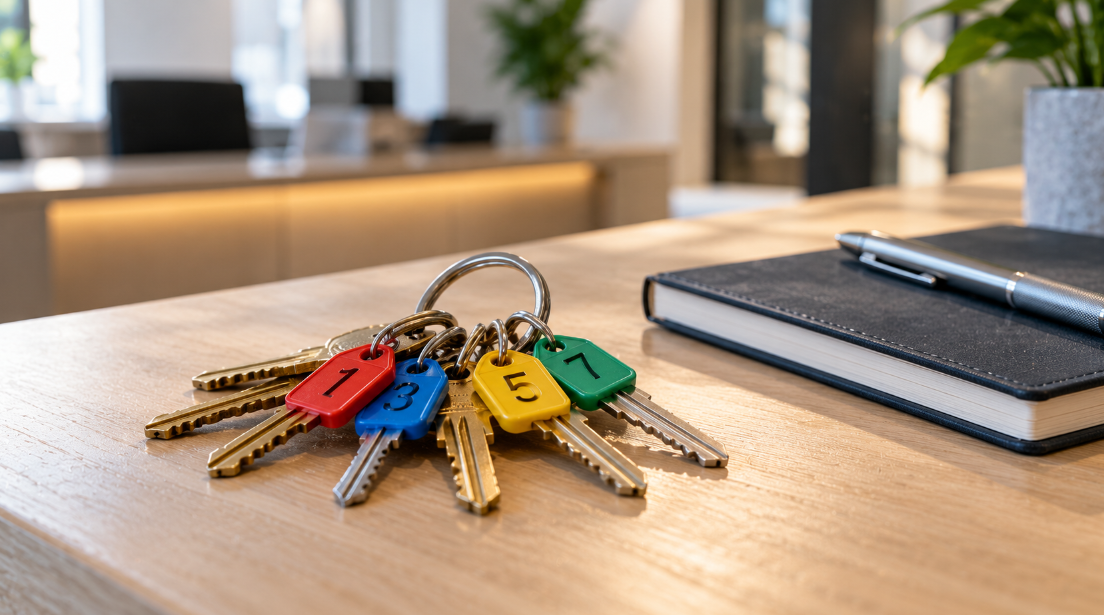
A master key system only works while copies stay under control. Keys with a restricted profile can’t be cut at an ordinary hardware store, and new copies are made only at the request of the person authorized to order them. Many businesses also stamp keys with a number instead of a door name and keep a simple log of who holds which key, when it was issued, and when it came back. When someone leaves, the log shows exactly which locks need rekeying.
Commercial Door Hardware
Business doors carry hardware that a home door doesn’t have, and it wears out faster under constant traffic.
- Storefront doors. Glass and aluminum doors use slim locks that slip out of line as the door sags, so the key turns hard or the bolt misses the frame.
- Panic bars. These exit devices let people leave with a push. Worn parts make the bar stick or keep the latch from catching.
- Door closers. A closer pulls the door shut and controls its speed. When it leaks or loses adjustment, the door slams or stops short of the latch and never locks.
Most of these problems start small, with a door that needs an extra push or a bar that sticks in cold weather, and they are easier to fix before the door stops locking at closing time. Repair and replacement of this hardware are covered on our commercial door locksmith page.
Business Safes
Many businesses keep the day’s cash or important documents in a safe, and two problems come up most often: the safe won’t open even with the right code, or an employee who knew the combination has left. In the first case, the lock is opened and checked for the cause. In the second, the combination is changed so the old code stops working. Electronic keypad safes can also lock out for a set time after several wrong entries, which is a security delay rather than a failure. Opening, combination changes, and safe lock repair are covered on the safe locksmith page.
Access Control, Intercoms, and Cameras
Mechanical keys have limits: they can be copied, they don’t record who came in, and every lost key means rekeying. When a business needs cards or codes instead of keys, a record of who entered and when, or a way to let visitors in from the front desk, that is electronic security rather than locksmith work. The security systems team of the same company handles it, along with intercoms and cameras. Details are on the access control installation page.
Where We Work
Lock and Tech works as a commercial locksmith in New York within 75 miles of Midtown Manhattan. That covers offices, shops, and restaurants in Manhattan, from the Financial District to Midtown and Harlem, and storefronts and restaurants across Brooklyn. A business that needs a commercial locksmith in Brooklyn or a commercial locksmith in Queens gets the same arrival window: usually 20 to 40 minutes, up to an hour. Staten Island and New Jersey are covered as well, and calls are taken around the clock. When you call, give the business name, the entrance to use, and whether a building manager needs to let the technician in.
Warranty, Service Area, and Payment
All work is done by licensed locksmiths. New locks and hardware we install carry a warranty of 90 days on mechanical parts and 12 months on electronics. Opening a lock, rekeying, key extraction, and repairs don’t carry a warranty.
The service area runs 75 miles from Midtown Manhattan, and calls are taken around the clock, including weekends and holidays. The price is named before work begins, and a deposit is taken only on large jobs.
Businesses can pay by ACH, wire transfer, or company check, so the job is paid from the company account rather than an employee’s card. Cash, credit card, Zelle, and Venmo are accepted as well.
Frequently Asked Questions
How fast can you get here if our office won’t open?
Arrival usually takes 20 to 40 minutes, up to an hour depending on traffic. Have a photo ID and a lease, a business document, or confirmation from the building manager ready, so the door can be opened as soon as the technician arrives.
Can you come before opening or after closing, so we don’t lose business hours?
Yes. Calls are taken around the clock, including weekends and holidays, so a lock can be opened before the first shift or rekeyed after the last customer leaves.
An employee left with keys. Should we rekey or replace the locks?
Rekeying is usually enough: the pins are changed, the old keys stop working, and the lock stays on the door. Replace the lock only if it is worn or damaged. If the employee had a master key, every lock in the system needs rekeying.
Can one master key system cover several tenants or departments?
Yes. Each tenant or department gets keys that open only its own doors, and the owner or building manager holds a master that opens all of them. Shared doors, such as the main entrance, can be set to open with every key in the system.
Can we stop employees from copying keys?
Keys with a restricted profile can’t be cut at ordinary key shops, and new copies are made only at the request of the authorized person. A simple log of who holds which key makes it easy to see what to rekey when someone leaves.
Do you install card or keypad entry?
Card and code entry is electronic security, handled by the security systems team of the same company. Details are on the card and keypad entry systems page.
How can a business pay for the work?
By ACH, wire transfer, or company check, as well as cash, credit card, Zelle, or Venmo. The price is named before work starts, and a deposit is required only on large jobs.
What our clients say


