
- Home
- Security System
- Security System Repair
Security System Repair in New York



Weekdays, 8 a.m. to 6 p.m.
Since 1989, we’ve been securing homes and businesses across NYC and New Jersey with professional security solutions you can trust. Our licensed technicians provide 24/7 emergency service, using only the latest technology and backed by comprehensive warranties on all installations.


Signs your system needs a repair call
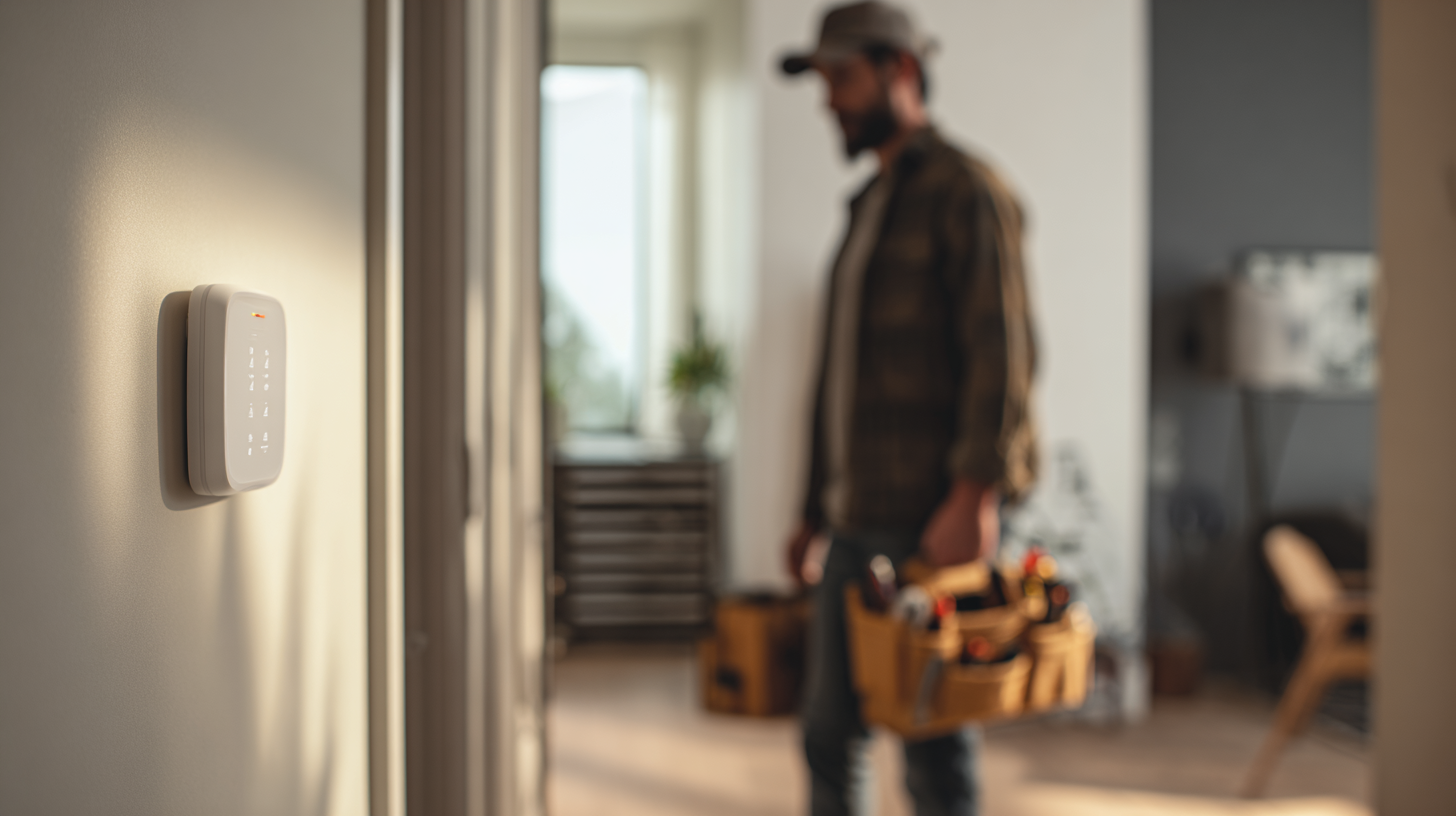
- The alarm keeps going off and nobody’s there.
- The system won’t arm, or the keypad throws an error when you try.
- The keypad beeps and won’t stop, even after you punch in the code.
- A door or window sensor stopped reporting, so the zone reads open.
- The siren stays quiet when you test it.
- The panel lost its connection to the monitoring station.
- The backup battery is dead and the panel runs on wall power alone.
- Cameras show a black screen, or the recorder stopped saving footage.
- The intercom rings through but the door won’t release.
- A card reader stopped reading fobs that worked last week.
Security system repair covers alarms, cameras, intercoms and access control — wired or wireless, any manufacturer, including gear that hasn’t been made in a decade. Calls are taken weekdays from 8 a.m. to 6 p.m., and a technician usually reaches you in 20 to 40 minutes, up to an hour toward the outer edge of the 75-mile radius around midtown Manhattan. Every visit starts with a diagnostic on site: the tech finds what failed, tells you what it takes to fix, and does the work on the spot when the part is on the truck. Systems installed by another company are handled the same way as ones we put in.
Alarm System Repair
Alarm system repair starts with the symptom, not with the brand on the panel. The calls that come in sound like this: the alarm keeps going off and nobody’s there, the system won’t arm, the keypad beeps and won’t stop, a door sensor stopped reporting so the zone reads open, the siren stays quiet during a test, the panel lost its connection to the monitoring station, or the backup battery is dead. Each of those points at a different part of the system, and a walk-through of the panel’s event log plus a test of every flagged zone takes 30 to 60 minutes on a typical home or apartment.
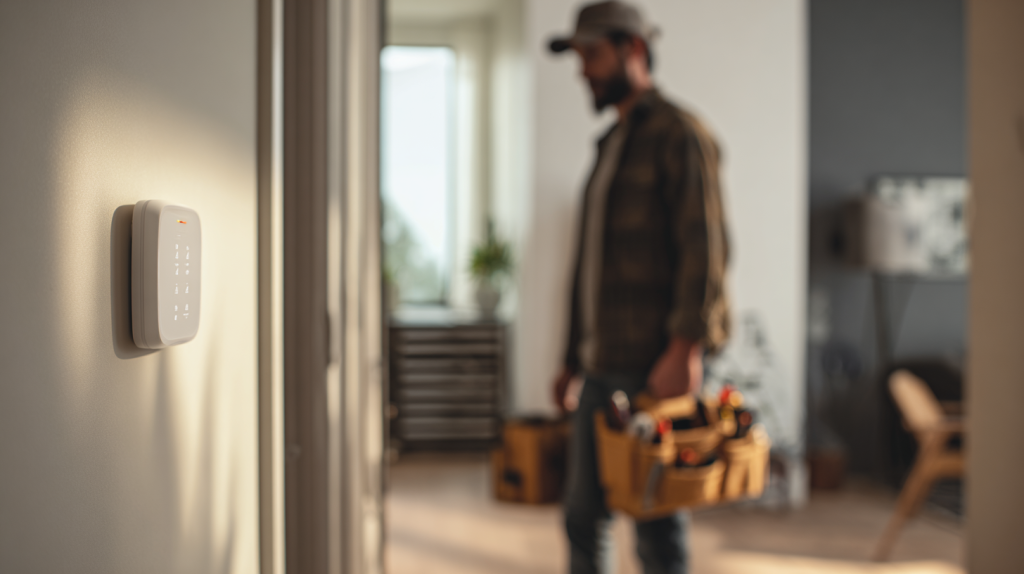
An alarm system is a short list of parts tied to one control panel: the panel itself, the keypad, door and window contacts, motion detectors, smoke and heat detectors, flood detectors, panic buttons, the siren, the power supply with its backup battery, and the communicator that reaches the central station. Any one of them fails on its own while everything else keeps running. A single dead zone doesn’t mean the panel is finished.
What actually goes wrong is usually ordinary:
- Backup batteries wear out. The sealed lead-acid batteries most panels use last three to five years, and a weak one throws trouble codes and low-battery chirps for weeks before it quits.
- Door and window contacts drift out of line. A door that’s been slammed for years, or a window frame that swelled through August, leaves a gap wide enough that the magnet stops holding the switch closed.
- Motion detectors read things that aren’t intruders — a radiator kicking on under the sensor, afternoon sun crossing the floor of a storefront, a cat in a walk-up.
- Wiring corrodes. Basement panels next to a boiler, runs through a damp cellar, and cable at a back door take the worst of it in prewar buildings.
- Communicators go silent when the copper phone line gets cut over to VoIP or the building’s service changes, so the panel arms normally and nothing reaches the station.
- Programming drops after a power event, and zones come back mislabeled or bypassed.
When the panel tests clean but no signal lands at the station, the fault sits in the communicator or the account rather than the hardware, and it gets sorted together with central station signal service.
Panels common in New York buildings come from a short list: Honeywell and the Resideo line that followed it, Napco, DSC, DMP, Bosch, and anything reporting through the Alarm.com platform. Older Ademco-era boards are still live in plenty of co-ops and brownstones, and a panel being out of production doesn’t rule out a repair — it changes how long the part takes to arrive.
Cameras, Intercoms and Access Control
Alarms are one of four systems that end up on the same service call. Cameras, intercoms and access control are repaired on the same visit when they sit on the same property, and each has its own page with the full breakdown of symptoms, components and brands.
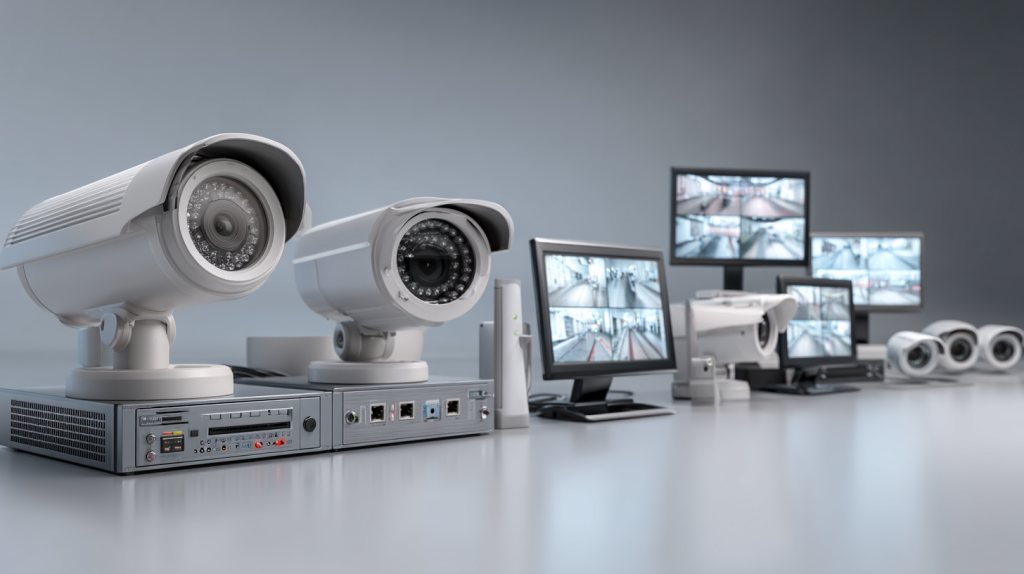
Camera systems fail at four points: the recorder, the drives, the cameras, and the cable between them. A black screen usually traces back to power or a cut run, footage that stops saving traces back to a full or failing hard drive, and night vision that quits means the infrared array burned out. Recorders, PoE switches and remote viewing are covered on the camera and recorder repair page.
Intercom problems are mostly audio and door release. The buzzer sounds but the door won’t unlock, one apartment stops receiving calls, the lobby panel crackles or goes dead, the video screen shows nothing. Lobby panels 30 and 40 years old are normal in this market and most of them are still repairable. Symptoms and legacy brands are on the intercom repair page.
Access control breaks at the reader, the lock or the controller. Fobs that worked last week stop reading, a valid code gets rejected, a maglock loses holding force, or a controller drops off the network and takes the schedules with it. Existing credentials are kept when hardware is swapped. Full detail sits on the access control repair page.
How a Repair Call Works
A repair call runs in five steps: the request comes in, a technician comes out, the system is diagnosed on site, you’re told what failed and what it takes to fix, and the work happens that visit or on a scheduled return if a part has to be ordered.
Requests go through by phone or through the form on this site, weekdays 8 a.m. to 6 p.m. The address, the type of system and a plain description of what it’s doing are enough to load the truck properly — a spare panel battery, a replacement keypad, contacts, a run of cable — before anyone leaves.
On site the tech checks power at the panel, reads the event log, walks and tests every zone, and puts the communicator against the central station. Wiring gets traced wherever a reading doesn’t match what the panel reports. A house or apartment runs 30 to 60 minutes; a commercial system with dozens of zones or several door controllers takes longer, and the estimate is given before the work starts.
Anything that doesn’t need ordering gets fixed on that visit — batteries, contacts, motion detectors, keypads, sirens, power supplies and most wiring. Nothing is replaced until you review the service recommendation and sign the consent form.
Parts that have to be ordered — a discontinued panel board, one specific reader, a handset from a maker that’s out of business — are quoted and scheduled, and the system is left in the best working state it can hold in the meantime. Every completed call ends with an invoice and a written description of what was done.
Repair or Replace
Repair is the right call when one component failed and the rest of the system still does its job. A dead keypad on a working panel, three bad contacts, a corroded run at a back door, a communicator that lost its line — those are single fixes, and the zones and programming you already have stay in place.
Replacement makes more sense when the failures start stacking. A panel from the 1990s that needs a board, a keypad and a communicator has three faults against one aging piece of equipment, and the parts hunt for each one gets longer every year. The same applies when a system was built around a phone line that no longer exists in the building, or when a discontinued panel has no board left in circulation at any price. In those cases a new panel with current sensors is quoted alongside the repair estimate so you can compare both before deciding.
Being out of production on its own is not a reason to replace. Plenty of older systems in co-ops and prewar buildings run fine for another decade on a battery and a couple of contacts.
What It Costs and How to Pay
Repairs are billed as labor plus materials, with the estimate given on site before any work starts and no hidden add-ons after. There’s no surcharge for evenings, weekends or holidays — the rate is the same whenever the work lands.
Payment is accepted by cash, credit card, ACH, wire transfer, check, Zelle and Venmo. Commercial clients can be invoiced or set up with a corporate account, and a tax exemption form is handled where it applies. Each finished job closes with an invoice and a full description of the services performed.
Repair work carries no warranty. The 90-day mechanical and 12-month electronic warranty applies to new installations only, and that difference is stated up front rather than left to the fine print.
Service Area
Coverage runs 75 miles out from midtown Manhattan and takes in all five boroughs: Manhattan, Brooklyn, Queens, the Bronx and Staten Island. Response time is 20 to 40 minutes across the denser parts of the city and up to an hour at the outer edge of that radius.
Inside Manhattan that means everything from the Financial District and Tribeca up through Midtown, the Upper East and Upper West Sides, Harlem and Washington Heights — detail on those calls is on the Lower Manhattan service page. Across the East River the regular runs are Williamsburg, Bushwick, Bed-Stuy, Park Slope, Bay Ridge, Sheepshead Bay and Flatbush, covered on the Brooklyn service page. Queens work concentrates in Astoria, Long Island City, Flushing, Forest Hills and Jamaica.
The same radius reaches Westchester, Nassau and Suffolk on Long Island, northern New Jersey and southwestern Connecticut. Property managers running several buildings can have multiple addresses handled on one schedule.
Security System Repair FAQ
Will you repair a system another company installed?
Yes, systems installed by any other company are repaired the same way as ones we installed. There’s no requirement to have an existing account or a monitoring contract, and equipment from any manufacturer is serviced, wired or wireless.
My alarm panel is discontinued. Can it still be fixed?
Discontinued panels are repaired whenever a working part can be sourced, and for most Ademco, DSC and Honeywell boards still running in New York buildings, parts are available. What changes is the timeline: an ordered component adds a scheduled return visit instead of a same-visit fix.
Is there a warranty on the repair?
No, repair work carries no warranty. The 90-day mechanical and 12-month electronic warranty covers new installations only, and that’s explained before the work is signed off rather than after.
How long before someone gets here?
A technician is typically at the property in 20 to 40 minutes, and up to an hour at the outer edge of the 75-mile radius around midtown Manhattan. Requests are taken weekdays from 8 a.m. to 6 p.m., and the arrival window is confirmed on the call.
Do you charge extra for weekends or holidays?
No, there’s no surcharge for evenings, weekends or holidays. Scheduling runs weekdays 8 a.m. to 6 p.m., and when work falls outside those hours it’s billed at the same labor plus materials rate.
What happens if a part has to be ordered?
The part is quoted and a return visit is scheduled once it arrives, and the system is left in whatever working condition it can hold in the meantime. That usually means arming the zones that still report while the failed device stays bypassed.
Can the alarm and the cameras be fixed on the same visit?
Yes, alarms, cameras, intercoms and access control on one property are handled on a single call. Mention every system that’s acting up when you book so the truck carries the right parts for all of them.
Related Services
Everything covered on this page sits inside the wider security systems section, which lists installation, monitoring and per-device repair pages side by side. When a diagnostic ends in a replacement rather than a fix, the equipment options are laid out under alarm panels, sensors and detectors.
What our clients say