
- Home
- Security System
- Commercial Burglar Alarm Systems Installation
Commercial Alarm Installation in New York



for Alarm Work
Since 1989, we’ve been securing homes and businesses across NYC and New Jersey with professional security solutions you can trust. Our licensed technicians provide 24/7 emergency service, using only the latest technology and backed by comprehensive warranties on all installations.



Where We Install Business Alarms
- Retail stores: glass break sensors on the storefront, motion coverage across the sales floor, and a panic button at the register that sends a silent signal to the central station.
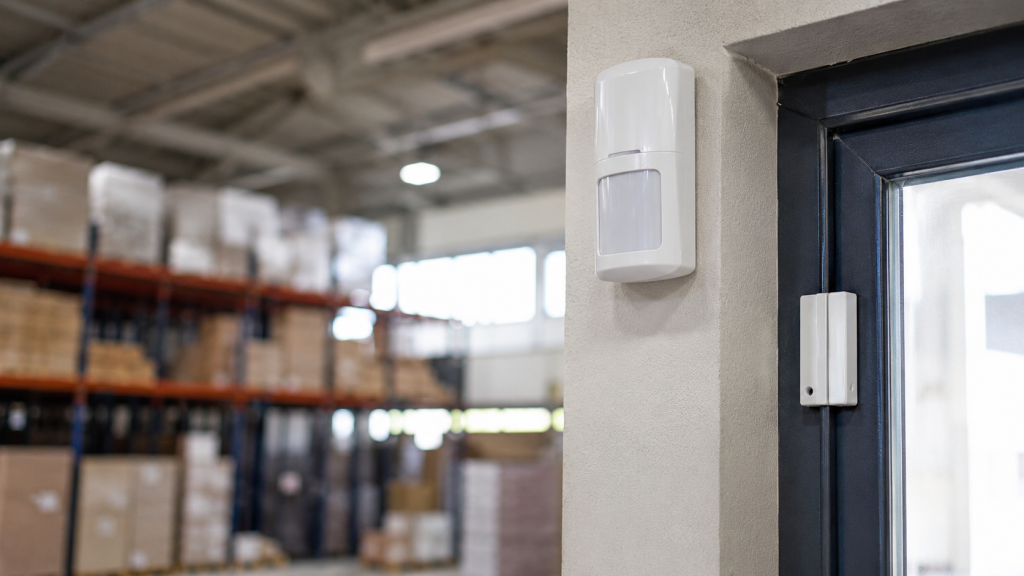
- Warehouses: contacts on every loading dock door, motion down the aisles, and separate zones so the office side can be armed while shipping keeps running.
- Offices: perimeter contacts, a keypad at each entrance, and open and close reports that show which user code turned the system off in the morning.
- Manufacturing and shops: sensors placed for high ceilings and moving equipment, with zone bypass for areas that stay active overnight.
- Multi-location businesses: one account covering every site, a separate user code per location, and one app that shows which site is armed right now.
Commercial alarm system installation covers the intrusion alarm on a business property: the control panel, door and window contacts, motion sensors, keypads, and the communicator that carries signals out of the building. We install these systems in stores, warehouses, offices, production floors, and businesses running several sites under one account. The job includes a zone plan built around how the building operates, testing against the central station, and on-site training after handover. Monitoring is set up on the same visit when you want it.
Business Alarm Monitoring on a Commercial Property
Business alarm monitoring means every signal from your panel lands at a central station that reads it and acts on it. When a zone trips at 2 a.m., the operator checks the signal type, then works down your call list: the manager first, then the second key holder, then the third, until somebody picks up. The dispatch request to police goes out while those calls are happening, not after them.
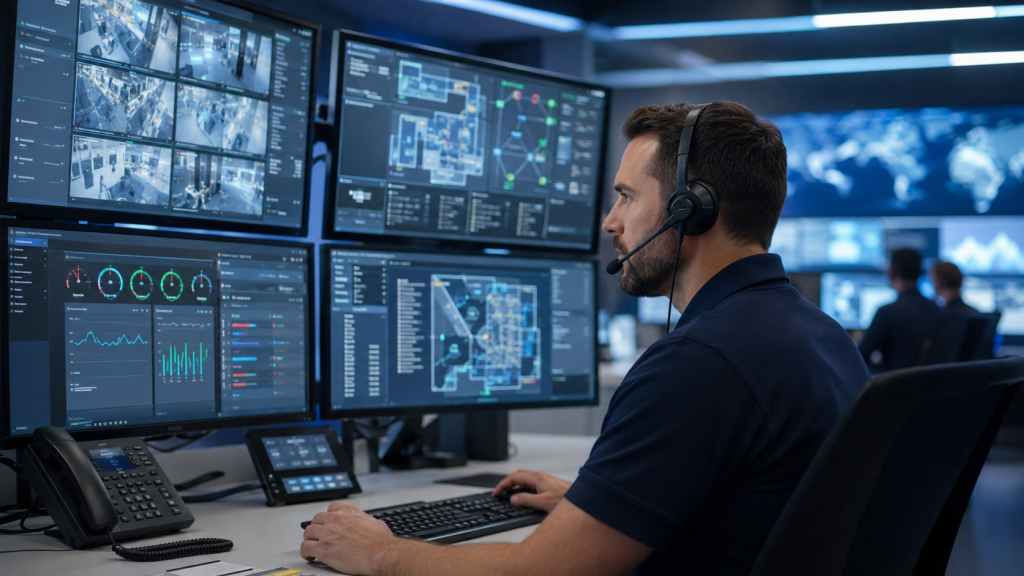
The call list is yours to set. Most businesses put three to five names on it, and adding or dropping one is a programming change rather than a service visit.
Open and close reports are the part owners use daily. The system logs which user code disarmed at opening and which armed at close, with a timestamp on each. If the store should be open by 9 and no disarm signal arrives by 9:20, the manager gets a notification, and the same rule catches a site that never armed at night.
Hold-up buttons and duress codes give staff a way to signal without saying anything. A duress code looks like a normal disarm on the keypad and sends a silent alarm at the same time, and hold-up buttons sit at the register or the reception desk. Cameras tied to the system let an operator look at the scene before anyone is dispatched, which is set up on the commercial camera installation side of the job.
False alarms get handled through how the system is set, not by shutting sensors off. Entry and exit delays are timed to the way people walk in, motion sensors go in away from vents and hanging stock, and a zone that keeps tripping is re-aimed or swapped on a service call. How the station is staffed and how signals move through it is covered on the page for alarm monitoring as a standalone service. That station takes signals 24/7; our own office runs weekdays from 8 to 6.
What Gets Installed at Different Types of Businesses
Commercial burglar alarm systems are laid out around the building and the hours it keeps. A store with one glass front and a stockroom needs a different layout than a warehouse with six dock doors, and the difference shows up in zone count and sensor type, not in the panel.
Stores. Glass break sensors on the front, motion across the sales floor, a contact on the back door, and a hold-up button at the register. The stockroom is usually its own zone so it stays armed while the floor is open.
Warehouses. Every dock door gets a contact, and motion covers the aisles rather than the racks, where forklifts and shifting stock cause trouble. Shipping and the office side are split, so one arms at 5 while the other runs until 9.
Offices. Perimeter contacts, a keypad at each entrance staff actually uses, and motion in corridors instead of individual rooms. Codes are issued per person, so the open and close report names someone.
Production floors. Sensors are picked for high ceilings, dust, and machinery that runs overnight, and any area still in use after hours is bypassed on a schedule rather than left unarmed.
Several locations. Each site keeps its own panel and zones and reports into one account with per-site user codes. One app shows which sites are armed, and the reports arrive together.
System Components and Zoning
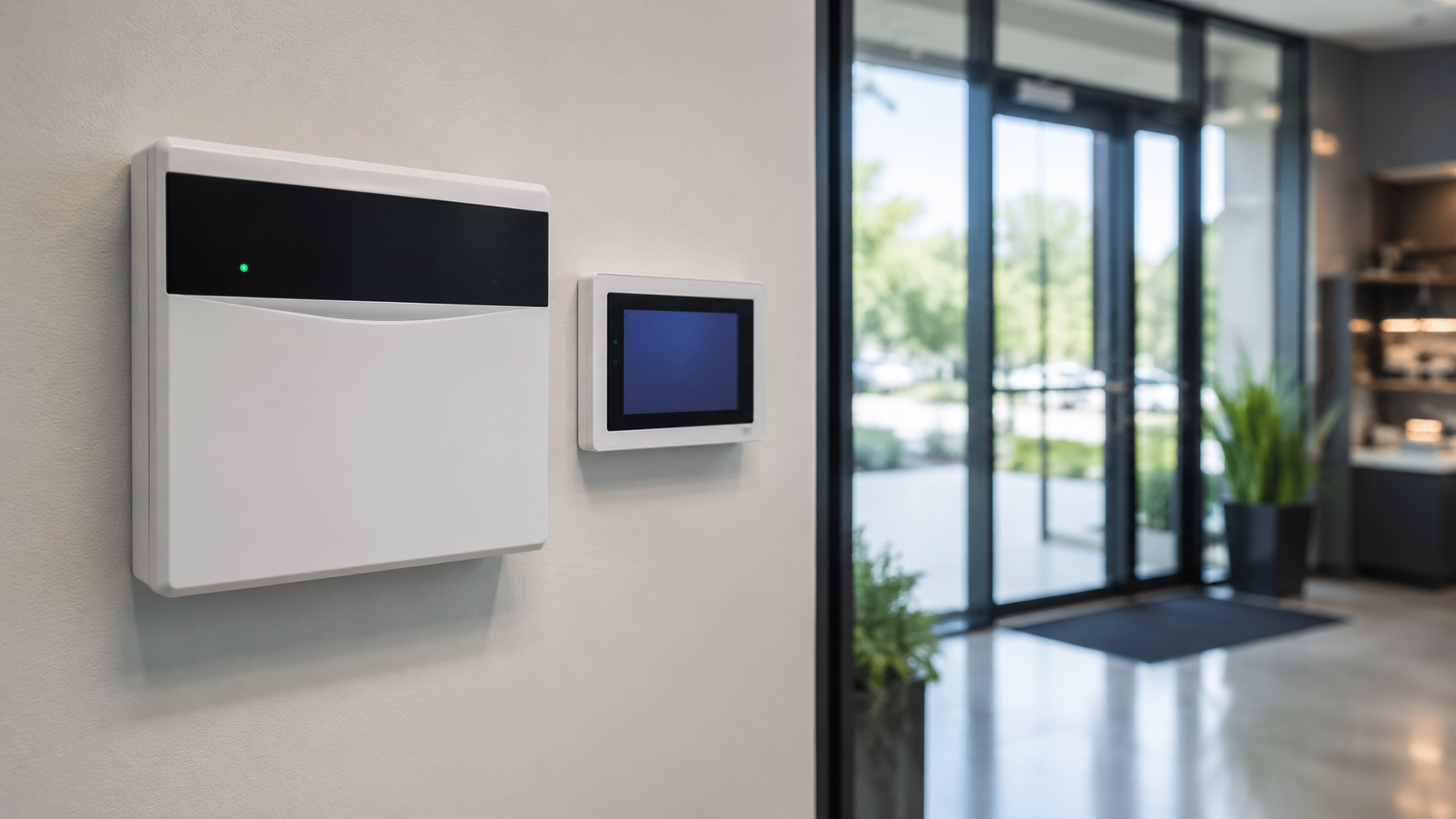
A business burglar alarm system is a control panel, the sensors wired or paired to it, one or more keypads, and a communicator. The panel is sized by zone count first: a small office runs fine on eight zones, while a warehouse with docks and partitions needs expansion modules.
Zoning is what makes the system usable during business hours. Zones are grouped into partitions that arm separately, so the stockroom, the dock, and the office each go on and off on their own schedule. Every user gets a code tied to a name and a permission level: manager codes with full control, key holder codes for arming and disarming, limited codes for staff on one partition.
Signals leave over cellular as the primary path with internet as backup, and the panel supervises both, sending a trouble signal if either drops. Smoke and carbon monoxide detectors can sit on the alarm loop as sensors, so those signals reach the station along with intrusion signals. Honeywell and Resideo, Napco, DSC, DMP, and Bosch panels, run through the Alarm.com platform, are standard equipment in this market; panels and sensor types are covered on the page for alarm system equipment and installation. Where badge readers already run the doors, the panel ties into access control for business properties so an authorized entry disarms its partition.
Installation at a Working Business
Installation starts with a walkthrough of the building. We count entry points, note where stock and cash sit, ask how staff come and go after hours, and turn that into a zone plan you sign off on before anything gets mounted.
Mounting and wiring happen around your hours. Most jobs run in evening or weekend blocks, and a cable crossing a sales floor or a production line waits until close. A site that stays open gets its zones brought online in stages, so no part of the building sits unprotected overnight.
Commercial alarm system installation ends with testing every device against the station: each sensor tripped, each signal confirmed as received, each partition armed and disarmed. Then comes the walkthrough for whoever will use the system, mobile app setup, and the code list programmed with names. Techs on the job are licensed, and the install carries a 90-day mechanical and 12-month electronics warranty covering parts and labor.
What Affects the Cost
Four things drive what a commercial alarm system costs: how many zones the building needs, how many sensors go in each zone, whether the runs are wired or wireless, and how many sites are on the job. Layout matters more than square footage: an office with one entrance is a smaller job than a shop of the same size with three doors and a dock.
The quote is labor plus material for one total, given after the walkthrough rather than over the phone. Larger jobs take a partial deposit up front with the balance on completion, and a signed contract goes in before work starts, with a tax exemption form if your business has one.
Commercial alarm system companies bill monitoring separately from the install, and that holds here: the install is a one-time job, monitoring runs on its own agreement. Business alarm monitoring companies price that side by the number of sites and the signal types watched. Commercial clients get invoicing and a business account; cash, card, ACH, wire, check, Zelle, and Venmo all work.
Service Area
We install and service commercial alarm systems within 75 miles of Midtown Manhattan, which covers the five boroughs and the surrounding counties. A service call inside the city usually gets a tech there in 20 to 40 minutes.
Businesses in Lower Manhattan and Brooklyn account for much of the multi-site work: a storefront in one borough and a warehouse in another run on one account with one call list. Extended zones past the 75-mile line are taken case by case. Service visits and phone or email support run weekdays from 8 to 6, while the central station takes signals 24/7.
Commercial Burglar Alarm Systems FAQ
Can I arm part of my building and leave the rest open?
Yes, zones are grouped into partitions that arm and disarm on their own. A stockroom or dock stays armed while the sales floor is open.
Who gets called when my alarm goes off at night?
The station calls the people on your call list, in the order you set, until someone answers. The police dispatch goes out during those calls.
What does business alarm monitoring include?
Business alarm monitoring covers signal handling at the central station, key holder calls, dispatch, open and close reports, and hold-up or duress signals from staff.
What alarm panels are used in commercial buildings?
Honeywell and Resideo, Napco, DSC, DMP, and Bosch panels are the common commercial platforms here, usually run through Alarm.com. Zone capacity decides which one fits.
What happens if we trip a false alarm?
You cancel it by giving the station your passcode when the operator calls, and no dispatch goes out. A zone that keeps tripping gets re-aimed or swapped.
Can one account cover alarms at several locations?
Yes, every site runs its own panel and zones while reporting into one account with per-site codes. Small business alarm monitoring works the same on two sites as on ten.
Is the installation covered by a warranty?
New installations carry a 90-day mechanical warranty and a 12-month electronics warranty, both covering parts and labor. Work on someone else’s equipment is quoted separately.
How is a commercial alarm system quoted?
Quotes are labor plus material for one total, given after a walkthrough. Zone count, sensor count, wired or wireless runs, and site count set the figure.
Related Security Services
A burglar alarm is one piece of the setup at most business properties. A build that brings alarms, cameras, and door hardware in as one project falls under complete security systems for business properties. A panel that keeps faulting, drops its signal, or was left behind by another company is handled as security system repair and service.
What our clients say