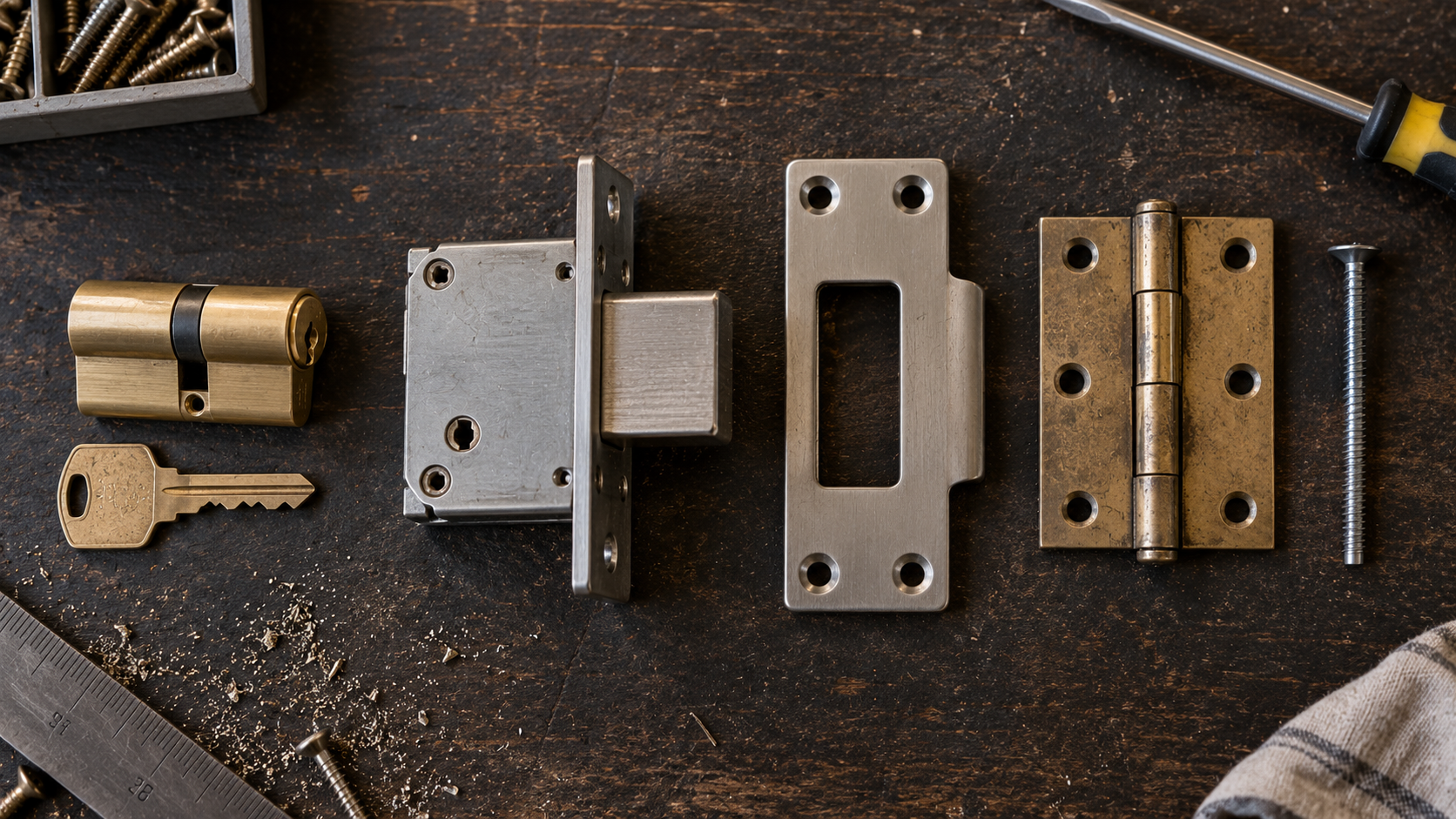
Improving your locks means strengthening four separate parts that fail in four different ways: the cylinder, the bolt, the frame and strike plate, and the hinges. An intruder attacks whichever one is weakest, which is why an expensive lock mounted in a soft frame protects almost nothing. Most money spent on home security hardware goes into the part that was already strong. This guide covers what each part does, which upgrade returns the most, and what is realistic in New York housing where the door, the frame and sometimes the decision are not entirely yours.
A Lock Is Four Parts, Not One
Each part resists a different kind of attack, and they do not substitute for one another. Total security equals the weakest of the four, not the average.
The Cylinder: Picking, Bumping and Key Copying
The cylinder is the keyed mechanism, and it defends against attacks that leave no visible damage — picking, bumping with a specially cut key, and unauthorized duplication of a key someone borrowed. A basic pin-tumbler cylinder from a hardware store is straightforward to manipulate for anyone who has practiced. This is the part where paying more genuinely buys resistance, through tighter tolerances, security pins that resist manipulation, and hardened inserts against drilling.
The Bolt: Length, Material and Throw
The bolt is the metal bar that crosses from door into frame, and it defends against force. What matters is how far it extends: a bolt that projects a full inch into the frame is considerably harder to defeat than one that barely clears the gap, because a short throw can be forced out of its pocket by spreading the frame. Solid hardened steel resists sawing. A spring latch in a knob or lever — the angled one that clicks shut on its own — is not a bolt and offers no meaningful resistance to force.
The Frame and Strike Plate: Where Most Doors Fail
The strike plate is the metal plate in the frame that the bolt lands in, and this is where the majority of forced entries actually succeed. A standard plate is a thin piece of brass held by two three-quarter-inch screws that bite only into the soft trim, not the structural framing behind it. Under a kick, the wood splits, the plate tears out, and the lock itself is still perfectly intact and still locked — attached to a piece of door frame lying on the floor. No cylinder upgrade addresses this.
The Hinges: The Half Nobody Checks
Everything above concerns one edge of the door. The other edge hangs on hinges, usually mounted with the same short screws into the same soft trim. On an outward-opening door the hinge pins may also be exposed on the outside, which allows the pins to be driven out and the door lifted off entirely. Security hinges with non-removable pins, or a simple set screw that blocks pin removal, close that route.
The Cheapest Upgrade That Actually Works
Replace the short screws in the strike plate and in every hinge with three-inch screws that reach past the trim and into the structural framing behind it. The parts cost a few dollars, the job takes twenty minutes with a screwdriver, and it changes what a kick has to break — from a strip of decorative moulding to the framing of the wall itself. Pair it with a reinforced strike plate, which is a longer, thicker plate spanning more of the frame with four screws rather than two.
If you do only one thing after reading this, do that one. It returns more per dollar than any lock on the market, and it is the step almost every self-installed lock skips.
What Makes a Lock “High Security”
The phrase is not regulated. Any manufacturer can print it on any package, so it is worth knowing which specific properties are actually behind it.
ANSI Grade 1, 2 and 3
Residential locks are graded by an industry standard that tests cycles of operation and resistance to force. Grade 3 is the basic residential level, Grade 2 is the middle tier commonly used in better residential and light commercial settings, and Grade 1 is the highest, built for commercial doors and heavy use. A Grade 1 deadbolt on an exterior door is a meaningful step up from the Grade 3 hardware that ships with most homes.
Anti-Drill, Anti-Pick and Anti-Bump Features
Three specific defenses are worth looking for. Hardened steel pins or plates inside the cylinder blunt a drill bit rather than letting it chew through. Security pins of irregular shape catch and bind during picking attempts instead of setting cleanly. Anti-bump designs use sidebars or sprung elements that a bump key cannot displace. A lock claiming high security without any of the three is claiming a marketing term.
Restricted and Patented Keyways
The overlooked half of lock security is key control. An ordinary key can be copied at any hardware counter by anyone who holds it for five minutes — a contractor, a dog walker, a former tenant. Restricted keyways use patented blanks that are not sold to the general trade, so copies can only be cut by an authorized dealer against a signed card. For a building or a household with a lot of people passing through, this often matters more than the mechanical rating.
What the Grade Doesn’t Tell You
The grade tests the lock as a device. It says nothing about the door it goes into, the frame it lands in, or how well it was installed. A Grade 1 deadbolt fitted with a misaligned strike and short screws performs worse in practice than a Grade 2 lock installed properly.
Deadbolts, Multipoint Locks and Smart Locks
Three constructions, three purposes. They are not ranked against each other, and the newest is not the strongest.
Single- vs Double-Cylinder Deadbolts
A single-cylinder deadbolt takes a key outside and a thumbturn inside. A double-cylinder needs a key on both sides, which prevents someone reaching through broken glass beside the door to turn the thumbturn — and also means nobody can get out quickly without finding a key. That trade-off is a safety question, not just a security one, and in many jurisdictions double-cylinder locks are restricted on primary exits for exactly that reason. Where glass sits within arm’s reach of the lock, security film on the glass is usually the better answer than a key-both-sides deadbolt.
Multipoint Locks
A multipoint lock throws several bolts along the height of the door from a single handle motion, typically at the top, middle and bottom. Force is distributed across the whole frame instead of concentrated at one point, which makes the door far harder to spread or lever. They are common on European-style and newer replacement doors, and they are the strongest mechanical option available for a residential entry — but they have to be specified with the door, since retrofitting one into an existing door and frame is rarely practical.
Where a Smart Lock Helps and Where It Doesn’t
A smart lock changes how the bolt is operated, not how strong it is. What it adds is key control: codes issued per person, revoked individually, with a log of who came and went. What it does not add is resistance to force — the underlying bolt and strike are the same hardware, and a motor that has to fight a misaligned door will eventually fail. Choose it for access management, then check that the mechanical grade underneath is still what you want.
When the Lock Isn’t the Problem
Some doors cannot be made secure with hardware at all. A hollow-core door — light enough to lift with one hand, sounding drummy when knocked — has nothing solid for a bolt to anchor into, and a hardened lock in a hollow door is decoration. The same applies to a frame that has already split and been filled, or a door that has sagged enough that you have to lift or push it to throw the bolt. That misalignment means the bolt is not seating fully in the strike, so it is throwing a fraction of its length whatever the specification says.
The quick test: lock the door and try to move it. If there is play, if the bolt goes in stiffly, or if daylight shows unevenly around the edge, fix the door and frame before buying hardware.
Locks in a New York Apartment or Brownstone
City housing changes what is possible. Some of these decisions are yours; some belong to a landlord, a board, or the building.
Pre-War Doors and What Fits Them
Older apartment doors often carry hardware installed decades ago, sometimes several generations of it, with old mortise pockets and filled holes from previous locks. Many were built solid, which is an advantage — but the frames around them have usually been opened and patched repeatedly, and that is where the weakness sits. A mortise lock in a pre-war door generally needs a like-for-like replacement or a new case fitted to the existing pocket, which is a different job from swapping a modern cylindrical deadbolt.
What You Can Change as a Renter
Reinforcing the strike plate and hinge screws changes no hardware and is almost always acceptable, though it is worth mentioning to the landlord. Replacing a cylinder or adding a lock does change hardware and needs permission, and the landlord will normally require a key. Anything that would leave the landlord unable to access the unit is not an option. Rekeying at move-in is the reasonable ask: it costs little and means nobody from the previous tenancy still holds a working key.
The Apartment Door vs the Building Entrance
In a multi-unit building your door is the second barrier, not the first, and the entrance downstairs is shared. Upgrading your own lock does nothing about a vestibule door that gets buzzed open by anyone who rings. Both matter, they are separate projects, and the building one goes through management or the board.
Rekeying, Key Control and Losing Access
Rekeying changes the pin configuration inside an existing cylinder so old keys no longer work, keeping the same hardware. Replacing swaps the whole lock. Rekeying costs less and is the right choice when the hardware is sound and only the key needs to change — after a move, after a contractor finishes, after a relationship ends. Replacement is right when the lock itself is worn, low-grade, or you want features it does not have.
Whichever you choose, keep track of how many keys exist and who holds them, because access drifts quietly over years. If you find yourself on the wrong side of a door, our guide on being locked out of your house covers the options, and an emergency locksmith can open the door without destroying the hardware you just paid to upgrade.
What Better Locks Don’t Do
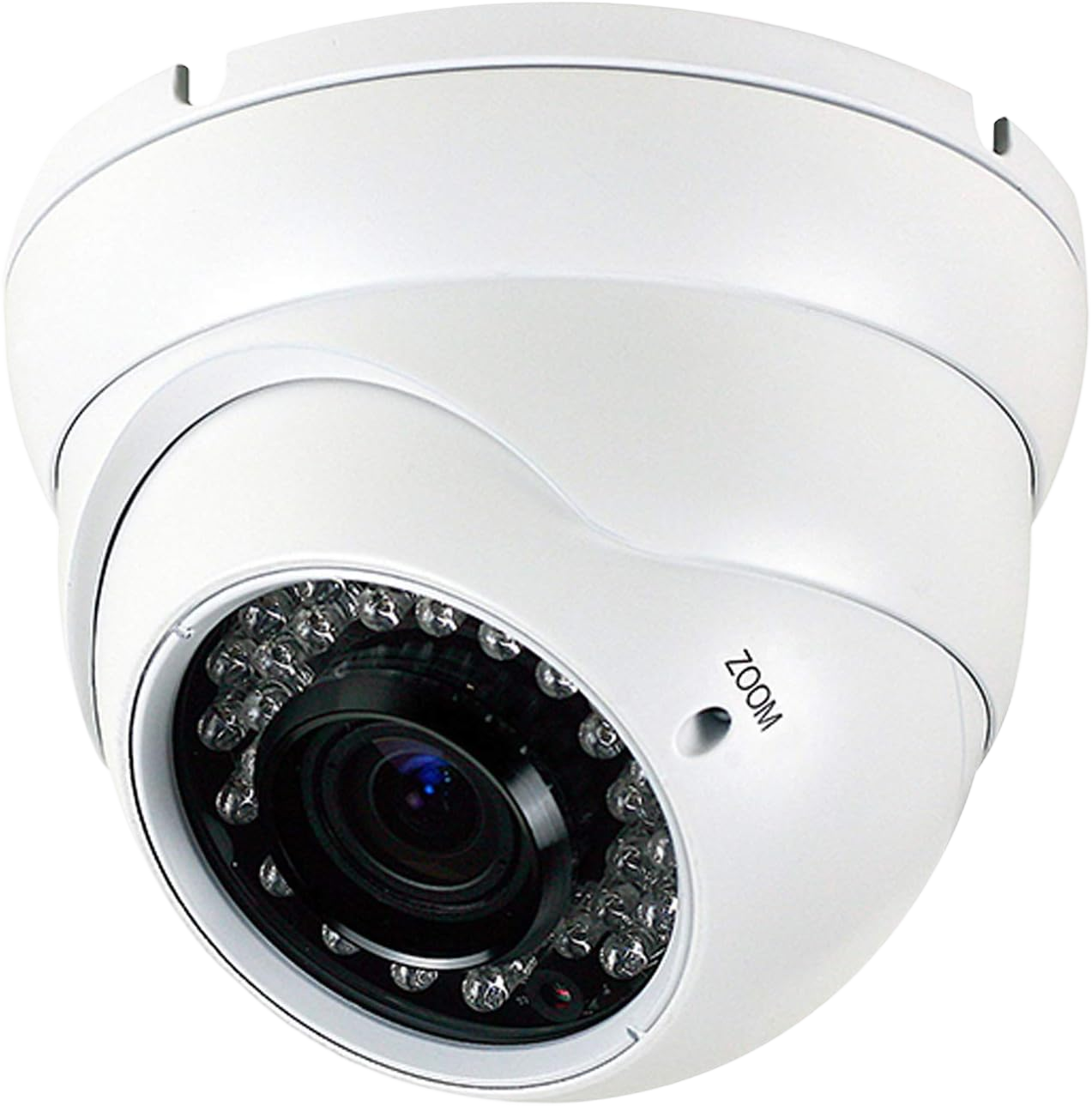
Locks delay and deter. They do not tell you anything happened. A forced door at two in the afternoon while you are at work produces no alert, no record, and no response — the lock either held or it did not, and you find out when you get home. That is the gap that sensors and home security cameras fill, and it is why hardware and monitoring are complements rather than alternatives.
Installation and Cost
Installation decides as much as the hardware. The bolt has to seat fully and freely in a strike that is aligned to it, the mortise or bore has to be cut to the right depth, and the cylinder has to sit flush without projecting far enough to be gripped and twisted. Misalignment is the most common defect found on self-installed locks, and it quietly cancels the specification you paid for. A residential locksmith can assess the door, frame and hinges as one assembly rather than fitting a lock to whatever is there, and our breakdown of what a locksmith costs for a house covers the typical range for rekeying, replacement and reinforcement work.
Frequently Asked Questions
What is the most secure lock for a front door?
A Grade 1 deadbolt with a one-inch throw, a drill-resistant cylinder and a restricted keyway, mounted in a reinforced strike with three-inch screws. On a door built for it, a multipoint lock is stronger still.
Does a better lock stop a door from being kicked in?
Not on its own. Kicks break the frame, not the lock. Resistance comes from a reinforced strike plate and long screws anchored in the structural framing, plus a bolt with a full throw.
What is the difference between rekeying and replacing a lock?
Rekeying reconfigures the pins inside the existing cylinder so old keys stop working, keeping the hardware. Replacing installs a new lock entirely. Rekey when the hardware is sound and only access needs to change.
Are smart locks less secure than regular deadbolts?
Not inherently — the bolt and strike are the same mechanical parts. A smart lock adds code-based access control and an entry log, and it depends on batteries and on a door aligned well enough for the motor to work reliably.
Can I change the lock on my apartment door as a renter?
Changing hardware needs the landlord’s permission, and they will normally require a key. Reinforcing the strike plate and hinge screws changes no hardware and is usually acceptable. Rekeying at move-in is a reasonable request.
How do I know if my lock is high security?
Check for an ANSI grade marking, a bolt that throws a full inch, hardened anti-drill components, and whether your key can be copied at any hardware counter. The phrase on the packaging means nothing by itself.
Start With the Weakest Part
Work out which of the four parts is weakest on your door, and spend there. For most homes that is the frame, and the fix costs less than a takeaway meal. Buying a better lock to bolt into the same soft trim is the most common way this money gets wasted.