A networked access control system in New York City costs about $1,500 to $4,500 per door installed with card, key fob, or phone credentials. A standalone keypad starts near $500 per door, while biometric readers and complex doors can exceed $6,000. The spread comes from door hardware, wiring, and the software plan. Below are NYC prices per door, what one door includes, monthly fees, and sample budgets.
Access Control Cost per Door by System Type
Access control system cost is quoted per door because each opening needs its own reader, lock, and wiring back to a controller.
| System type | NYC price per door, installed | Monthly software | Where it fits |
| Standalone keypad or smart lock | $500 to $1,500 | None or a small app fee | One to three doors, storage and back rooms |
| Card, fob, or phone credentials on a controller | $1,500 to $4,500 | $10 to $30 per door in the cloud | Offices, apartment buildings, shops |
| Biometric readers | $2,000 to $8,000 | Same as the platform | Server rooms, pharmacies, records rooms |
| Complex openings: glass storefronts, elevators, turnstiles | $6,000 and up | Same as the platform | Lobbies and multi-tenant buildings |
The ranges come from 2026 price guides published by New York City installers and national access control vendors, checked in September 2026. They include hardware, labor, and basic setup, but not ongoing software. Fingerprint and face readers are covered on our biometric access control page.
What Goes Into the Price of One Door
A single controlled door combines four cost lines: the reader, the lock hardware, a share of the controller, and the labor to wire and program it all. Understanding each line makes competing quotes easier to compare.
Readers and Credentials
A basic card reader costs around $150, and a biometric reader closer to $600, before installation. Cards and key fobs run about $1 to $10 each, depending on whether they use plain proximity or encrypted smart technology. Phone credentials remove most of that plastic, although some platforms charge a fee per mobile user. Keypads cost less per door, but codes get passed around, so the entry log cannot show who actually walked in.
Locks and Door Hardware
Electronic locks range from about $50 to $900 per door. An electric strike fits most wood and metal frames and keeps the existing lever. Glass storefront doors usually need a magnetic lock, a bracket, and a request-to-exit sensor, so they cost more. Every door also gets a door position switch, which tells the system when a door is propped open.
Controller, Wiring, and Labor
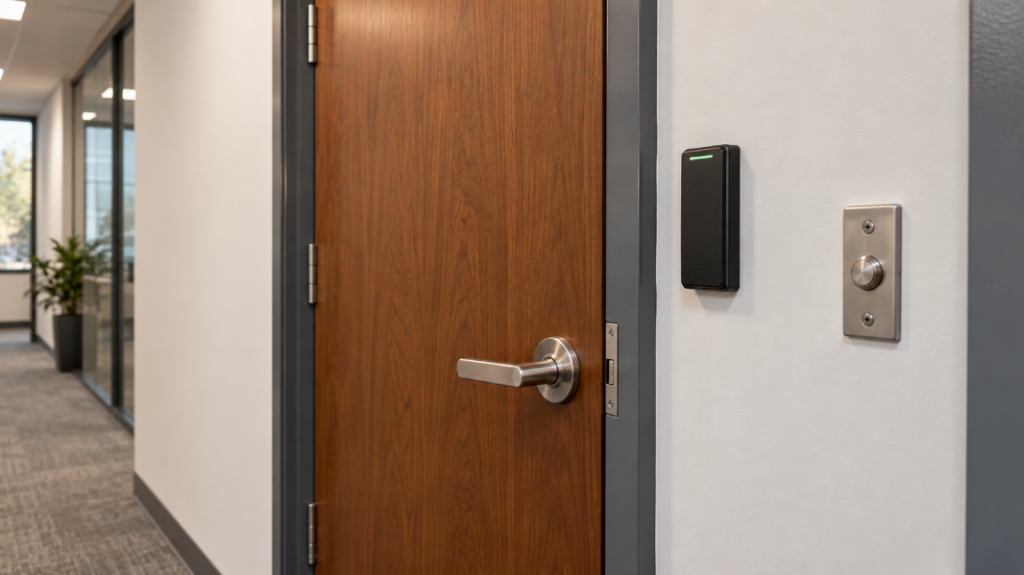
A controller handles four to twenty-four readers, so its cost gets split across the doors it serves. Panels come in two-, four-, eight-, and sixteen-door sizes, which means the ninth door on an eight-door panel costs more than the eighth. Labor usually runs $400 to $1,200 per door in straightforward conditions. In NYC, the same door can reach $600 to $2,500 when the job needs conduit across several floors, fire-rated penetrations, or union oversight. Cable, conduit, and power add roughly $200 to $1,000 per door, depending on the distance to the closet.
A clear quote lists every door with its reader, lock type, and wiring path, followed by the controller, power supplies, credentials, programming, and training. Lump-sum quotes without that detail hide what adding or dropping a single door would cost, which makes them hard to compare.
Cloud or On-Site Software: Monthly Costs
Cloud platforms charge about $10 to $30 per door each month, sometimes more for video features. The fee covers updates, remote management, and adding a door later without a server. On-site software costs more at the start, often $1,000 to $3,000 for licensing plus $500 to $1,500 a year in maintenance, and then carries no per-door fee.
Over five years, the two models land closer than they look on day one. One NYC installer’s analysis puts cloud at $3,000 to $6,000 per door over that period and on-site systems at $4,000 to $8,000 once maintenance and upgrades are counted. Cloud usually suits companies with several locations or frequent staff changes. On-site software suits a single building with a stable user list and its own IT support. Whichever you choose, get administrator rights to your own system written into the contract, so every permission change does not become a service call.
What Raises Access Control Costs in NYC Buildings
New York adds labor and paperwork that national price guides leave out. Prewar plaster, masonry shafts, and fire-rated corridors slow every cable run. Co-op boards usually approve any drilling before work starts. Magnetic locks must release for safe exit, so each one needs a request-to-exit sensor, a push-to-exit button, and a fire alarm tie-in where the building has one.
Most standard installations in a commercial building do not need a Department of Buildings permit, although new electrical conduit or structural work can require one. Usable risers and old cable paths work in your favor and can cut the wiring line by a quarter or more.
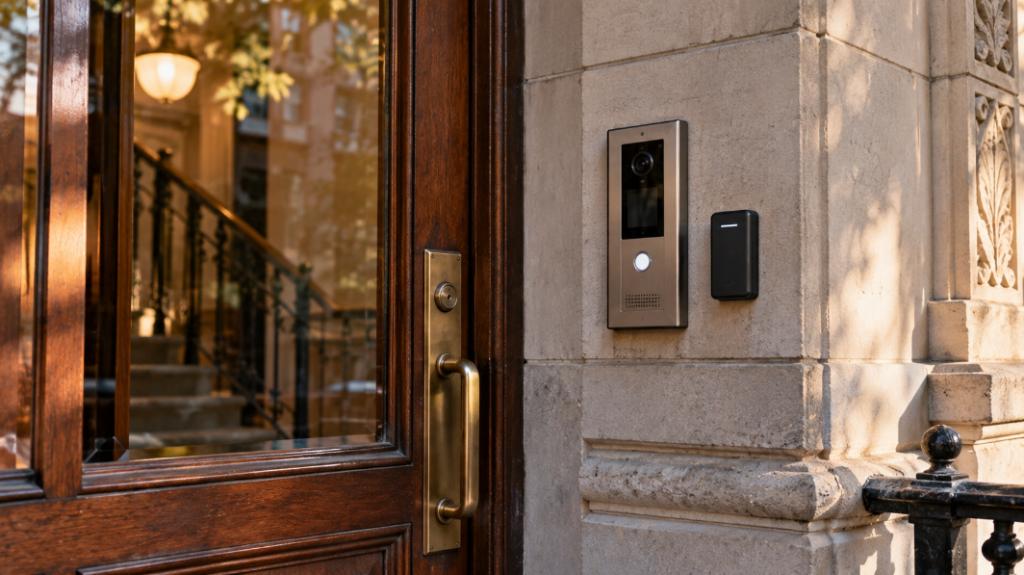
Apartment buildings that use smart access fall under the city’s Tenant Data Privacy Act, and businesses that collect biometric data from customers must post notice signs. Elevator control and lobby turnstiles add programming and coordination with other trades. Many buildings also want the reader to share the entrance with a video intercom, which adds hardware but avoids a second device at the door.
Sample Budgets for NYC Properties
Per-door prices apply best to small jobs. Larger systems share controllers and cable paths, so the cost per door drops as the door count grows.
- Two-door office, front door and server room, card or phone access: about $3,000 to $9,000, plus $20 to $60 a month for cloud software.
- Walk-up apartment building with the front door, package room, roof door, and basement on fobs: about $6,000 to $18,000.
- Ten-door office or building floor on a cloud platform: one NYC integrator quotes $8,000 to $15,000 installed, because controllers and wiring are shared.
Phasing keeps the first invoice smaller: secure the main entrance and the most sensitive rooms first, then add doors to the same platform later. Budget another 5% to 12% of the system price each year for maintenance, whether it comes as a service plan or as repair calls. If you want each door event tied to video, our guide to security camera installation cost covers the camera side. Multi-entrance projects with turnstiles and tenant-by-tenant rules are described on our commercial access control page. Lock and Tech USA’s licensed technicians plan and install access control across the five boroughs; see our access control installation service.
Frequently Asked Questions
How much does a key fob entry system cost for an apartment building?
Expect about $1,500 to $4,500 per controlled door installed, with a small building on the lower end once doors share one controller. Fobs themselves cost roughly $1 to $10 each, so a 40-unit building spends a few hundred dollars on credentials.
Do access control systems have monthly fees?
Cloud systems do, usually $10 to $30 per door each month. On-site systems have no monthly fee but need an upfront license and yearly maintenance. Standalone keypads and many smart locks carry no recurring fee at all.
Can access control work with our existing doors and locks?
In many cases, yes. An electric strike works with most existing locksets in wood and hollow metal frames, which keeps hardware costs lower. Glass doors, damaged frames, and very old hardware usually need new locking parts, and the site walkthrough confirms this before the quote.
What happens to controlled doors when the power goes out?
Magnetic locks release so people can always get out, which is why they are paired with exit devices and fire alarm release. Electric strikes can be set to stay locked from the outside while the inside lever still opens. Backup batteries at the controller keep readers working through short outages.
How long does access control installation take?
A standard door takes roughly four to eight hours of labor, including cable, hardware, and programming. A small office is often finished in one or two days. Cable pulling, the noisiest part of the work, can be scheduled after hours in occupied buildings.