
- Home
- Security System
- Burglar Alarm System Installation
Burglar Alarm System Installation in New York



in New York
Since 1989, we’ve been securing homes and businesses across NYC and New Jersey with professional security solutions you can trust. Our licensed technicians provide 24/7 emergency service, using only the latest technology and backed by comprehensive warranties on all installations.


Common Reasons for a Burglar Alarm Install
- A ground-floor apartment has windows on a fire escape or an airshaft, so contacts go on every reachable opening, not just the front door.
- A townhouse with a garden entrance and a cellar hatch runs the lower level as its own zone and arms the upper floors separately.
- A small storefront needs a code for each employee, so opening and closing times show up in the panel log.
- An insurance carrier asks for a monitored burglar alarm system in writing before the policy renews.
- A previous owner left an old panel behind with no documentation and no keypad codes.
- A house is being gut renovated, and sensor runs get planned during the wiring stage, before the walls close up.
A burglar alarm system is a set of sensors — door and window contacts, motion detectors, glass break detectors — wired or paired to a control panel that arms, disarms, and sets off a siren when a zone trips. The panel watches openings and interior space. It does not record video, and it does not decide who gets through a door. A typical apartment or townhouse runs 8 to 16 zones, keeps running on a backup battery through a power cut, and gets installed in a single visit on most residential jobs.
Burglar Alarm System or Security System: Where the Line Sits
A burglar alarm system handles detection of entry. A security system is the umbrella term for everything that guards a property — the alarm, cameras, access control, intercom — and the alarm is one part of that. The alarm answers one question: did something open, move, or break where it shouldn’t have. Cameras answer a different one: what happened, and who was standing there.
The same equipment shows up under several names. An alarm burglar system, a burglar alarm security system, and an intrusion alarm all describe the same panel and sensor setup, and burglar alarm systems is the phrase most manufacturers print on the box.
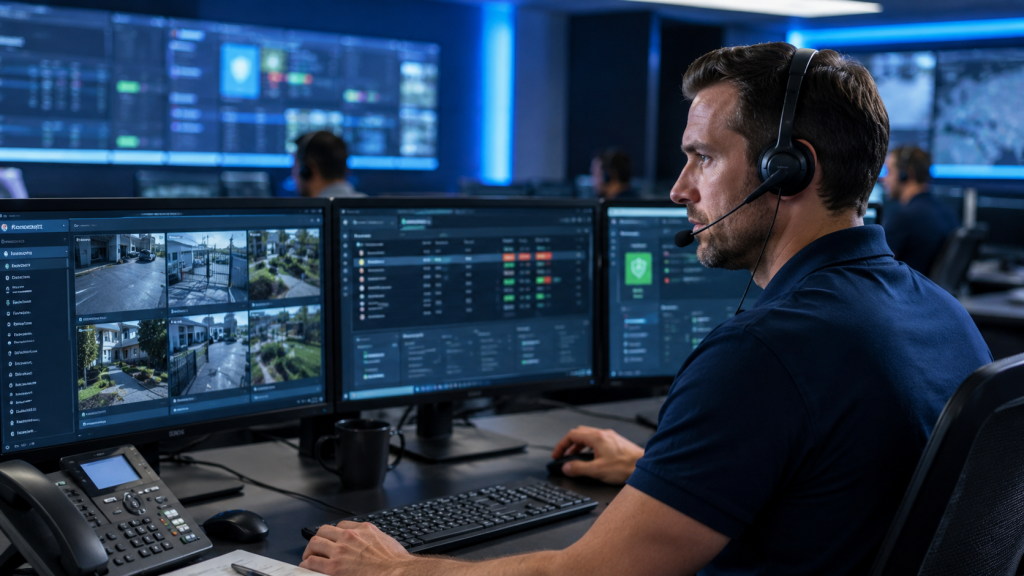
Detection stops at the signal. A local alarm sounds the siren and pushes a notification to your phone, and that is where it ends. A monitored burglar alarm system sends the same signal to a central station, where an operator verifies it and calls the police; central station monitoring runs around the clock and is billed separately from the install. Footage of the event comes from cameras put in alongside the alarm, not from the panel.
Sensors on their own are enough when the goal is to know that someone came in and to make noise about it — most apartments, townhouses, and small offices sit here. You need more than an alarm when you have to identify people rather than detect them, control who unlocks which door, or keep a record of who came and went.
What a Burglar Alarm System Is Made Of
Every burglar alarm system is built from the same six groups of parts, and the count of each is what changes from one property to the next.
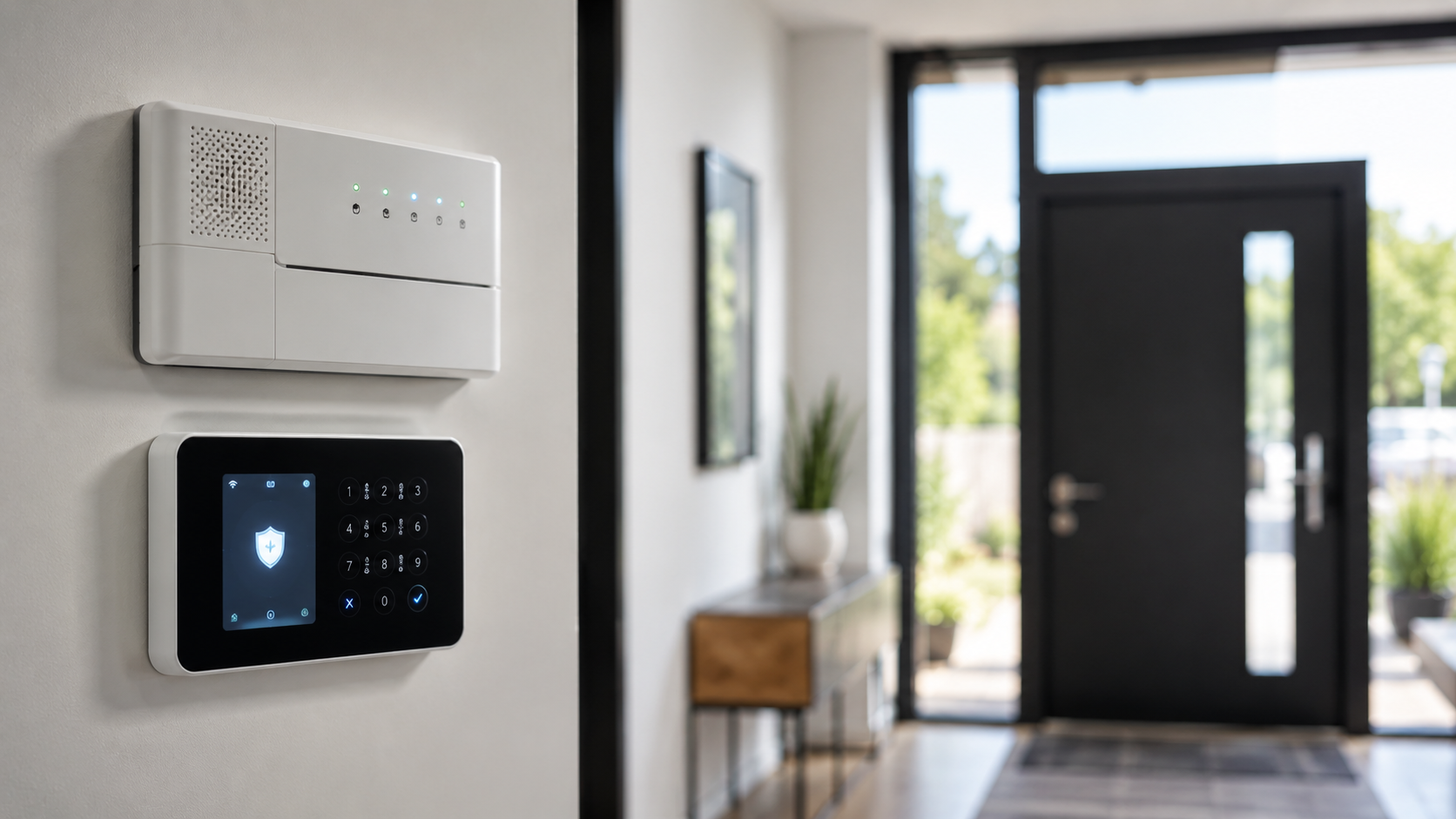
- Control panel and keypads. The panel takes every sensor input, holds the zone list and user codes, and communicates out over cellular, internet, or both. Keypads go by the doors people actually use, usually one at the main entry and one near the bedrooms.
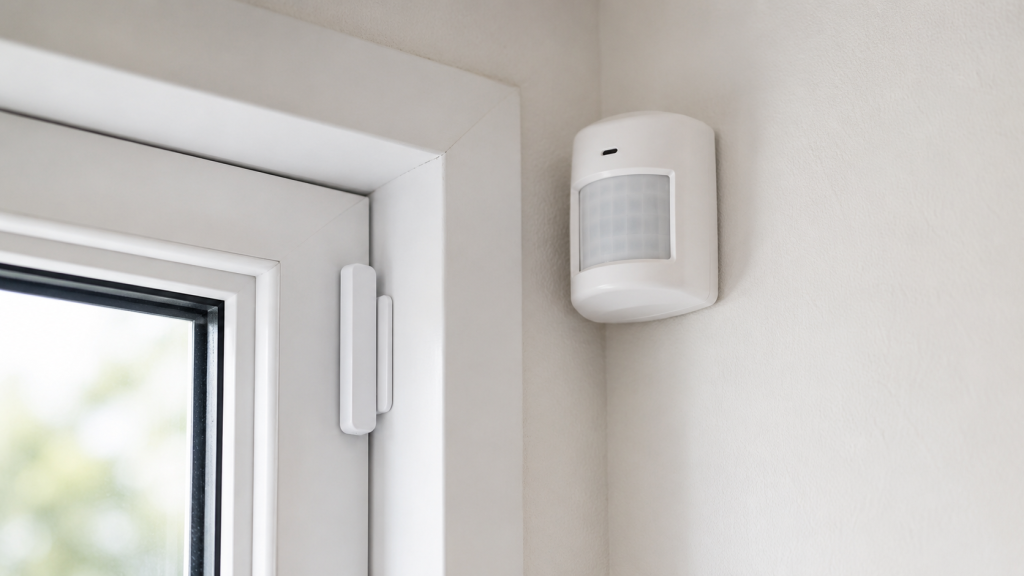
- Door and window contacts. Magnetic contacts sit on entry doors and any window a person can reach. Recessed contacts hide inside the frame; surface contacts mount on the face and cost less.
- Motion detectors. Passive infrared units read heat movement across a room and cover roughly 30 by 30 feet. Pet-immune models ignore animals under about 40 to 80 pounds depending on the sensor.
- Glass break detectors. One acoustic detector covers the windows of a whole room within about 20 to 25 feet, which is cheaper than a contact on each sash.
- Sirens. An interior siren runs 85 to 105 decibels. An exterior siren with a strobe tells the neighbors and the responding officer which building it is.
- Smoke and carbon monoxide detectors on the alarm loop. These are sensors wired into the same panel as the intrusion zones, so a trip shows up on the keypad and in the app the way any other zone does.
- Backup power. A sealed battery in the panel carries the system through an outage, typically for 24 hours. Panel batteries get replaced every 3 to 5 years, wireless sensor batteries every 2 to 5.
Honeywell and Resideo, Napco, DSC, DMP, and Bosch are the panel platforms that dominate intrusion work in the New York area, and parts and service for all of them are easy to source locally. Panels split into hardwired, wireless, and hybrid; a hybrid panel takes wired zones from an older install and adds wireless sensors where fishing cable is not worth it.
Residential and Commercial Setups
Residential burglar alarm systems and commercial ones use the same panels and differ in three things: how many zones, how the system gets armed, and how many people hold a code.
A ground-floor apartment gets contacts on the entry door and on every window off the fire escape or airshaft, plus one motion detector in the main room — typically 6 to 10 zones on one keypad. A townhouse splits into floors: the garden entrance, cellar hatch, and parlor windows arm as their own zones so the upper floors can stay disarmed while people sleep. Stay, away, and night modes exist for exactly this, and they are set during programming, not later by the homeowner.
A small storefront runs closer to 12 to 20 zones and gives each employee a separate code, so the panel log shows who opened at 7 and who set the alarm at close. Larger buildings, multiple tenants, and open and close reporting fall under alarm work for business properties, which is scoped differently from a house.
How the Installation Goes
A burglar alarm system installation runs as one visit on most residential jobs and two on wired retrofits, and the scope gets confirmed in writing before anyone shows up.
- Walkthrough. We come out, look at every door, window, and skylight a person could get through, and note where cable can run and where it can’t.
- Sensor plan. Zone by zone, on paper: what goes where, which zones arm in stay mode, where the keypads land.
- Mounting and wiring. Our licensed technicians run concealed cable on hardwired jobs and mount wireless sensors where walls are finished. Weekday work, 8 a.m. to 6 p.m.
- Programming. Zone names, entry and exit delays, user codes, siren behavior, and the communication path get set at the panel and tested one zone at a time.
- Handover. Before we leave, you arm and disarm the system yourself, and we set up the mobile app on your phone.
After that, the system needs three things on a schedule: a full sensor test, batteries swapped on the intervals above, and motion detector lenses wiped clean, since dust cuts sensitivity. Installations carry a 90-day mechanical and 12-month electronic warranty, parts and labor, and phone and email support runs during business hours. The broader service, including panel swaps and adding zones to a system someone else put in, sits on our alarm installation page.
What Drives the Cost
Price on an alarm job comes down to four things, and the first two move it the most.
- Zone count. Every opening you want covered is a sensor, and the sensor count is the largest line on the quote.
- Wired or wireless. Fishing cable through finished walls and old plaster takes hours; wireless sensors mount in minutes and carry battery replacement every 2 to 5 years instead.
- Property type. A one-keypad apartment and a four-floor townhouse with separate arming per level are different amounts of programming and different amounts of cable.
- Communication path. A cellular communicator in the panel is hardware plus a recurring line, and it is what keeps the signal alive if the internet drops.
We quote labor plus materials as one number. Larger jobs take a partial deposit up front with the balance on completion, and a signed contract goes in before the first hole gets drilled.
Service Area and Response Time
We install and service burglar alarm systems within 75 miles of Midtown Manhattan, which covers all five boroughs plus Westchester, Long Island, and northern New Jersey.
A technician reaches most addresses in the city in 20 to 40 minutes during working hours, weekdays 8 a.m. to 6 p.m. Multi-site clients with several properties get scheduled together rather than one address at a time. Coverage details by neighborhood are on the Lower Manhattan service page and the Brooklyn service page.
Burglar Alarm System FAQ
What is the difference between a burglar alarm and a security system?
A burglar alarm detects entry through sensors and a panel, while a security system is the whole package that can also include cameras, access control, and intercom. The alarm tells you someone came in; the rest of the system tells you who and lets you control the door.
Does a burglar alarm work without monitoring?
Yes, an unmonitored alarm still sounds the siren and sends a notification to your phone. What it does not do is put a person on the line who verifies the alarm and calls the police, which is what a monitored system adds for a monthly fee.
How many sensors does a two-bedroom apartment need?
Most two-bedroom apartments come out at 6 to 10 zones: a contact on the entry door, contacts on every window a person can reach, one motion detector in the main room, and a glass break detector if the windows face a fire escape. The final count comes off the walkthrough, not off a package.
Will my dog set off the motion detectors?
Pet-immune motion detectors ignore animals under roughly 40 to 80 pounds, depending on the model. Mounting height and angle matter as much as the sensor rating, which is why the placement gets planned rather than guessed.
How do I pick a home alarm system company in New York?
Ask three things: whether the technicians are licensed, whether the quote is labor plus materials in one written scope, and what the warranty covers. Our installations carry 90 days on the mechanical side and 12 months on electronics, parts and labor included.
Should I get a wired or a wireless burglar alarm system?
Wireless suits finished apartments and townhouses where opening walls is not an option, and wired suits new construction and gut renovations where cable can go in before the drywall. Hybrid panels take both, so an older wired install can pick up wireless sensors without replacing what already works.
How long does the installation take?
A wireless system in an apartment or a townhouse is a single visit, including programming and the walkthrough at the end. Wired retrofits in older buildings usually run two visits, since cable runs and finish work happen on separate days.
Related Services
A burglar alarm is one piece of what goes into a building. If a panel someone else installed keeps faulting, a keypad is dead, or a zone will not clear, that falls under diagnostics and repair of existing equipment. If you are weighing a full system rather than the intrusion side alone, start from the main alarm services page, which covers panel upgrades and expansions as well as new installs.
What our clients say