
- Home
- Telecommunications Services
- Home Automation and Security Systems
Home Automation and Security Systems in New York City



Secured in One Press
Since 1989, we’ve been securing homes and businesses across NYC and New Jersey with professional security solutions you can trust. Our licensed technicians provide 24/7 emergency service, using only the latest technology and backed by comprehensive warranties on all installations.


Automation and Security for New York Homes
- Apartments and co-ops. Existing sensors joined to the automation system without changes the building has to approve.
- Condominiums. Everything kept inside the unit, on the same app as lighting and climate.
- Townhouses and brownstones. Sensors across several floors feeding one set of scenes.
- Single-family houses. Doors, windows, garage, and outdoor lighting responding together.
- Homes with an existing alarm. The panel stays where it is; the automation system reads it and acts on what it reports.
- Homes left empty for weeks. Vacation scenes that vary lighting and report back, so an empty house does not read as one.
- Renovations. Sensor positions planned with the wiring while the walls are open.
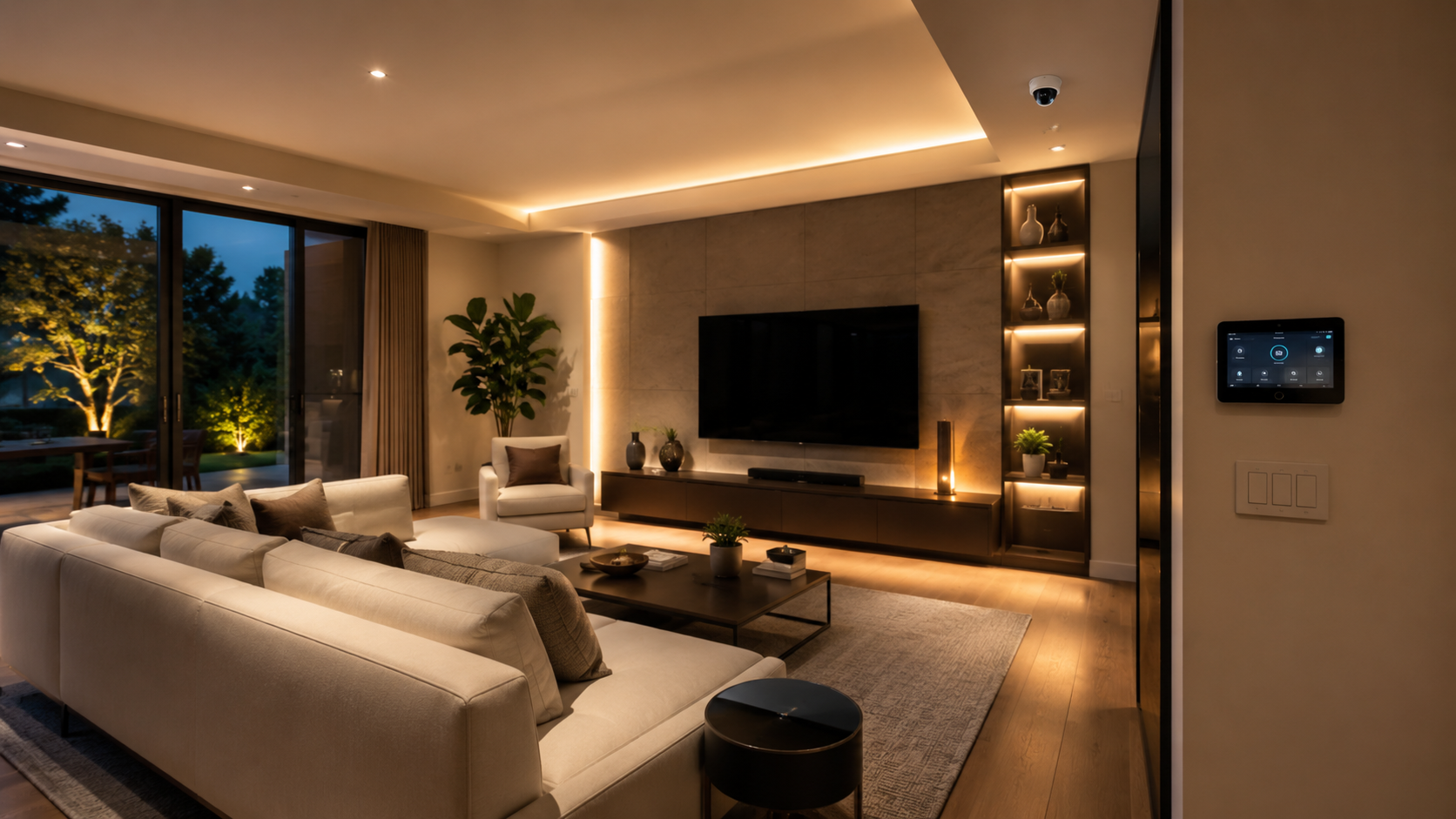
Home automation and security systems put two things that usually live apart on one controller: the sensors and alarm that watch the house, and the lighting, locks, shades, and climate that run it. Home security automation is what turns an event into an action — a trigger that does something rather than one that only reports.
How Security Integrates with Home Automation
Two systems can share a house for years without ever speaking to each other. The alarm sounds and the lights stay off. The app says a door opened and nothing follows. Home automation security system integration closes that gap: the automation controller reads what the security devices report and decides what the rest of the house does about it. The wider build this connects into is covered under home automation installation.
Sensors, Alarms, and Automated Responses
A home automation alarm is defined by what follows the trigger, not by the siren. A contact opening at three in the morning can bring up hallway lighting on a path toward the door. Motion in an empty house can start a sequence of lights across floors. Smoke detection can unlock exit doors, raise shades, and light the route out. A leak sensor under a sink can shut a valve before anyone is awake to notice. With alarm and home automation joined, each of those runs on its own, in the order you set, without anyone reaching for a phone. Camera events work the same way — motion in a zone becomes a trigger for a scene rather than just a clip in an app.
One App, One Set of Scenes
The second half is daily use. Leaving the house stops being a checklist: one press secures the doors, sets the alarm, drops the climate to away, and turns everything off behind you. A night scene locks up and lowers the house while leaving the interior sensors doing their job. A vacation scene varies lighting and shades over the days you are gone, so an empty house does not read as empty. Home automation and security for mobile devices means all of it sits on one screen — you check whether the house is secured in the same place you check whether the garage is shut.

What Gets Connected
Door and window contacts report which openings are secured and which are not, which is what lets a scene refuse to arm while a window is open. Motion sensors double as occupancy input, so the device watching an empty house also keeps lights on in a room someone is sitting in. A home automation smoke alarm becomes a trigger for lighting, locks, and shades rather than an isolated sounder, and carbon monoxide and water leak detection work the same way. Cameras act as event sources, with that side covered on home automation cameras. Connected locks report their state and take part in securing the house, detailed under home automation door systems. Existing panels usually stay where they are — the automation system reads them instead of replacing them.
Where We Install
We work in apartments and co-ops, condominiums, townhouses and brownstones, and single-family houses, including homes where an alarm is already in place and only the connection to automation is missing. We cover New York City and Brooklyn, along with Queens, the Bronx, Staten Island, and the surrounding areas within our service radius. After the work is finished we run the system with you on site and set up the mobile app before we leave.
Warranty, Service Area, and Payment
Lock and Tech USA backs new installations with a 90-day mechanical warranty and a 12-month electrical warranty, covering both parts and labor. Repairs are not covered by a warranty. We provide installation within 75 miles of Midtown Manhattan and support extended zones, multiple locations, and multi-site service for clients with several properties. Phone and email support is available during business hours.
We accept cash, wire transfer, ACH, credit card, and check, as well as Zelle and Venmo, and we offer invoicing and business accounts for commercial clients. Depending on the size of the job, payment is typically a partial deposit up front with the balance collected on completion. Before starting, we require a signed contract and a tax exemption form if applicable.
Frequently Asked Questions
Will the sensors we already have work with this?
Does it keep working if the internet goes down?
Can we add more later?
Is the work covered by a warranty?
What our clients say


