- Home
- Telecommunications Services
- Motorized Shades
Motorized Window Shades in New York City



Measured Before Anything Is Ordered
Since 1989, we’ve been securing homes and businesses across NYC and New Jersey with professional security solutions you can trust. Our licensed technicians provide 24/7 emergency service, using only the latest technology and backed by comprehensive warranties on all installations.


Motorized Shades for New York Homes
- Apartments and co-ops. Battery motors where power cannot be run to the window, so nothing has to be approved that the board would rather not approve.
- Townhouses and brownstones. Deep pre-war reveals that take an inside mount, and tall windows that need the weight calculated first.
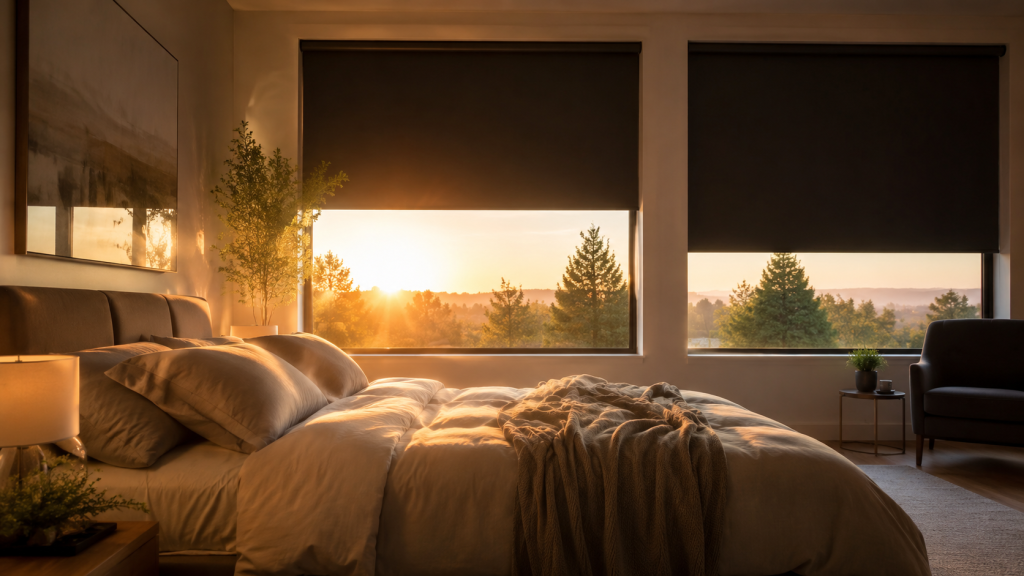
- Bedrooms and nurseries. Room-darkening fabric with side channels, since fabric alone leaves light down the edges.
- Media rooms. Shades that drop with the rest of the scene rather than as a separate step.
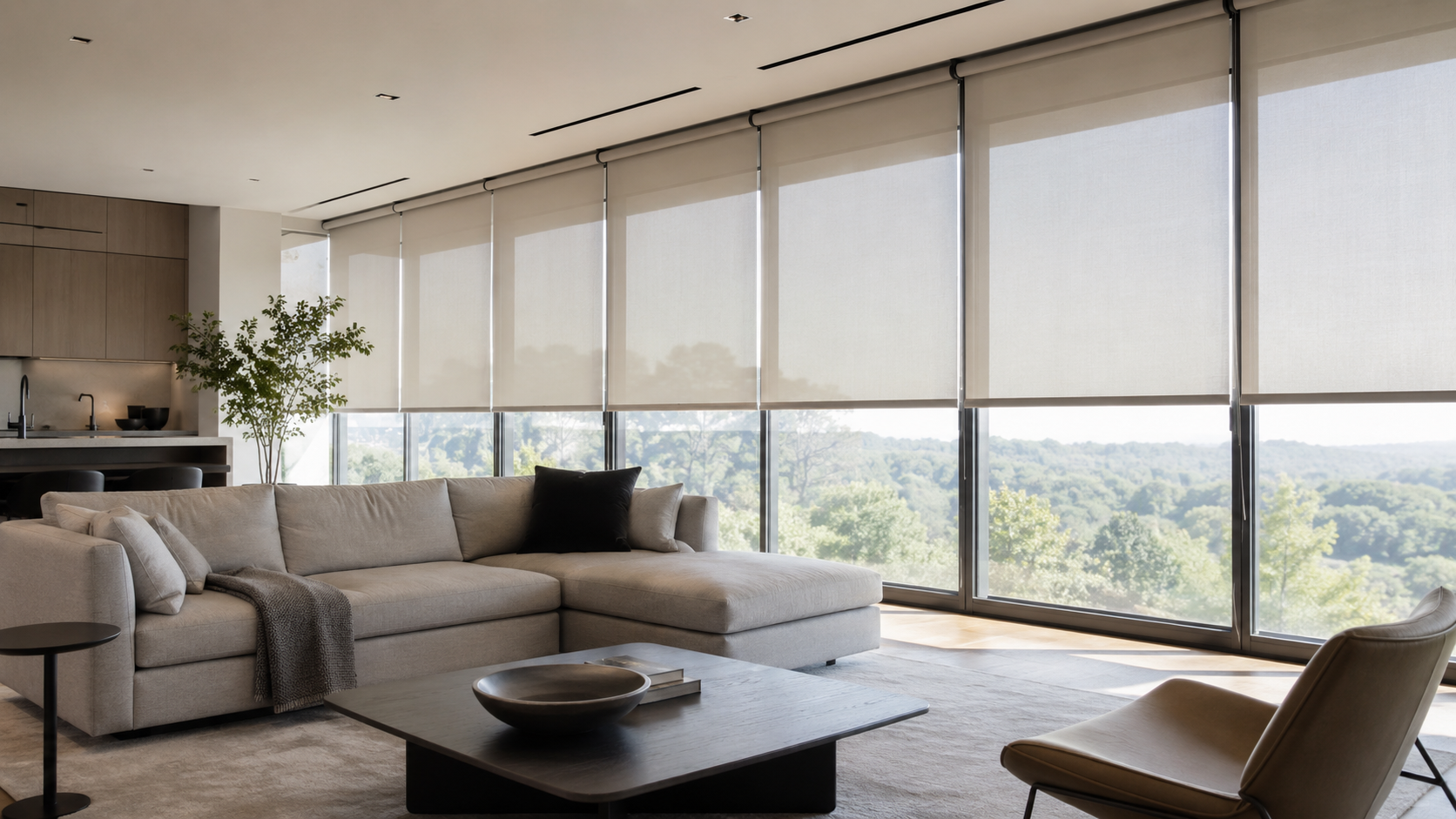
- Living areas and sunrooms. Solar fabric that cuts heat and glare without closing off the view.
- Glass walls and sliding doors. Wide openings split across several shades so they travel evenly and stay aligned.
- Offices and commercial spaces. Whole floors on one schedule, adjusted from a single point.
Motorized shades are window coverings with the motor inside the roller tube, operated from a keypad, an app, or a schedule instead of a cord. Lock and Tech USA measures, fits, and programs them for apartments, co-ops, brownstones, and houses across New York City, where the window opening usually decides more about the result than the fabric does.
Motorized Window Shades Installation
The order of this work matters more than it looks. Everything is made to the opening — width, drop, mounting depth, and bracket position are measured on site and cannot be adjusted afterwards, because a shade fabricated to the wrong number is not a shade that can be trimmed. That is why the survey comes before any fabric or motor conversation, and why we do it ourselves rather than working from numbers someone else took.
The survey establishes four things: the depth of the reveal, which decides whether the shade sits inside the opening or on the wall in front of it; the width and drop, which together give the weight the motor and brackets have to carry; whether power can reach the window; and what the wall above the opening is actually made of, which in a pre-war building is rarely what it looks like.
Wired and Battery Motors
A wired motor runs off building power, never needs charging, and is the right answer wherever power can reach the head of the window — normally during a renovation, when the wall is open and a cable can be pulled to the bracket position. A battery motor is charged periodically and goes where running power would mean opening a finished wall, which in an apartment or a co-op is most windows. Solar charging is a variation of the same thing for openings that get direct sun.
Neither is better in the abstract. What decides it is whether the wall is open and what the building allows, and that is settled at the survey rather than by preference.
Mounting Inside and Outside the Opening
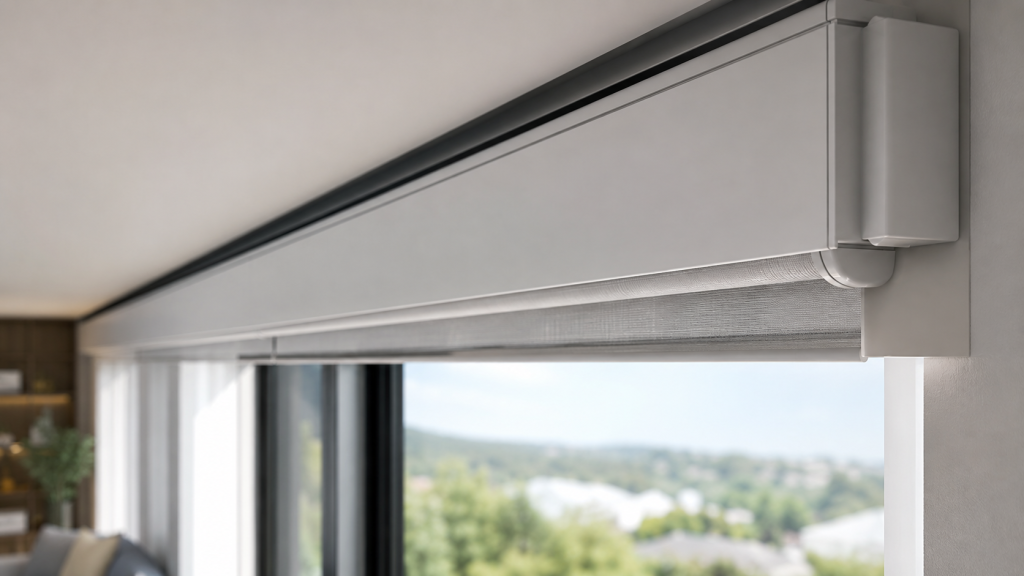
An inside mount sits within the reveal and looks cleanest, but it needs enough depth for the tube and brackets, and it leaves a gap of light at each side. An outside mount fixes to the wall above and overlaps the opening, which covers those gaps and works where the reveal is shallow or out of square — common in older buildings, where openings are frequently not rectangles. Ceiling mounts are used at glass walls and where there is no usable wall above the opening.
What We Install
- Motorized roller shades in room-darkening, light-filtering, and solar fabrics
- Dual-roller systems with two fabrics on one opening
- Wired, battery, and solar-charged motors
- Custom sizing for wide openings, glass walls, and sliding doors
- Skylights, arched openings, and specialty shapes
- Side channels for room-darkening installations
- Keypads, remotes, and app control
- Scene programming and sunrise and sunset schedules
- Integration with lighting, climate, and the wider automation system
- Repair and replacement of existing motorized shades
Custom Motorized Shades and Large Openings
Every motorized shade is custom in the sense that it is built to a measured opening. What changes with size is the physics. Weight rises with both width and drop, and a heavy shade needs a stronger motor, a larger tube to resist deflection, and brackets fixed into something structural rather than into plasterboard alone. Custom motorized shades on a standard window are routine; the same job on a twelve-foot opening is a different specification at every point.
Large motorized window shades bring a second problem: a wide tube sags in the middle under its own weight, and a sagging tube makes the fabric track to one side as it travels. Past a certain width the correct answer is two or three shades across the opening rather than one, aligned so the gaps between them read as intentional and programmed to move together. That looks like one shade in operation and behaves far better over years of use.
Glass walls and sliding doors are handled the same way, with shades grouped so the whole run moves as a unit. Skylights and arched openings each have their own hardware and are quoted after the survey, since access is usually the deciding cost.
Room Darkening and Fabric Choice
Room-darkening fabric is not the same thing as a dark room. The fabric itself blocks light, but light arrives around it — down both sides, over the top of the roller, and under the hem. In a bedroom that reads as a bright outline around the window, which is exactly what someone ordering motorized room darkening window shades was trying to avoid.
Getting an actually dark room takes three things beyond the fabric: side channels that the fabric edges run inside, a mount that overlaps the opening generously rather than sitting inside it, and attention to the gap at the top of the roller. We specify those together or say plainly that the opening will not fully darken, rather than fitting blackout fabric and letting you discover the edges afterwards.
Other fabrics answer other problems. Solar fabric has an open weave that cuts heat and glare while keeping the view — the usual choice for living rooms and sunrooms facing sun. Light-filtering fabric gives privacy with diffused daylight. A dual-roller system puts two fabrics on one opening, typically solar for the day and room-darkening for the night, which is the most flexible arrangement and the most expensive.
Smart Motorized Shades and Automation
Smart motorized shades earn their place through schedules rather than remote control. Opening a shade from your phone is a novelty; a house where south-facing rooms close down before the afternoon sun arrives and open again in the evening is something you stop noticing because it simply works.
Schedules follow sunrise and sunset rather than clock times, so the behaviour stays correct in December and June without adjustment. Automated motorized shades also join scenes that involve other subsystems: a morning scene that raises bedroom shades as lighting comes up, an away scene that closes everything on the way out, an evening scene in a media room. The lighting side of those scenes is covered under lighting control.
Shades and temperature belong together, since closing a shade against direct sun costs nothing and cooling the room behind it does not — that side is covered under climate control. All of this runs on the controller that holds the rest of the house, covered under home automation installation.
Motorized Shades in New York City Buildings
Buildings here impose most of the constraints on this work. Pre-war apartments have deep reveals that suit an inside mount and openings that are rarely square, so each window is measured individually rather than assumed identical to the one beside it. Walls are plaster over masonry or over lath, which changes fixings and sometimes rules out a position entirely. Running power to a window in a finished co-op usually means work the board has to approve, which is why battery motors are the common answer in apartments and wired ones the common answer in renovations and houses.
New buildings bring the opposite set: floor-to-ceiling glass, wide openings, and often no wall above them, which pushes toward ceiling mounts and grouped shades. Brownstones sit between the two, with tall windows where weight is the governing factor.
Where We Install
We fit motorized shades in apartments and co-ops, condominiums, townhouses and brownstones, single-family houses, and renovations where wiring can be placed while walls are open, as well as offices and commercial spaces. Bedrooms, nurseries, and media rooms usually take room-darkening; living areas and sunrooms take solar or light-filtering fabric. We cover New York City and Brooklyn, along with Queens, the Bronx, Staten Island, and the surrounding areas within our service radius.
Our Process and Pricing
The first visit is measurement and fabric. We measure every opening, check depth and wall construction, look at where power can reach, and go through fabric options against what each room is actually for. That produces the specification and the quote.
What the cost depends on: the number of openings, the width and drop of each, whether the fabric is standard or specified, whether the motor is wired or battery, how much programming the scenes involve, and how hard the windows are to reach. A wide opening costs more than two narrow ones of the same total width, because the hardware carries more load. Motorized window shades installation is quoted as labor plus material for one total figure after the survey, with a partial deposit on larger jobs and a signed contract before work begins.
Fitting itself is quick per window: brackets, shade, then setting the travel limits so the shade stops exactly where it should at each end. Programming follows — scenes, schedules, keypads, and the app — and we walk through all of it with you on site before leaving. Installation carries a 90-day warranty on the mechanical side and 12 months on electronics; repair visits are not covered by that warranty.
Warranty, Service Area, and Payment
Lock and Tech USA backs new installations with a 90-day mechanical warranty and a 12-month electrical warranty, covering both parts and labor. Repairs are not covered by a warranty. We provide installation within 75 miles of Midtown Manhattan and support extended zones, multiple locations, and multi-site service for clients with several properties. Phone and email support is available during business hours.
We accept cash, wire transfer, ACH, credit card, and check, as well as Zelle and Venmo, and we offer invoicing and business accounts for commercial clients. Depending on the size of the job, payment is typically a partial deposit up front with the balance collected on completion. Before starting, we require a signed contract and a tax exemption form if applicable.
Frequently Asked Questions
Wired or battery motors — which do we need?
Will room-darkening fabric make the room fully dark?
What does a motorized shade cost?
Can you cover a very wide window?
Do the shades work with the rest of the house?
Can you work in a co-op with restrictions on drilling?
Can you repair shades we already have?
What our clients say