- Home
- Telecommunications Services
- Video Surveillance
Video Surveillance Installation in New York
Lock and Tech USA installs camera systems, recorders, and storage for apartment buildings, offices, warehouses, and homes. Licensed technicians handle the full job — site survey, cabling, setup, and on-site training. We cover properties within 75 miles of Midtown Manhattan and back every installation with a 90-day mechanical and 12-month electronic warranty.



for video surveillance
Since 1989, we’ve been securing homes and businesses across NYC and New Jersey with professional security solutions you can trust. Our licensed technicians provide 24/7 emergency service, using only the latest technology and backed by comprehensive warranties on all installations.


One crew for the whole system
- Your co-op board signed off on cameras for the lobby and package room, and you need a layout the board will approve and the super can manage day to day.
- Your office is moving floors and the old cameras stay with the landlord, so you need a new system planned, cabled, and recording before staff move in.
- Your warehouse has coverage at the front but nothing on the loading dock or the back alley, and footage requests from insurers keep coming back empty.
- Your storefront gate gets tagged or forced overnight and you need cameras that hold up outdoors and record in low light.
- Your parking garage needs cameras at vehicle entry points tied into one recorder your management office can pull footage from.
- Your building already has cameras, but the recorder is full, half the channels are dark, and nobody remembers the passwords.
- Your general contractor requires site coverage on a construction project, with recording that survives dust, weather, and equipment moves.
- You manage several properties and want every location recording to one standard, with one company answering the phone for all of them.
One System, Not Separate Cameras
Video surveillance is cameras, a recorder, storage, and remote access working as one system. A single surveillance video camera watches one spot; a video surveillance system ties every spot into one searchable record of the property, kept on a schedule you set. Lock and Tech USA designs and installs video surveillance systems across New York — from a four-camera storefront to a 32-camera warehouse.
What Goes Into the System
A working video surveillance system has five parts: cameras, a recorder, storage, the network that moves the video, and the access layer you watch it through. Miss one and the rest underperforms — a 4K camera feeding an undersized hard drive keeps three days of footage instead of thirty.
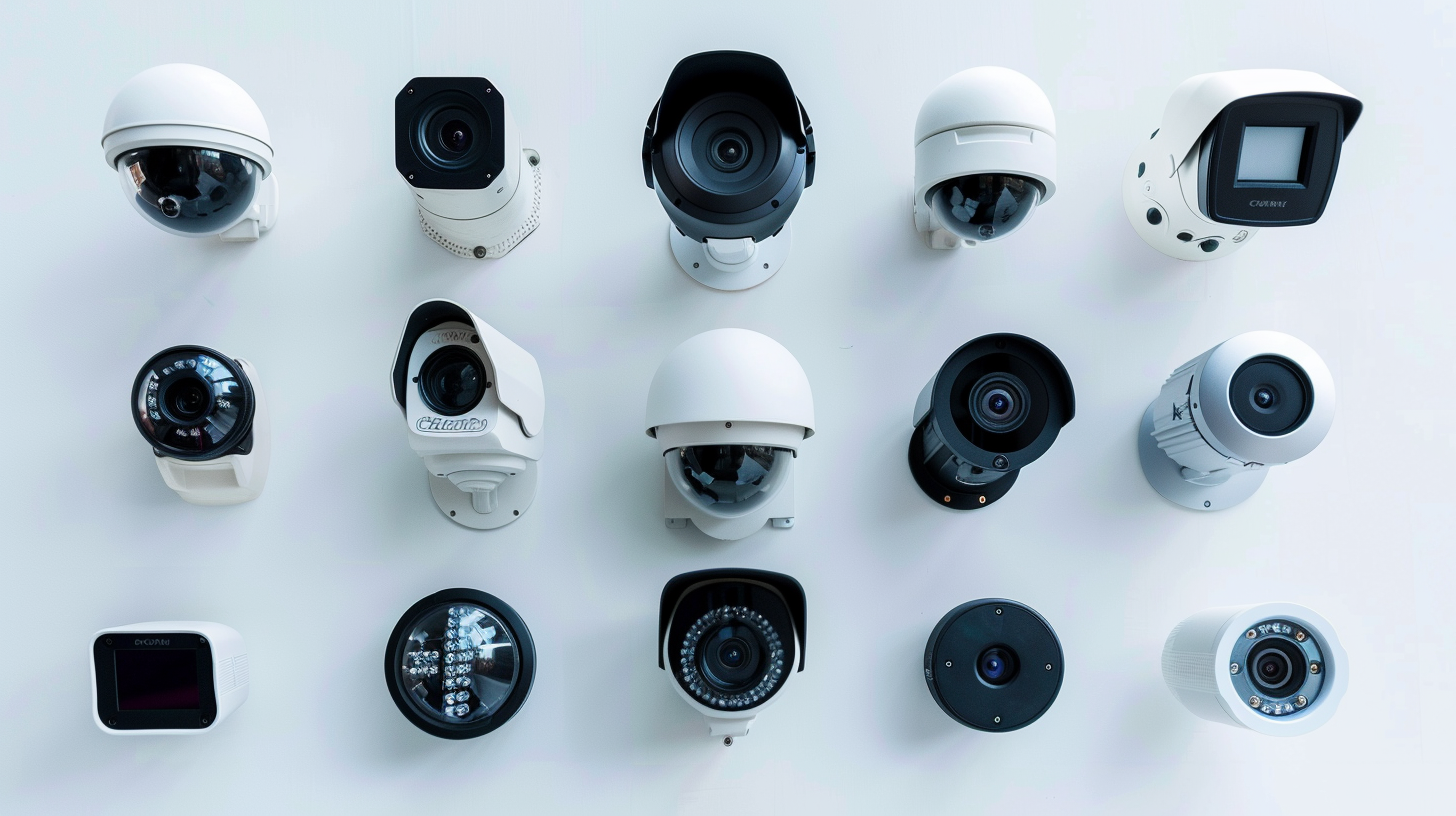
Cameras do the capture. We install video surveillance cameras from 2MP to 4K and higher, in dome, bullet, and PTZ bodies; picking the right body and lens for each video surveillance camera is its own trade, covered under security camera installation. The recorder collects every stream in one place: a network video recorder for IP cameras wired over Power over Ethernet, or a digital video recorder where a building has usable coax. Buildings with an older coax setup don’t have to start over — CCTV installation covers reuse and upgrade paths. Recorders come in 4, 8, 16, and 32-channel sizes, so the system grows without replacing the head end.
Storage means hard drives sized to camera count, resolution, and how long footage has to be kept. The network side is a PoE switch, cable runs, and enough bandwidth that live view doesn’t stutter. Access is the app and browser accounts, set per person — an owner sees everything, a super sees the lobby and the trash room.
Uniview is our preferred manufacturer. Beyond that, we install any system available on the market — the choice comes out of a discussion of your property and budget, not a fixed catalog.
Where These Systems Go
Most of our video surveillance installation work is on commercial and multi-tenant properties: apartment and co-op buildings, offices, warehouses, retail stores, parking garages, and construction sites. Houses and townhouses get the same process at smaller scale.
In apartment and co-op buildings the usual scope is the lobby, entrances, elevators, package room, and trash areas — with a layout drawn up front, since co-op boards want camera positions on paper before approving the work. Prewar buildings take extra planning: plaster walls and concrete slabs decide where cable can run. Offices cover reception, server rooms, and back doors. Warehouses need loading docks, yard gates, and racking aisles — long sight lines where PTZ cameras earn their cost. Storefronts pair an interior camera over the register with an exterior unit rated for weather, watching the gate and the sidewalk. Parking garages call for license plate capture at entry and exit ramps plus coverage on stairwells, and construction sites get rugged temporary systems that move as the job progresses.
Larger commercial jobs — 16 cameras and up, multiple entrances, several tenants — are covered in more depth under camera systems for commercial properties.
How the Installation Runs
Video surveillance systems installation runs in a fixed order, and the scope is agreed before anyone drills.
It starts with a site walkthrough. A technician covers entry points, sight lines, lighting through the day, and where the recorder and switch will live. Out of that comes a placement plan — each camera’s position, body type, and resolution — with a written price attached.
Installation itself is cabling and mounting: cable concealed in walls or run through weatherproof conduit outside, cameras set at heights that catch faces without inviting tampering. Configuration follows — recorder schedules, motion zones, and remote access, checked camera by camera.
Handoff happens on site. We test every camera in day and night light, confirm recording and playback, then walk you through live view, footage search, and exports, and set up the mobile app on your phones before we leave. You get camera locations documented and credentials in hand.
Installation of video surveillance carries a 90-day warranty on the mechanical side and 12 months on electronics, parts and labor both. Phone and email support runs through business hours.
Recording, Storage, and Viewing
Footage lives in one of three places: on the recorder’s drives, in the cloud, or both.
Local recording is the default. Drives on the recorder hold footage for a set window — 7 to 30 days is typical for apartment buildings and stores, 60 to 90 for warehouses and sites with insurance requirements — and the oldest footage overwrites automatically, so recording never stops on a full drive. Local playback is fast and doesn’t depend on your internet connection. Cloud storage adds an off-site copy, so footage survives even if the recorder itself is stolen or damaged. A hybrid setup keeps everything local and pushes critical cameras — entrances, registers, cash rooms — to the cloud.
Viewing works from a phone, tablet, or computer. The app shows live video and recorded playback per camera; browser access puts a full camera grid on a large screen with a timeline you can scrub. Motion alerts go out as push notifications, and detection zones are drawn per camera, so a tree in the wind doesn’t page you at 3 a.m.
Accounts are set per user with separate permission levels — an owner with full control, a manager with playback, a doorman with live view only. On the network side we change default passwords, enable encryption, and close outside access except through the secured route we configure. Firmware gets updated at installation.
What It Costs
Video surveillance installation is priced as labor plus materials, one total, quoted after the walkthrough and before any work starts.
What moves the number: camera count and resolution, cable distance and how the building is built — fishing cable through a prewar plaster wall costs more than dropping it through an open ceiling — recorder size, storage length, and whether exterior runs need conduit. A four-camera storefront and a 32-camera warehouse are different jobs, and the quote reflects the property, not a flat rate.
The price comes in writing with the placement plan. A signed contract comes before the start date; on larger jobs we take a partial deposit, with the balance collected after you’ve seen the system tested and running. Payment works by cash, check, ACH, wire, credit card, Zelle, or Venmo, and commercial clients can set up invoicing and business accounts. The recorder, drives, and mounting hardware are inside the quoted number — that’s the figure to compare when weighing one video surveillance installer against another.
Where We Work
Lock and Tech USA installs video surveillance systems in NYC and the surrounding region — anywhere within 75 miles of Midtown Manhattan. That covers all five boroughs, Long Island, Westchester, and northern New Jersey.
Inside the city, our video surveillance installers reach most jobs in 20 to 40 minutes. Crews run out of Brooklyn and Manhattan offices, with hours 8 a.m. to 6 p.m. on weekdays. Neighborhood pages for Lower Manhattan and Brooklyn cover local work in those areas, and multi-site clients get video surveillance services at every location under one account.
Frequently Asked Questions
Which camera brands do you install?
Can you add license plate recognition at my garage entrance?
How long is footage kept?
Can I watch my cameras from my phone?
Will the cameras work with my alarm and access control?
What warranty comes with the installation?
How is the price set?
How fast can someone come out?
Related Services
When an existing system needs fixing rather than replacing — dead channels, a failed recorder drive, a camera knocked out of alignment — security camera repair covers that as its own service, with the same crews. Everything else we install and maintain, camera work and beyond, is collected on the security systems overview.
What our clients say