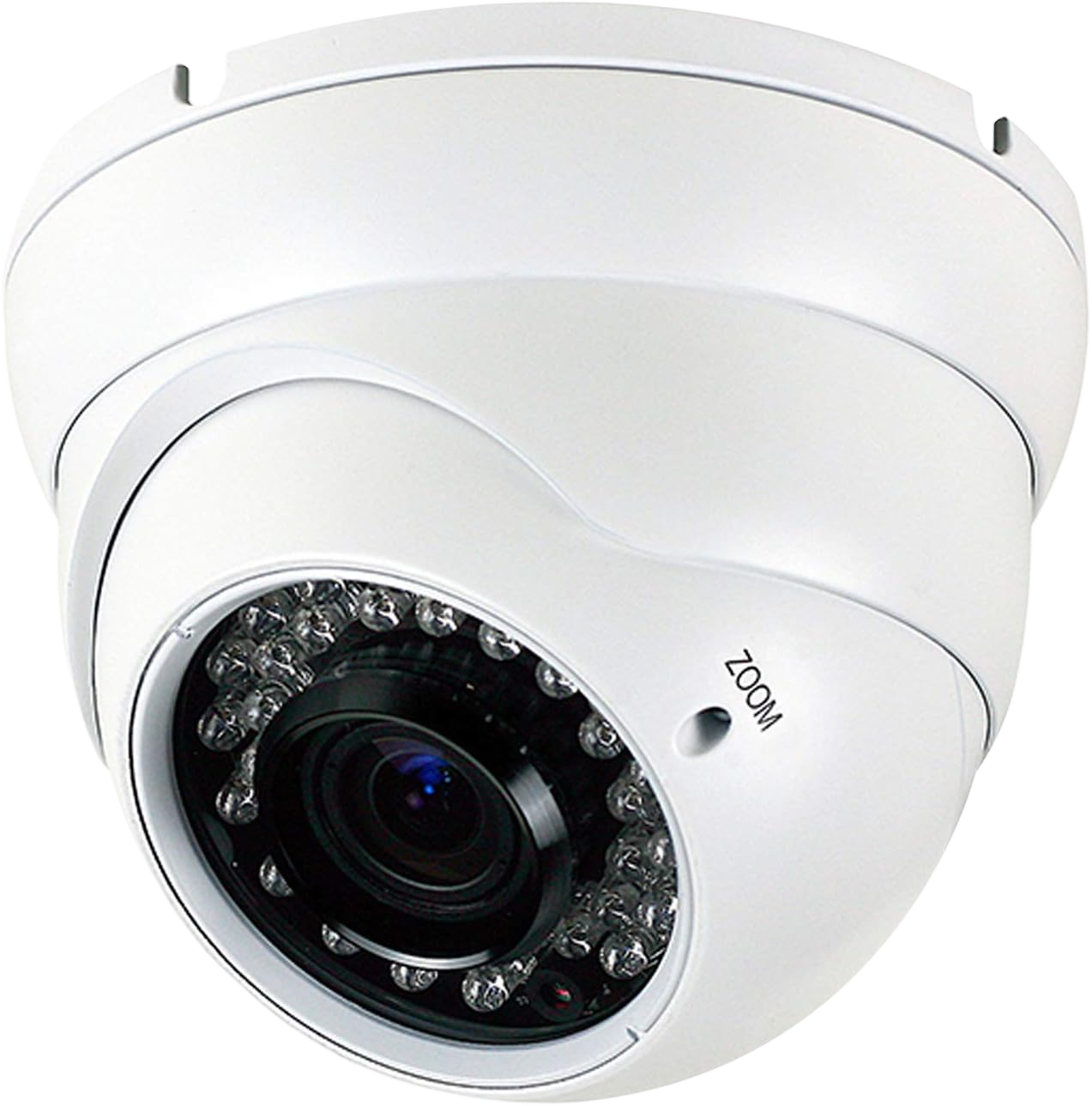
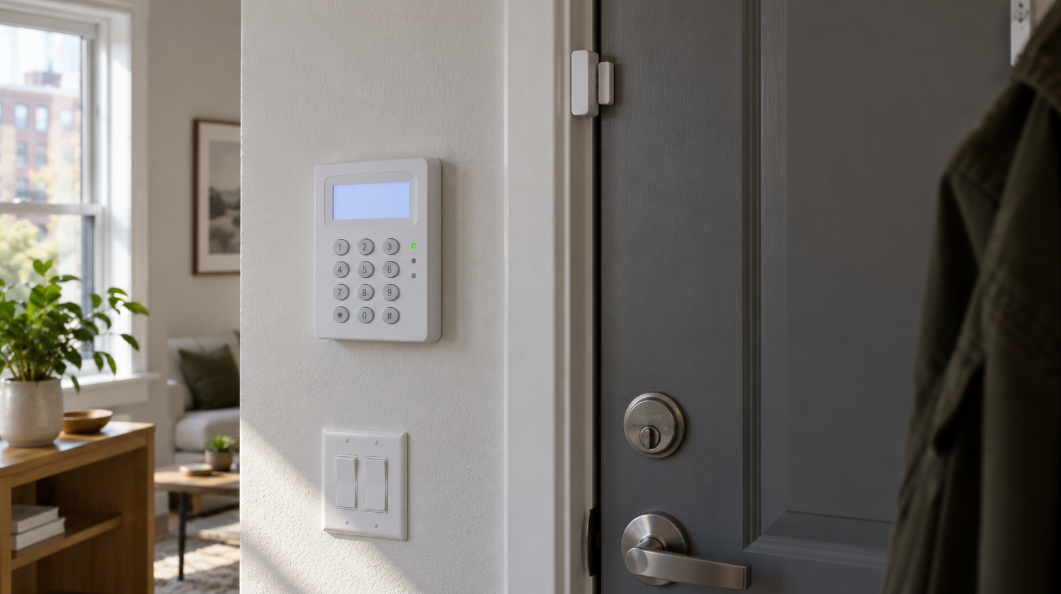
A professionally installed alarm system in New York City costs about $400 to $900 for an apartment and $800 to $1,800 for a house. Those totals include equipment and labor. A small business system typically runs $1,500 to $3,000. Central-station monitoring adds $25 to $60 a month for homes and $40 to $120 for businesses. Below are 2026 NYC prices by property type, what the equipment costs, and how contracts and monitoring change the total.
Alarm System Installation Cost by Property Type
The number of doors, windows, and floors decides how many sensors you need, and the building decides how hard they are to install. That is why a one-bedroom apartment and a three-story townhouse land in very different ranges, and why home alarm system cost in the city run above national averages.
| Property | NYC equipment and installation | What changes the price |
| Apartment or condo | $400 to $900 | One or two entry doors, wireless sensors, building rules |
| House or townhouse | $800 to $1,800 | Number of floors and ground-level windows, wired or wireless |
| Store or small office | $1,500 to $3,000 | Rear doors, roll-up gates, after-hours access codes |
| Larger commercial space | From $3,000, quoted after a site survey | Zones, multiple partitions, communication paths |
These ranges combine national cost surveys and published New York and New Jersey installer pricing checked in September 2026. They cover a professionally installed intrusion alarm and exclude monitoring fees, cameras, and permits. Stores and offices usually need more zones and user codes, as described on our business security systems page.
What the Equipment Costs
Every intrusion alarm is built from the same parts: a control panel, a keypad, contact sensors on doors and windows, motion detectors, and a siren. Glass-break detectors cover large windows without a sensor on each pane, and smoke and carbon monoxide detectors can report to the same panel for monitoring.
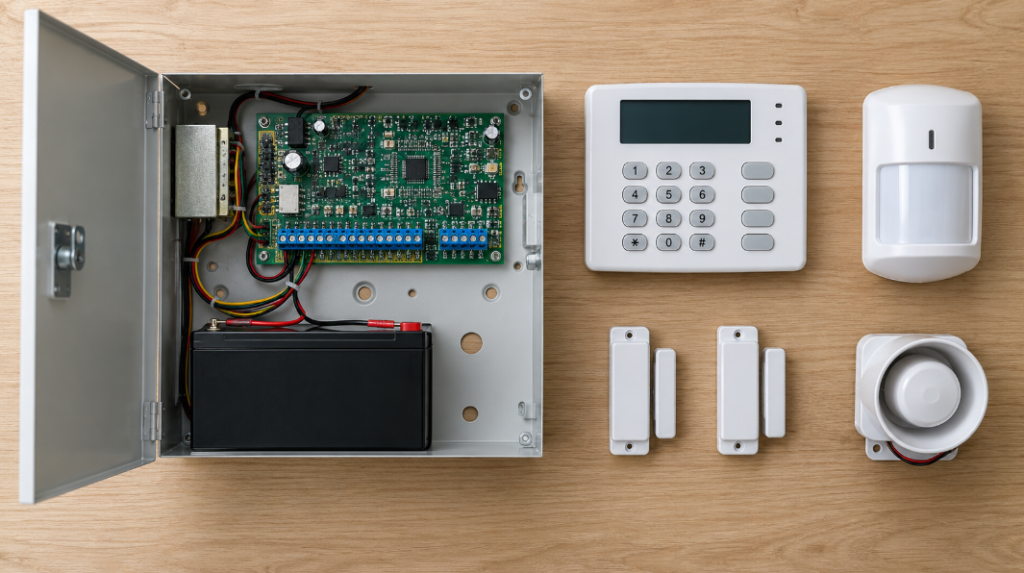
Consumer starter kits with a hub, keypad, a few door sensors, and one motion detector sell for a little over $200. Professional panels from Honeywell, DSC, Bosch, and DMP cost more. In return, they support more zones, wired sensors, and cellular links, and they are not tied to one monitoring company. Individual door and window sensors start around $20 each, so every extra entry point adds a modest amount to the equipment line.
The communicator is easy to miss. It sends signals to the monitoring station over a cell network, the internet, or both. A dual-path unit costs more upfront, but it keeps the alarm online when a phone line is cut or the internet goes down. Alarms are one part of our wider security systems work, which also covers cameras and access control.
Wired vs. Wireless Installation in NYC
Wireless systems cost less to install because sensors mount with screws or adhesive and talk to the panel by radio. Most apartment installations are wireless, and they are the practical choice for renters who cannot drill.
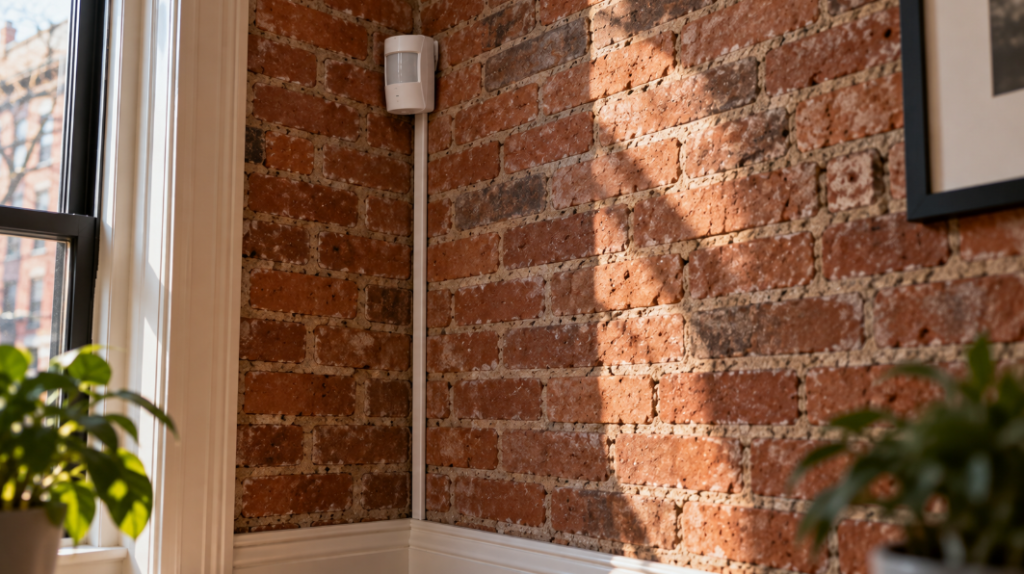
Wired systems run thin cable from each sensor back to the panel. Their sensors never need batteries, but labor rises fast in the city. Brick and plaster walls in prewar buildings slow every cable run. Finished brownstone rooms often need cable routed through closets and along baseboards. Wired installations commonly carry $800 to $1,600 in labor alone.
Many NYC jobs end up hybrid. The panel and hard-to-reach doors are wired, and upper-floor windows use wireless sensors. In co-ops and managed buildings, ask building management before drilling into brick or running cable through halls. Approval can add a week to the schedule.
Monitoring Fees, Contracts, and Permits
Self-monitoring through a phone app costs nothing or a few dollars a month. The catch is that you have to see the alert and call for help yourself. A central station watches your alarm 24/7 and sends police or the fire department after it checks the signal. Home plans cost about $25 to $60 a month, and business plans $40 to $120. The price depends on the communicator, video checks, and the number of zones.
Many national firms cut or waive the install fee if you sign a 36-month monitoring contract. Compare offers by the full contract cost: the monthly fee times the number of months, plus what you pay upfront. A $29 monthly plan on a 36-month term with $199 upfront totals about $1,240, and early termination often means paying the remaining months.
Some plans add a one-time activation fee of up to about $230. Some towns also require an alarm permit, usually $25 to $100. Repeat false alarms can bring fines, so ask the installer to show every user how to arm and disarm the system before it goes live. Our alarm monitoring services page explains how central-station response works.
Insurance Discounts
A monitored alarm usually lowers what you pay for home or renters insurance. Insurers often take about 5% to 15% off for a monitored burglar alarm, and up to about 20% when fire and water sensors are watched too. Alarms that only sound a siren, and systems you watch yourself, often earn 2% to 5% or nothing.
To claim the discount, ask the installer for an alarm certificate and send it to your insurer. Business owners should check if their policy calls for a UL-listed monitoring station, since some carriers ask for one. For a full home or business installation anywhere in the five boroughs, see our burglar alarm installation service. If you are pricing cameras and smart locks as well, our guide to how much a home security system costs covers the full package.
Frequently Asked Questions
Can I install an alarm system myself?
A wireless kit, yes, if you are fine pairing sensors in an app. Wired systems and pro panels need cable runs and setup, which is a job for an installer. Kits you install and watch yourself also earn smaller insurance discounts unless you add a monitoring plan.
How long does alarm installation take?
A wireless apartment system is usually finished in two to four hours. A wired house or a small business can take a full day or more, depending on cable runs, wall materials, and how many zones need programming and testing.
Can I keep my old alarm panel and switch monitoring companies?
Often, yes. Panels from Honeywell, DSC, Bosch, and DMP can usually be reprogrammed to a new monitoring station, which avoids buying new equipment. Some national providers lock their panels, so a technician should check yours before you cancel the old contract.
Does an alarm system work without Wi-Fi?
Yes, with a cellular communicator. It sends alarm signals over a mobile network, so the system keeps reporting during internet outages. Dual-path communicators use both cellular and internet for extra reliability.
Do alarm companies require a long-term contract?
Many national companies do, usually 36 months, in exchange for cheaper equipment. Local installers more often sell the equipment outright and offer month-to-month monitoring. Read the renewal and rate-increase terms before you sign any agreement.