Home security guidelines come down to four layers working together: the approach to the building, the entrance to the building, your own door and windows, and the interior. A weakness in any one of them undoes the strength of the others, which is why a checklist beats a shopping list. Most published checklists assume a detached house with a driveway, a yard, and a garage. In New York, half of those items do not exist — and the items that matter most here appear on almost none of them.
How to Run a Security Audit on Your Own Home
Guidelines are useless until you know which layer is weak in your specific home. The audit takes about an hour, costs nothing, and should happen before anything is bought.
Walk the Route an Intruder Would Take
Start on the sidewalk and move inward the way someone would if they wanted in. Where does the light stop? Which window can be reached from a fire escape, a low roof, a scaffold, or a stoop railing? Which door can be seen from the street and which cannot? Walking the route surfaces problems that no room-by-room inspection does, because it follows opportunity rather than floor plan.
What Makes a Home an Easy Target
Most break-ins are decided in seconds by a short list of signals: a dark entrance, a reachable window, an unlocked or flimsy door, packages piling up, mail visible through a slot, and no sign that anyone is watching. None of those require special skill to notice. All of them can be changed.
Write Down Weak Points Before Buying Anything
Finish the walk with a written list, ordered by how easy each weak point is to exploit rather than by how easy it is to fix. That order is what prevents the most common mistake in home security: spending on the layer that was already the strongest because it is the one with products attached to it.
Layer 1 — The Approach to the Building
The outer layer rarely stops anyone. Its job is to filter out the opportunist who is looking for the easiest option on the block.
Lighting at Entrances, Alleys and Basement Stairs
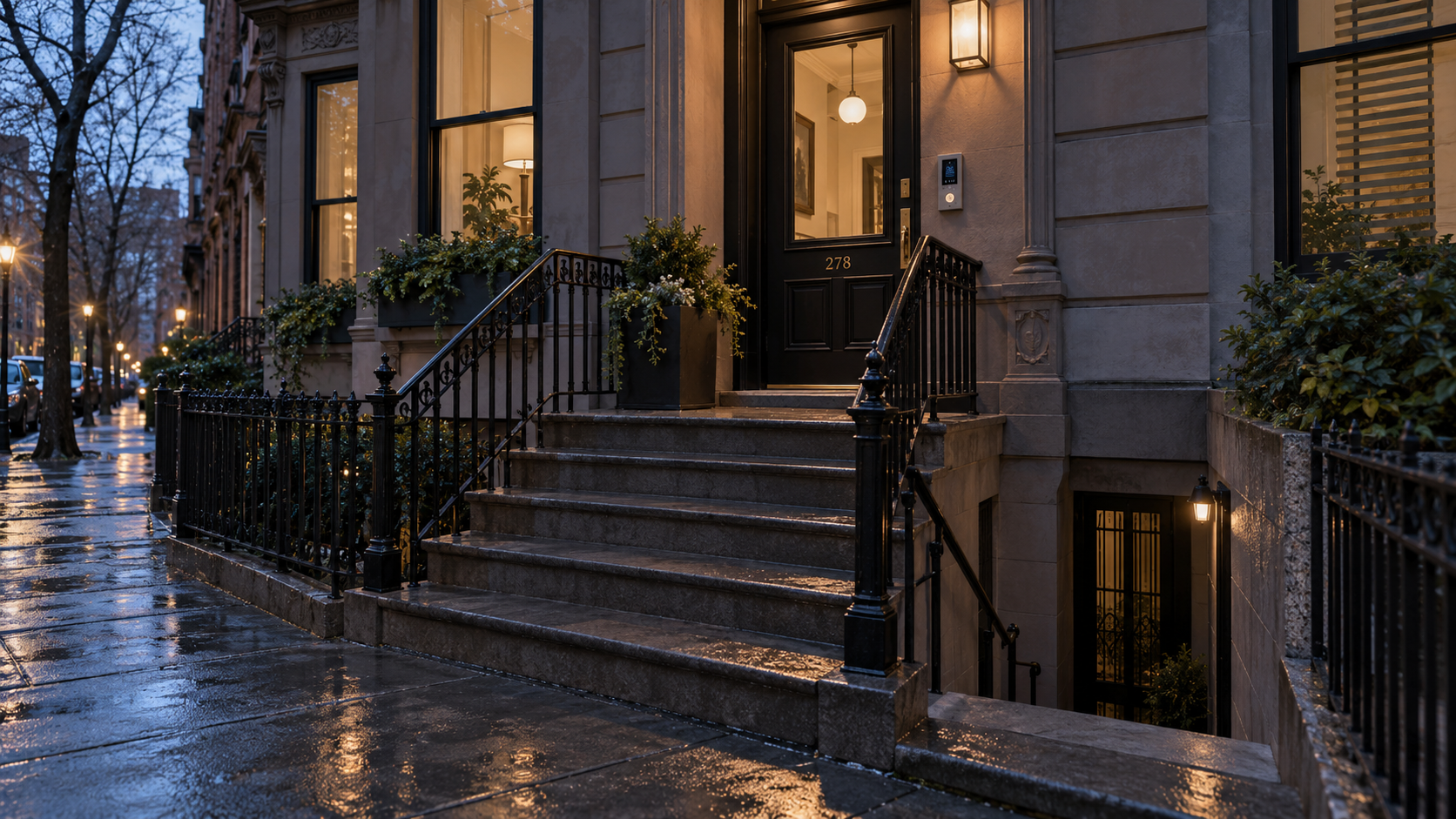
Light is the cheapest deterrent that exists. In city housing the gaps are predictable: the areaway and basement stairs below the stoop, the side alley, the rear yard door, and the stretch of sidewalk between the streetlight and the entrance. Motion-activated fixtures work better than constant light because movement in a previously dark spot is what draws attention.
Sightlines: Scaffolding, Sheds and Blind Corners
Anything that gives cover or height is a security problem. Sidewalk sheds and scaffolding are the New York version of overgrown shrubs — they conceal the ground floor from the street for months and put upper windows within reach. If your building is under one, treat every window behind it as a ground-floor window until it comes down.
Ground-Floor and Garden Apartments
Ground-floor and garden units carry the risk that upper floors do not, and they carry it through windows rather than doors. Rear windows facing a shared yard are the least observed openings in most buildings. If you live at that level, the window layer deserves more attention than the door layer.
Layer 2 — The Building Entrance
In a multi-unit building, the vestibule is your real front door, and it is the one layer you do not control alone.
The Intercom and Who Can Buzz Someone In
An intercom that any resident can release without seeing who is downstairs is a shared vulnerability. Older audio-only systems get buzzed open dozens of times a day by people who assume it is a delivery. Video entry, delivery-specific access, and an entry log change that, and because the benefit lands on every unit, it is also the easiest security item to raise with a board or management.
Package Theft in Lobbies and Vestibules
Package theft is the most common property crime most New Yorkers actually experience. The fixes are unglamorous: deliver to a workplace or pickup point, require a signature for anything valuable, use a building package room if one exists, and keep a camera or video doorbell aimed at wherever things get left.
What Requires the Board or Management
Anything touching the front door hardware, the intercom, common areas, the facade, or the electrical panel typically needs approval, and often a licensed contractor with insurance on file. Anything inside your unit that plugs in generally does not. Knowing which side of that line an item falls on saves you from paying twice.
Layer 3 — Your Own Door and Windows
This is the layer you control completely, and the one where audits most often find an expensive lock installed on a door that cannot support it.
Deadbolts, Strike Plates and Hollow-Core Doors
A lock is only as strong as what surrounds it. A deadbolt in a hollow-core door, or in a frame held by three-quarter-inch screws, gives way to a single kick regardless of what the lock cost. Long screws into the framing behind the jamb, a reinforced strike plate, and a solid door are what turn the lock into protection. If you are unsure what your door is made of or how the frame is fastened, a residential locksmith can assess the whole assembly rather than just swap the cylinder.
Fire Escape Windows and Window Gates
Windows opening onto a fire escape are the classic New York entry point, and they are also the one place where security and escape pull in opposite directions. Gates on those windows must be the type that releases from inside without a key, a tool, or anything you would have to find in the dark — anything padlocked or bolted shut turns a security measure into a hazard. Fit matters as much as type: a gate that leaves a gap at the sill or is fastened into crumbling masonry is decorative. If you are adding or replacing gates, have the opening measured and the fastening checked as part of the iron works, and confirm the release mechanism with your building before anything is installed.
Keys, Codes and Who Still Has Access
Access drifts over time. Previous tenants, former roommates, a contractor, a building super, a dog walker, an ex-partner — each may still hold a key or a code nobody has thought about in years. Rekeying after a move-in is standard practice for a reason, and access codes should be issued individually so any one of them can be revoked without changing the rest.
Layer 4 — Inside the Home
The innermost layer does not prevent entry. It determines how fast someone responds and what you are left with afterward.
Alarm Sensors and Monitored Response
Sensors on doors and accessible windows, plus a motion detector covering the path between entry points and the valuables, cover most of what a home needs. The larger question is what happens when one trips. An unmonitored alarm makes noise and sends you a notification you may not see. A system connected to a central station is watched around the clock, so a signal produces a call and a dispatch even when your phone is face-down in a meeting. Alarm monitoring is the difference between an alert and a response.
Cameras and What They Are Actually For
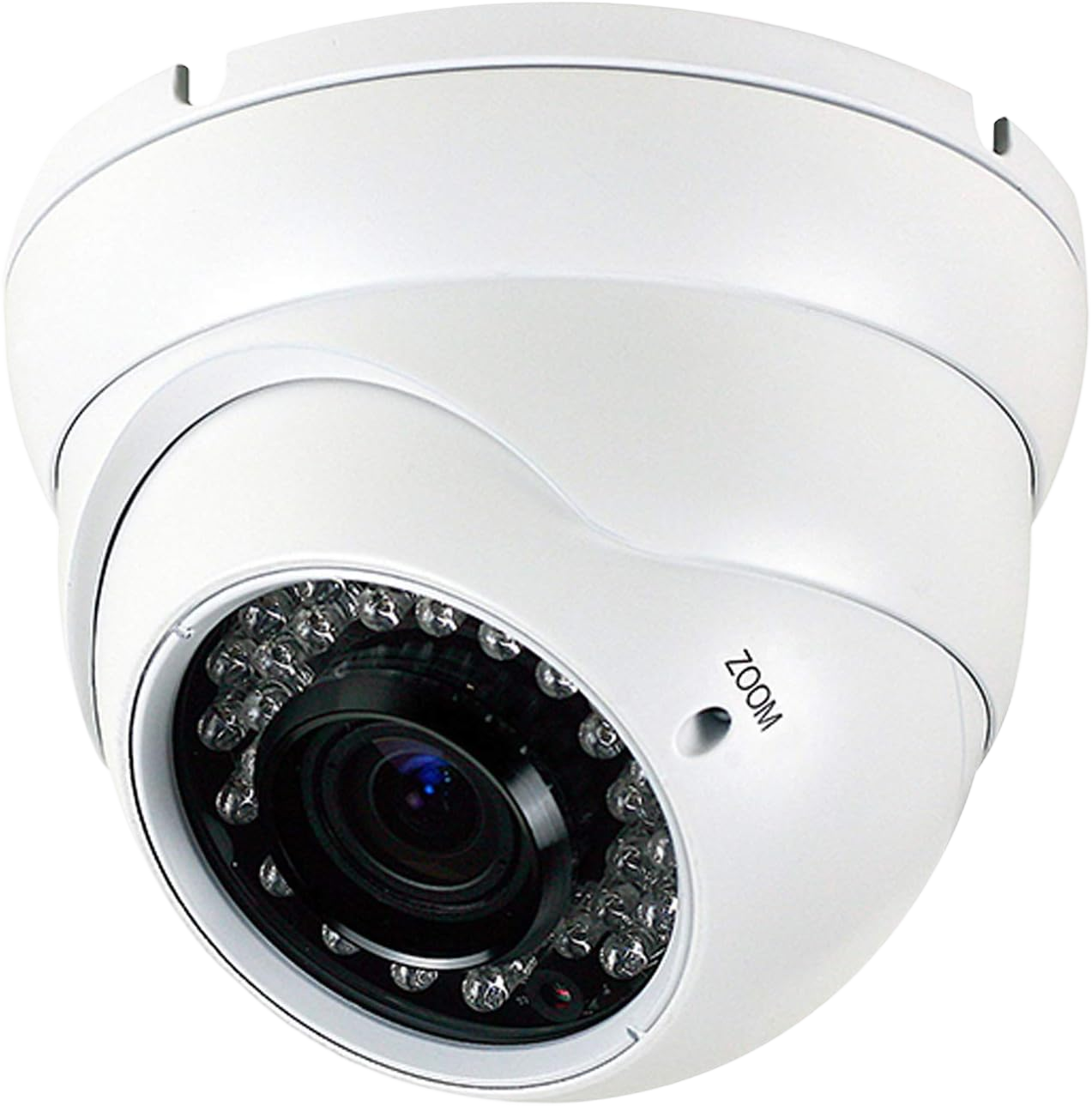
Cameras rarely stop a break-in in progress. They deter beforehand and document afterward, which makes placement more important than resolution. Entry points, the path from the entrance inward, and wherever deliveries land cover most of the value; more cameras pointed badly cover less than fewer cameras pointed well. Our guide to security camera placement works through the coverage angles in detail.
Valuables, Documents and Home Inventory
Assume the worst case and reduce what it costs you. Keep passports, deeds, and irreplaceable documents in a fireproof safe that is bolted down rather than portable. Photograph valuables with serial numbers visible and store the file somewhere other than the apartment. An insurance claim without an inventory is a negotiation you will lose.
Habits That Do More Than Hardware
Several of the most effective guidelines cost nothing at all:
- Lock up even for a five-minute errand — a meaningful share of break-ins involve no forced entry at all.
- Keep no spare key outside. Under the mat, in the planter, and above the frame are all checked first.
- Verify anyone claiming to be from a utility, the building, or a service company before opening the door.
- Post travel photos after you are home, not while the apartment is empty.
- Have mail and packages collected while you are away, and put a lamp on a timer so the pattern of the apartment does not change.
If You Can Only Fix Three Things
Renting an apartment: reinforce the strike plate and frame, get the unit rekeyed if it was not done at move-in, and light the path to your door. All three are reversible and none need permission.
Co-op or condo: the same door work, a solution for packages, and — if the building intercom is aging — raising it with the board, which improves the layer you cannot fix alone.
House or brownstone: exterior lighting at every entrance including the areaway, window security on the ground floor and anything reachable from a fire escape, and a monitored alarm covering the doors. If you would rather have the layers designed as one system than assembled piece by piece, our home security systems team handles the assessment and installation across New York City.
Frequently Asked Questions
What are the basic guidelines for home security?
Secure your home in four layers: light and clear the approach, control who gets into the building, reinforce your own door and windows, and cover the interior with sensors and monitoring. Audit first, then fix the weakest layer rather than the easiest one.
What is the weakest point in most homes?
The door frame, not the lock. A strong deadbolt in a weak frame or a hollow-core door offers little resistance. In ground-floor and garden apartments, accessible windows usually rank ahead of the door.
What kind of window gate can go on a fire escape window?
Only a gate that opens from the inside without a key or tool. Padlocked or permanently fastened bars block escape during a fire. Check the specific requirements with your building or management before installing anything.
Do I need a monitored alarm, or is a camera enough?
They do different jobs. A camera documents what happened; a monitored alarm produces a response while it is happening. If you can only have one, the alarm protects the home and the camera protects the claim.
What can I secure in a rental without the landlord’s permission?
Anything reversible: door and window sensors, a plug-in camera, timers, and portable safes. Rekeying, strike plate reinforcement, and window gates change the hardware and need the landlord’s agreement first.
Security as Layers, Not Purchases
The guidelines only work as a set. A monitored alarm behind an unlocked vestibule, or a high-security cylinder in a frame held by short screws, protects far less than the spending suggests. Find the thinnest layer, fix that one, and re-run the walk afterward.