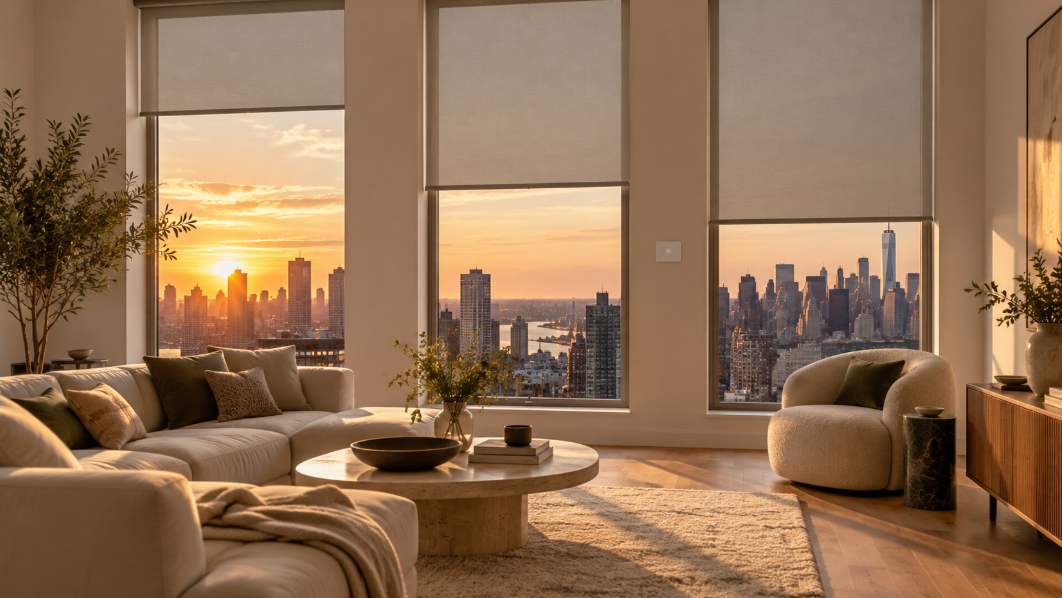
Motorized shades in New York City typically cost $450 to $1,200 per window installed for custom roller shades. Oversized windows and glass walls can reach $1,500 to $2,500 each. The price depends on window size, fabric, how the motor gets power, and how you control the shades. Below are NYC prices per window, whole-home budgets, battery vs. hardwired motors, and what drives up the bill.
Motorized Shade Prices per Window
Motorized shades cost more than manual versions because of the motor, the controls, and the programming visit. In Manhattan, the same shade usually costs 40% to 70% more with a motor than with a cord.
| Option | NYC price |
| Ready-made smart roller shade, installed yourself | $200 to $400 per window |
| Custom roller shade with a battery motor, standard window | $450 to $900 per window installed |
| Premium brands such as Lutron or Hunter Douglas, standard window | $650 to $1,200 per window installed |
| Dual shade (solar plus blackout) on one window | $1,200 to $2,500 per window installed |
| Oversized window or floor-to-ceiling glass section | $1,500 to $2,500 or more per shade |
| Hub or bridge for app and voice control | $80 to $150 per home |
| Hardwired power run by an electrician | $150 to $500 or more per window |
The ranges come from price guides published by New York City window treatment installers and national cost surveys, checked in September 2026. Installed prices include measuring, making the shade, mounting it, and setting up the motor, unless the quote lists those separately.
Motorized Blinds Cost for a Whole Apartment or House
Most projects cover several windows at once, and one hub serves every shade in the home. Typical NYC totals for custom roller shades:
- Studio or one-bedroom apartment, three to four windows: about $1,400 to $4,800.
- Two- or three-bedroom apartment, six to eight windows: about $2,700 to $9,600.
- Townhouse, twelve to fifteen windows: about $5,400 to $18,000.
Glass walls, dual shades, and hardwired motors push any of these toward the top of the range or beyond. Many owners motorize the hardest windows first, such as a tall living room window or a bedroom that needs blackout shades, and keep manual shades elsewhere.
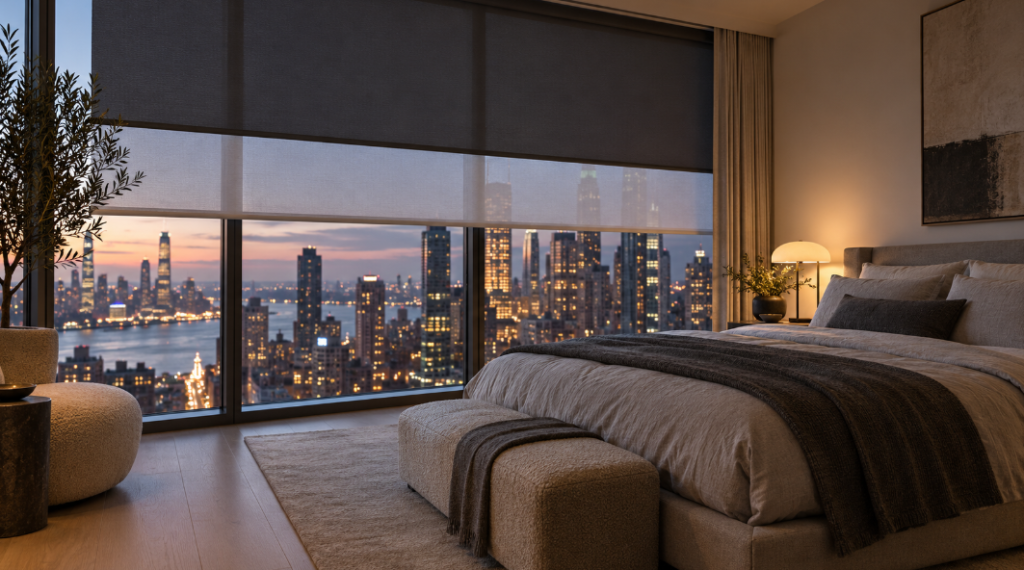
Battery or Hardwired Motors
Battery motors are the default in finished apartments because they need no new wiring. Their batteries usually last six to twelve months, depending on shade size and how often it moves. Rechargeable battery wands and small solar panels cut down on replacements, and a single visit can recharge or swap the batteries for the whole home.
Hardwired motors run on household power or low-voltage cable, so they never need charging and handle heavy shades on large windows better. The wiring is easiest during a renovation, when walls and ceilings are open. In co-ops and many condos, new wiring counts as an alteration that needs board or management approval, while renters are usually limited to battery motors.
What Raises the Price in NYC Homes
Window count and size set most of the budget, but city buildings add a few costs that national averages miss. Installers also check building rules first, since some co-ops and landmark buildings require a white backing on every shade facing the street.
Prewar Windows
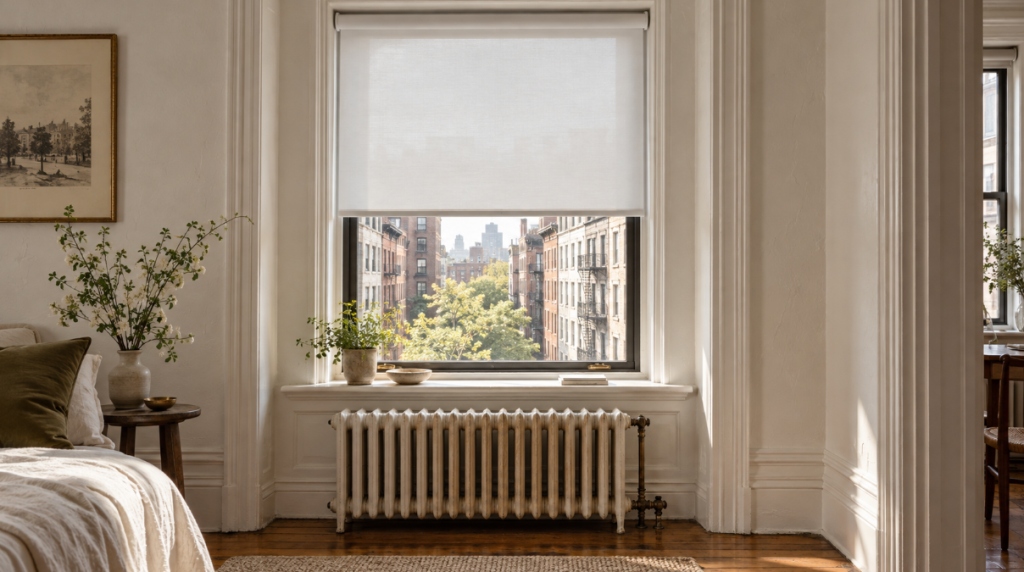
Prewar apartments often have deep window recesses, radiators directly below the sill, and openings that are slightly out of square. Each of those changes the mounting and can call for a custom bracket or a smaller shade inside the frame. Tall windows in older buildings also need longer fabric and a stronger motor.
Glass Walls in New Condos
New condo towers bring the opposite problem: wide spans of floor-to-ceiling glass. A glass wall usually needs several shades side by side with matching motors, and heavy blackout fabric across a wide opening requires a more powerful drive. High floors with strong afternoon sun often justify a dual shade, which pairs a solar screen for daytime glare with a blackout layer for the night.
Smart Home Control
A handheld remote comes with most motors and costs nothing extra. App and voice control need a hub, and scenes that dim the lights while the shades close tie into lighting control. If you are planning shades as part of a larger system, our guide to home automation cost covers the whole-home budget. Our overview of how to set up a smart home helps you pick a platform first.
How to Compare Motorized Shade Quotes
A useful quote prices every window separately, listing the fabric, the motor brand, the power source, the control method, and the labor. Line items make it easy to see what switching one room to manual shades or battery motors would save. Ask for the motor warranty in writing, since it often differs from the warranty on the fabric and the brackets.
Custom shades are made to measure, so let the installer take the measurements. If a shade then arrives the wrong size, the remake is the installer’s responsibility. Ask as well whether removing and disposing of the old blinds is included, because some quotes leave it out.
Also confirm who handles programming after installation and whether a follow-up visit is included to adjust stop points or pair the shades with a new hub. Lock and Tech USA’s licensed technicians install and program motorized shades across the five boroughs; see our motorized shades service.
Frequently Asked Questions
Can I motorize my existing blinds?
Sometimes. Retrofit motors exist for some roller shades and for tilting horizontal blinds, and they cost far less than new custom shades. They work only when the existing hardware is a standard size and in good condition, so an installer checks the brackets first.
How long do motorized shade batteries last?
Most battery motors run six to twelve months between charges or replacements. Large, heavy shades that move several times a day drain faster, while a small solar panel on the window can keep a rechargeable motor topped up.
Do motorized shades work without Wi-Fi?
Yes. The handheld remote talks to the motor by radio, so the shades open and close during an internet outage. Wi-Fi is needed only for app control, voice assistants, and schedules run through a hub.
Are motorized shades a good choice for a rental apartment?
They can be, as long as they run on batteries and mount with a few screws that the landlord allows. Ready-made smart shades cost the least to leave behind or take along, while custom shades make more sense in a home you plan to keep.
How long does motorized shade installation take?
Custom shades need a measuring visit first and a production period before installation. The installation itself usually takes one visit for an apartment, including mounting, motor programming, and pairing the remote or hub.