
- Home
- Security System
- Outdoor Security Cameras Installation
Outdoor Security Camera Installation in New York



Sealed, Wired, and Set Up to Stay Put
Since 1989, we’ve been securing homes and businesses across NYC and New Jersey with professional security solutions you can trust. Our licensed technicians provide 24/7 emergency service, using only the latest technology and backed by comprehensive warranties on all installations.


Outdoor Camera Positions
- Front door and delivery spot: a camera mounted 9 to 10 feet up, angled down at the mat, reads faces and shows what got left on the step.
- Back door and yard: rear entries sit out of view from the street, so a wide-angle unit on the rear wall covers the door, the yard, and the gate in one frame.
- Driveway: a tighter lens at 10 to 12 feet reads plates at the curb cut, while a second wide view holds the length of the drive.
- Parking area: pole or wall mounts at 12 to 14 feet keep the lens above headlight glare and out of arm’s reach.
- Storefront window: a camera under the awning or sign band watches the glass, the display, and the sidewalk in front of it.
- Service and side doors: these get used after hours, so the camera goes with a light and records anyone approaching the handle.
- Loading area: a corner mount covers the roll-up door, the truck bay, and what moves between them.
- Fire escape and rear ladder: a downward-facing camera on the wall above the drop-down section shows anyone on the landings.
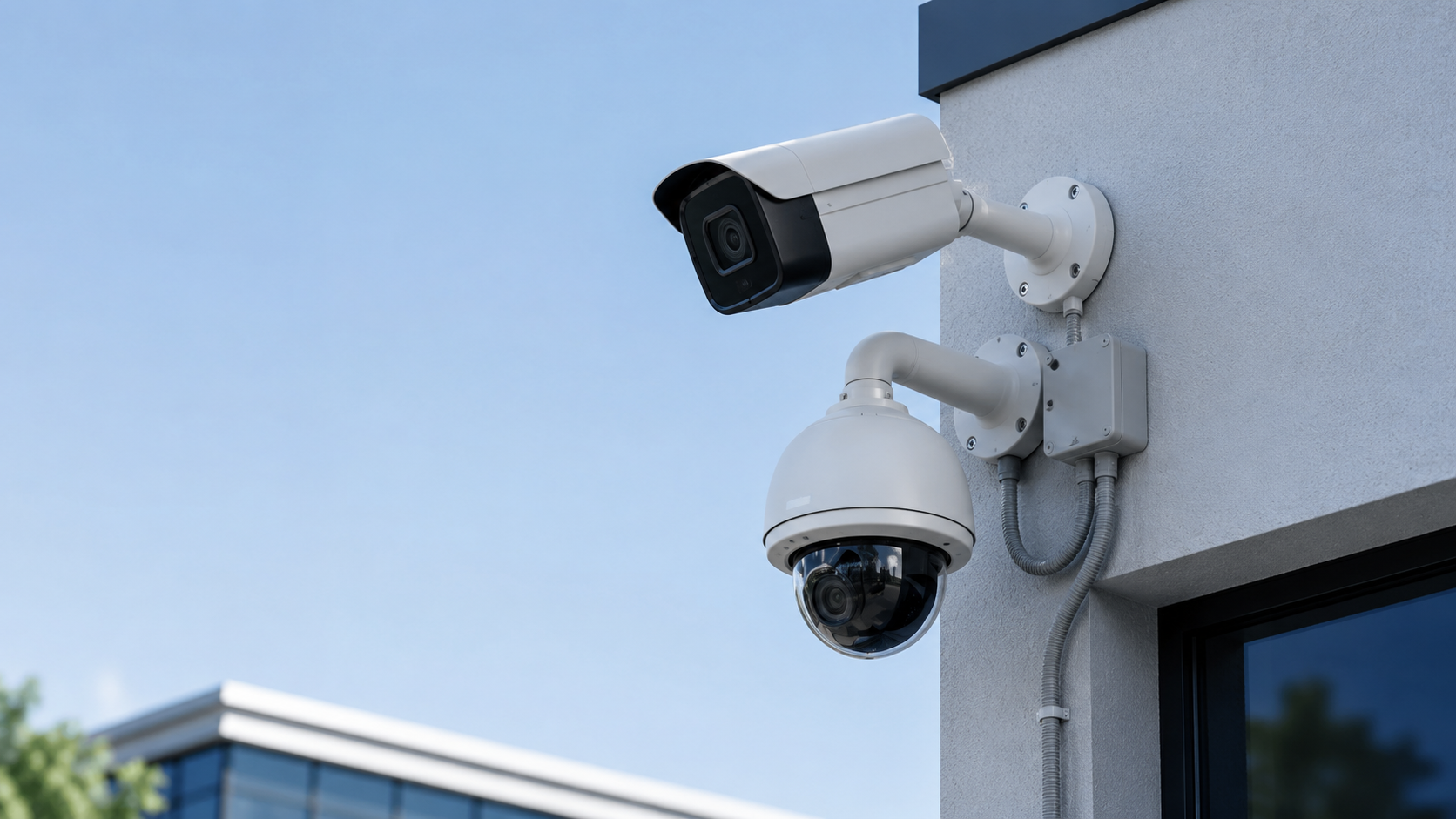
Outdoor security camera installation puts cameras on the outside of a building: walls, soffits, poles, fences, and entry doors, wired back to a recorder inside. We do this work on houses, townhouses, storefronts, and small commercial buildings around New York. The job covers the site walk, mounting, cable runs, sealed wall entries, and app setup on your phone before we leave. Installs carry 90 days on mounting hardware and 12 months on electronics, and we work a 75-mile radius from Midtown Manhattan.
Where Outdoor Cameras Go
Outdoor cameras earn their spot where people actually approach the building: doors, driveways, alleys, and the front of a storefront. Most jobs run five to eight cameras, and the layout gets set during the walk rather than picked off a package list.
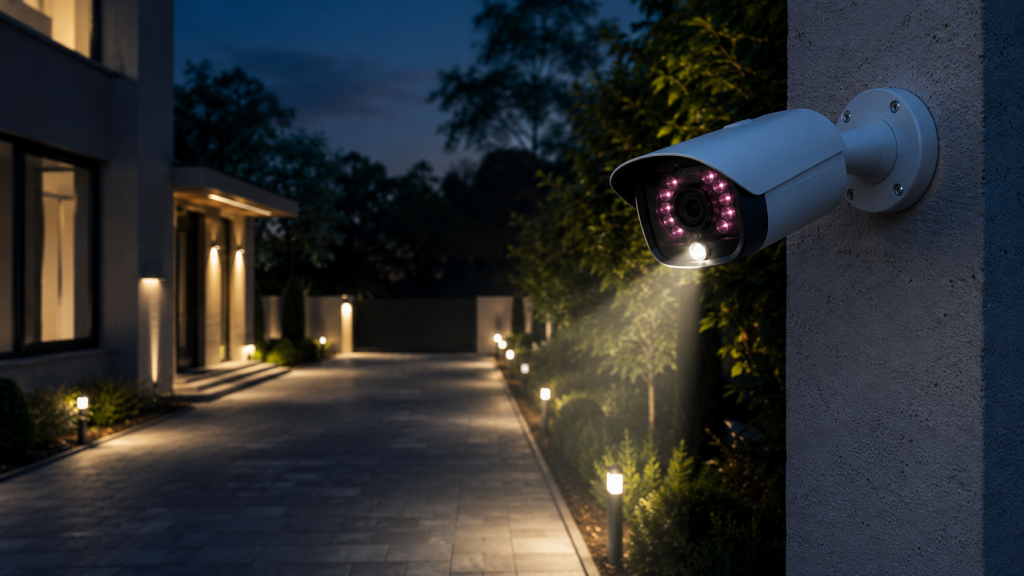
The front door and the delivery spot come first on almost every house. A camera 9 to 10 feet up, angled down at the mat, reads a face at the step and shows what a driver left behind. Bullet housings go here often because the shape reads as a camera from the sidewalk.
Back doors and yards are the other half of a residential job. Rear entries sit out of view from the street, so one wide-angle turret on the back wall holds the door, the yard, and the gate in a single frame. Full residential layouts, indoor cameras included, run through our camera systems for houses and apartments.
Driveways and parking areas take two lenses doing separate jobs: a tight one that reads plates at the curb cut, a wide one that holds the length of the drive. On a lot, mounts go 12 to 14 feet up on a pole or wall, above headlight glare and out of arm’s reach, and a PTZ unit covers a large lot from one position.
Storefronts, service doors, and loading areas are where outdoor security cameras installation crosses into commercial work. A camera under the awning watches the glass and the sidewalk in front of it, the side door gets its own view since that’s the one used after hours, and a corner mount at the bay covers what moves in and out. Multi-building sites are handled as camera systems for business properties.
Fire escapes and rear ladders come up on older buildings. A camera on the wall above the drop-down section, pointed down, shows anyone on the landings without pointing into a neighbor’s windows.
What Outdoor Cameras Have to Handle
An outdoor camera runs with no cover over it: rain, road salt, 95-degree August afternoons, and long stretches below freezing. Cameras built for outdoor use come in sealed housings with gasketed cable entries, and that seal is what keeps water off the board and fog off the lens.
Cold is the part people underestimate. Standard housings hold down to around minus 20 Fahrenheit, and units with built-in heaters go lower and clear condensation off the glass at sunrise. On south-facing walls a sun shield keeps the housing from cooking through the afternoon.
Night is the other half of it. Infrared LEDs light a scene invisibly out to 60 to 100 feet on most units, and the range gets picked per spot, so a camera watching a doorway doesn’t blow out a face at 6 feet. Where a streetlight or a porch light already gives some ambient light, a color night vision model keeps jacket and vehicle colors readable, which is what a police report needs.
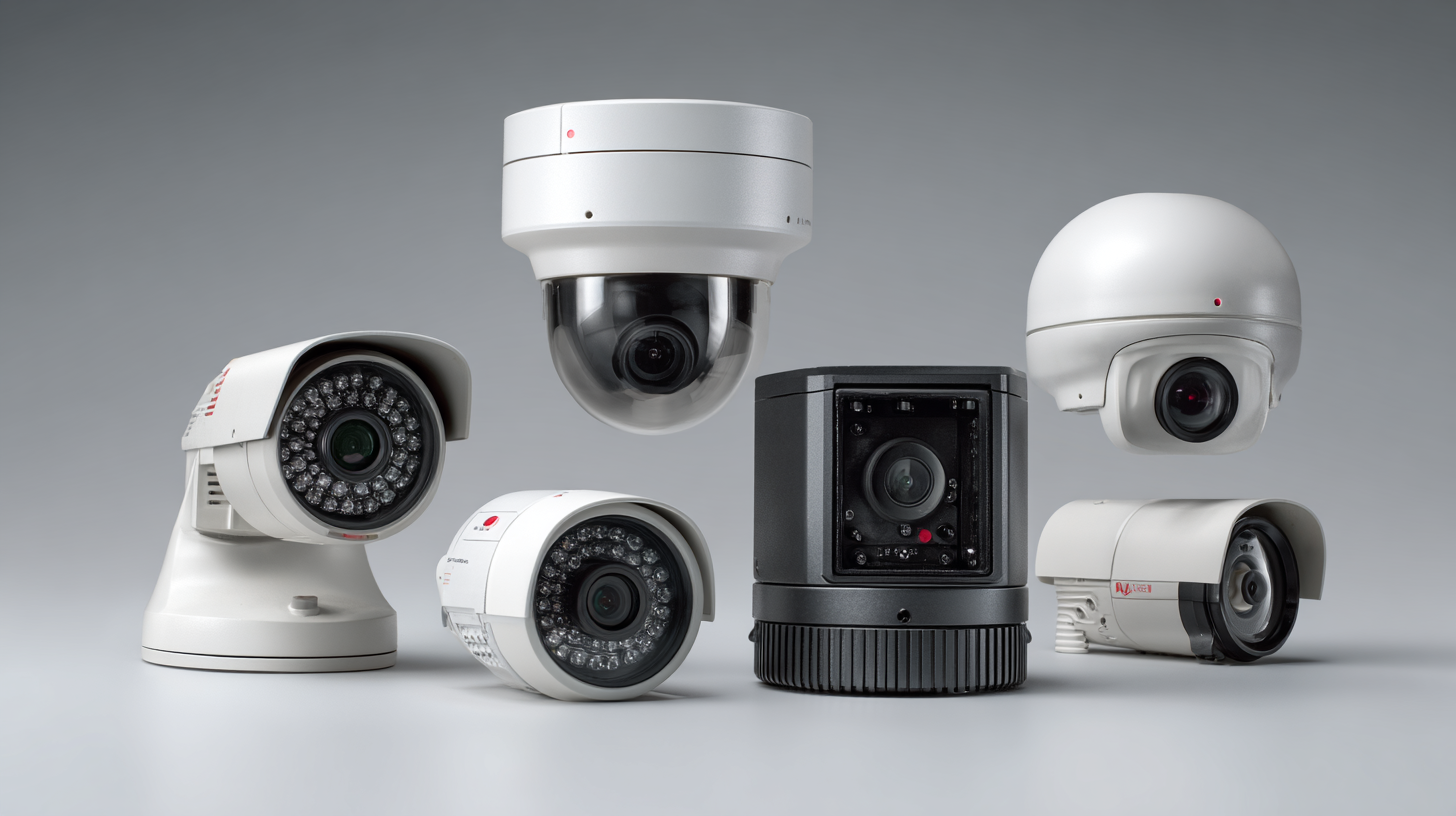
Anything within reach gets a vandal-rated body and tamper-resistant screws. Dome and turret housings take an impact better than a bullet camera hanging off an arm, and the cable goes inside conduit for the run down the wall.
Uniview is our default line outdoors, with Hikvision on residential jobs, and we install any other system on the market after talking it through with you. Matching a housing type to each spot is covered on our full camera installation service. Recorders, retention time, and viewing footage from your phone are set up as part of recording and remote access work.
How the Install Goes
Outdoor security cameras installation starts with a walk around the building. We count entry points, look at where light falls after dark, check what the walls are made of, and find where power and network already reach. That walk sets camera count and mounting points before anything gets drilled.
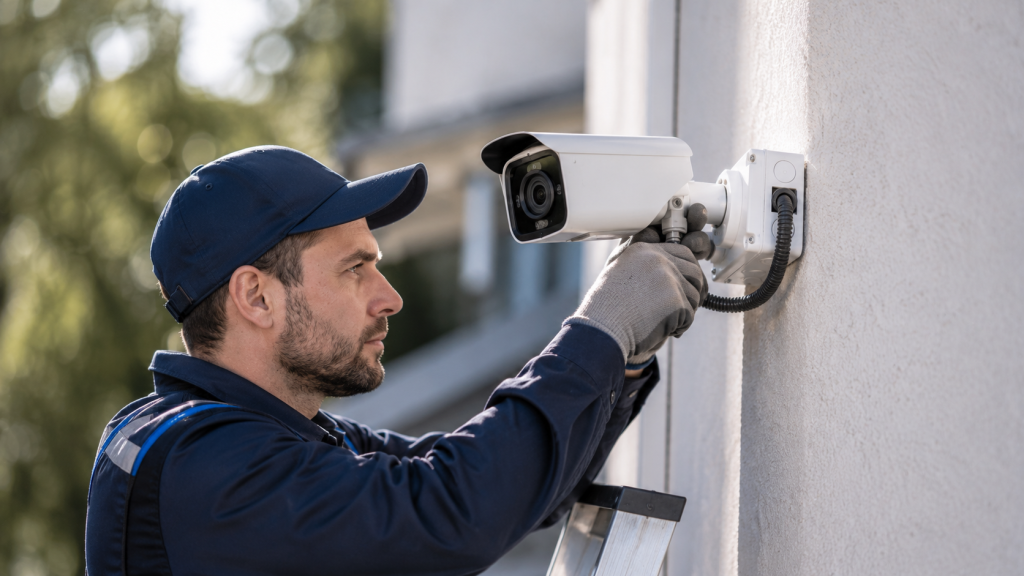
Height gets decided camera by camera. Too high and you record the tops of heads, too low and someone reaches it, so most exterior mounts land between 9 and 14 feet with the lens tipped down toward faces.
Cable runs follow the facade in conduit or under the soffit, and we hold to trim lines and mortar joints instead of crossing open brick face. Every wall penetration gets sealed at the entry. Power comes off a switch inside on IP jobs, and where that run is a stretch, an outdoor-rated supply goes in a weather box.
Buildings with a co-op board or a managing agent need sign-off before anyone drills the facade. On those jobs we hand you the mounting plan and camera positions to submit, and a landmark block adds a step to that.
The last part is testing and handover: every camera checked in daylight and after dark, angles and focus set, recording confirmed, then a walkthrough with whoever will use the system and mobile app setup done on site. Techs on the job are licensed, and the install carries a 90-day mechanical and 12-month electronics warranty covering parts and labor.
What Affects the Cost
Four things set the number on an outdoor job: how many cameras go up, how long the cable runs are, how high and what kind of wall they mount to, and how close power sits to each spot.
Facade type does more work here than square footage. A camera into vinyl siding at 9 feet is a short job, and the same camera into masonry at 14 feet off a lift is not. Runs that cross a roofline or need a new conduit path add hours, and so does a position with no power within reach.
The quote is labor plus material for one total, given after the walk rather than over the phone. Larger jobs take a partial deposit up front with the balance on completion, and a signed contract goes in before work starts.
Service Area
We install outdoor cameras within 75 miles of Midtown Manhattan, which covers the five boroughs and the counties around them. A call inside the city usually gets a tech to the property in 20 to 40 minutes.
Most of the work sits in the boroughs, from row houses and two-families in Brooklyn to storefronts and mixed-use buildings in Lower Manhattan. Install crews and phone or email support run weekdays from 8 to 6. Properties past the 75-mile line are taken case by case.
Outdoor Security Camera Installation FAQ
Will outdoor cameras hold up through winter and heavy rain?
Yes, the cameras we mount outside come in sealed weather-rated housings with gasketed cable entries, and standard models run down to around minus 20 Fahrenheit. Spots that fog or ice over get a unit with a built-in heater.
Can you actually see a face at night?
Yes, at the distance the camera is set up for. Infrared reaches 60 to 100 feet on most outdoor units, and where there’s a streetlight or porch light we use color night vision so clothing and vehicle colors stay readable.
Do you have to drill into my siding or brick?
Mounting and cable entry need holes, and we keep them to the fewest possible. Runs follow trim lines, soffits, and mortar joints instead of open brick face, and every penetration gets sealed the same day.
Do I need approval from my co-op or managing agent?
Most buildings with a board or managing agent require sign-off before anyone drills the facade. We give you the mounting plan and camera positions to submit, and we schedule the install once it clears.
What stops someone from pulling the camera off the wall?
Height and hardware. Cameras in reach of the sidewalk go up 12 to 14 feet where the wall allows, in vandal-rated dome or turret housings with tamper-resistant screws, and cable runs inside conduit rather than exposed.
How long does an outdoor camera install take?
A typical four to six camera house runs one day, from mounting through testing and the walkthrough. Long cable runs, masonry walls, and lift work push it into a second day, and we tell you which one it is after the site walk.
What does the warranty cover?
New installs carry a 90-day mechanical warranty and a 12-month electronics warranty, both covering parts and labor. Work on equipment installed by someone else is quoted separately.
Related Services
A camera that’s gone dark, lost focus, or shifted after a storm is a repair call rather than a new install, handled under camera repair and service. Lenses picking up road film and mounting hardware backing out from wind vibration are the two things worth checking once a year on an exterior system. Outdoor cameras also tie into access control, an intrusion panel, or exterior lighting, so a door event or a tripped sensor pulls up the matching camera view.
What our clients say